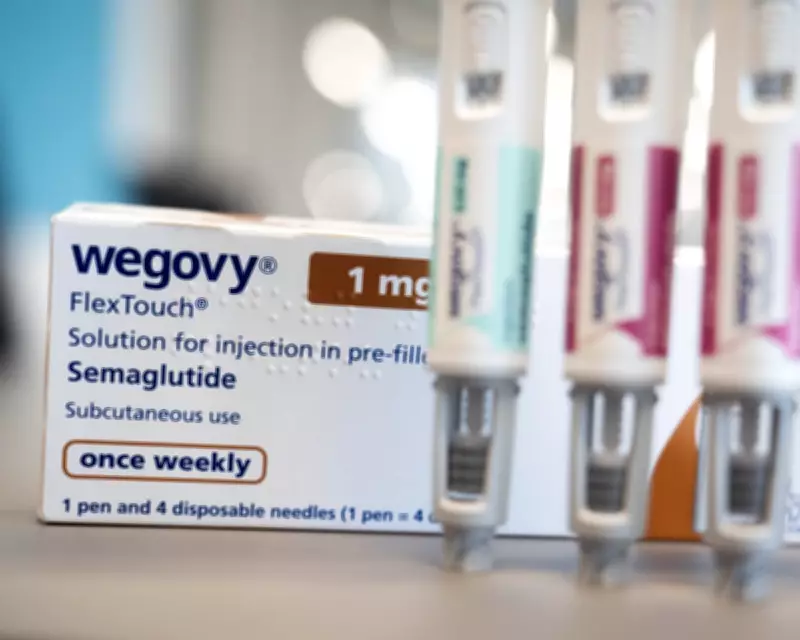
Wegovy Weight-Loss Drug Linked to Fivefold Higher Risk of Sudden Vision Loss
Patients using the weight-loss medication Wegovy face nearly five times greater risk of sudden vision loss compared to those taking the diabetes drug Ozempic, according to a comprehensive new study published in the British Journal of Ophthalmology. The research identifies "eye strokes" as a potential side-effect of the active ingredient semaglutide, which is common to both medications.
Study Details and Key Findings
The large-scale investigation examined adverse event reports submitted to the U.S. Food and Drug Administration between December 2017 and December 2024. Canadian researchers analyzed data involving weekly injectable Ozempic (up to 2mg for type 2 diabetes), weekly injectable Wegovy (up to 2.4mg for obesity), daily Rybelsus tablets for type 2 diabetes, and tirzepatide (sold as Mounjaro).
The study revealed that Wegovy had the strongest association with sudden vision loss, specifically non-arteritic anterior ischemic optic neuropathy (Naion). These "eye strokes" occur when blood flow to the optic nerve is reduced, typically causing sudden and permanent vision impairment. While rare—affecting approximately one in 10,000 semaglutide users—the research identified "a potential dose-dependent safety concern" for the drug.
Gender Differences and Medication Comparisons
Beyond the fivefold greater risk for Wegovy users compared to Ozempic patients, the study found that men taking Wegovy had three times greater risk of developing Naion than women. Interestingly, researchers detected no increased risk with Rybelsus tablets or tirzepatide.
Dr. Edward Margolin from the University of Toronto's ophthalmology department, one of the study authors, stated that Naion appears to be "a real side-effect" of semaglutide. He suggested that faster, quicker, or more aggressive weight loss might "increase the risk" of developing this condition.
Possible Explanations for Risk Variations
The authors proposed several factors that could explain why Wegovy showed stronger associations with vision loss than other semaglutide-containing medications:
- Higher dosage: Wegovy contains the highest approved dose of semaglutide among the medications studied
- Faster-acting formulation: The injectable nature of Wegovy may lead to more rapid effects compared to oral alternatives
- Absorption differences: The limited absorption and slower uptake of Rybelsus tablets likely explain the absence of detectable links to Naion
Regulatory Responses and Expert Perspectives
The findings follow recent safety updates from regulatory agencies. In February, the UK Medicines and Healthcare products Regulatory Agency issued a drug safety update warning about Naion risks, with similar cautions coming from European medicines regulators.
Dr. Alison Cave, MHRA chief safety officer, emphasized: "The risk of Naion in patients prescribed semaglutide is extremely low. However, as with all medicines, patients and prescribers need to be aware of the symptoms of potential side-effects, even if the risk is very small, to ensure patients receive the appropriate treatment promptly should they occur."
Samantha Mann, a consultant ophthalmologist and diabetic eye screening lead at the Royal College of Ophthalmologists, offered cautious interpretation: "This study relied on reported side-effects and so cannot prove causation or determine how common this problem truly is. An increase in this form of optic nerve 'stroke' has however not been widely observed in routine clinical practice at St Thomas' in London, where I work. Further studies are therefore needed to clarify if this increased risk is indeed real."
Manufacturer's Position and Patient Information
A Novo Nordisk spokesperson responded to the findings, stating: "Patient safety is our top priority, and we take any reports about adverse events from the use of our medicines very seriously. We work closely with authorities and regulatory bodies from around the world to continuously monitor the safety profile of our products."
The company noted that European Union patient leaflets for Wegovy, Ozempic and Rybelsus have been updated to include information about Naion. However, they maintained that "based on the totality of evidence, we concluded that the data did not suggest a reasonable possibility of a causal relationship between semaglutide and Naion and Novo Nordisk believes that the benefit-risk profile of semaglutide remains favourable."
All three medications—Wegovy, Ozempic, and Rybelsus—contain semaglutide but feature different dosages and formulations. These glucagon-like peptide-1 receptor agonist (GLP-1 RA) medicines help reduce blood sugar levels, slow digestion, decrease appetite, and have been associated with reduced heart attack risks and other health benefits despite the newly identified vision concerns.