Stomach Pain Leads to Shocking Brain Tumour Discovery
Lewis Goodfield, a 37-year-old father-of-two from Beddau, Wales, experienced years of severe and relentless abdominal pains that led to multiple hospital admissions. In March of last year, his agony peaked when he collapsed in the A&E department, an event that nurses initially assumed was a seizure. However, a subsequent CT scan revealed an unexpected mass on his brain, delivering a diagnosis that left him and his family in shock.
Unexpected Diagnosis and Surgical Intervention
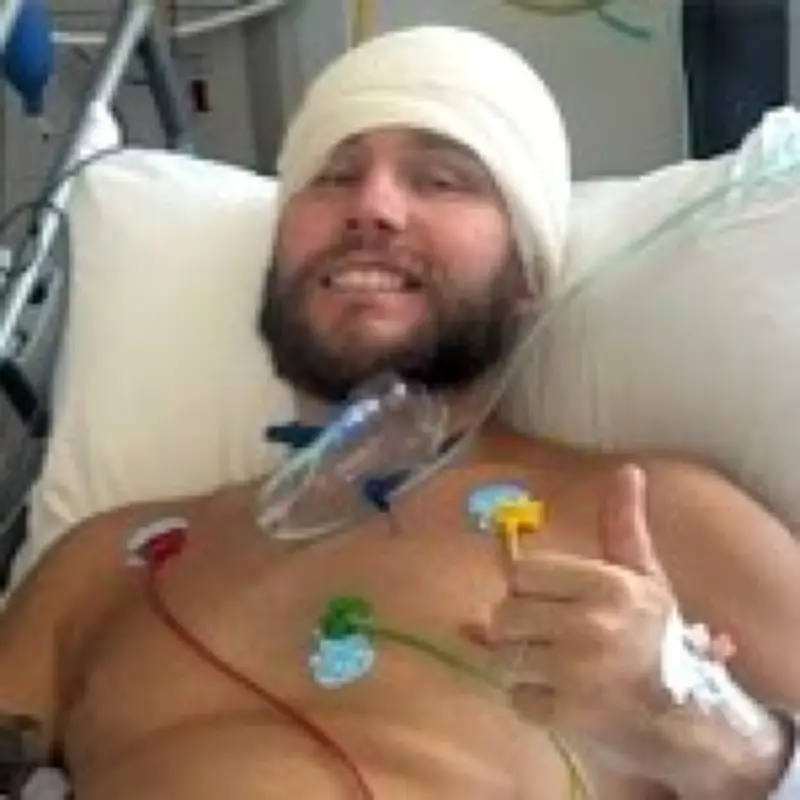
In April, doctors informed Lewis that he had a grade two glioma, a slow-growing brain tumour that can progress to a faster-growing type over time. Interestingly, his debilitating stomach pains are believed to be entirely unrelated to the tumour, making the discovery a chance finding. Faced with two options—monitoring the mass or undergoing surgery—Lewis chose a craniotomy in July 2025, a procedure where he remained awake while a section of his skull was temporarily removed.
"I could hear all the drilling and conversations," Lewis recalls. "It was really strange and just a lot to take in. My neurosurgeon showed me the tumour in the palm of her hand. I was a bit shocked to see it, it was about the size of an egg." The surgery was successful, and the tumour was found to be non-cancerous, likely detected early enough for effective treatment.
Recovery Challenges and Ongoing Health Struggles
Lewis praised his wife Keeley for her unwavering support during his recovery, noting that she bore the brunt of the challenges. "Keeley has borne the most of this," he says. "She's been incredible, especially with me not being able to drive. The pair of us have really fought and recently the realisation of what we've been through has kicked in." Despite the successful brain surgery, Lewis continues to grapple with his original stomach issues, which remain undiagnosed despite numerous tests, including CT scans, MRIs, and endoscopies.
Doctors are reportedly confused about the cause of his abdominal pains, with one suggesting he might have to live with the condition—a prospect Lewis refuses to accept. Additionally, the brain surgery has left him with new sensitivities, such as difficulty in busy environments and increased sensitivity to noise and bright lights, though his memory function is gradually improving with support from family and friends.
Fundraising and Personal Resilience
In the face of these challenges, Lewis has turned his experience into a force for good by raising over £3,600 for The Brain Tumour Charity. He organized a fundraising walk, which has attracted more than 60 participants, despite having to postpone it due to his ongoing stomach problems. "I've had so many messages of support and people joining the walk—some I only know through a friend of a friend," he explains. "It's so good for us to talk things through." This effort has also helped him process his journey and connect with others affected by similar issues.
Lewis's story underscores the complexities of medical diagnoses and the resilience required in recovery. While his brain tumour was successfully treated, the mystery of his stomach pains persists, highlighting the ongoing battles many face in the healthcare system. His determination to find answers and support charitable causes serves as an inspiration to those navigating similar health challenges.