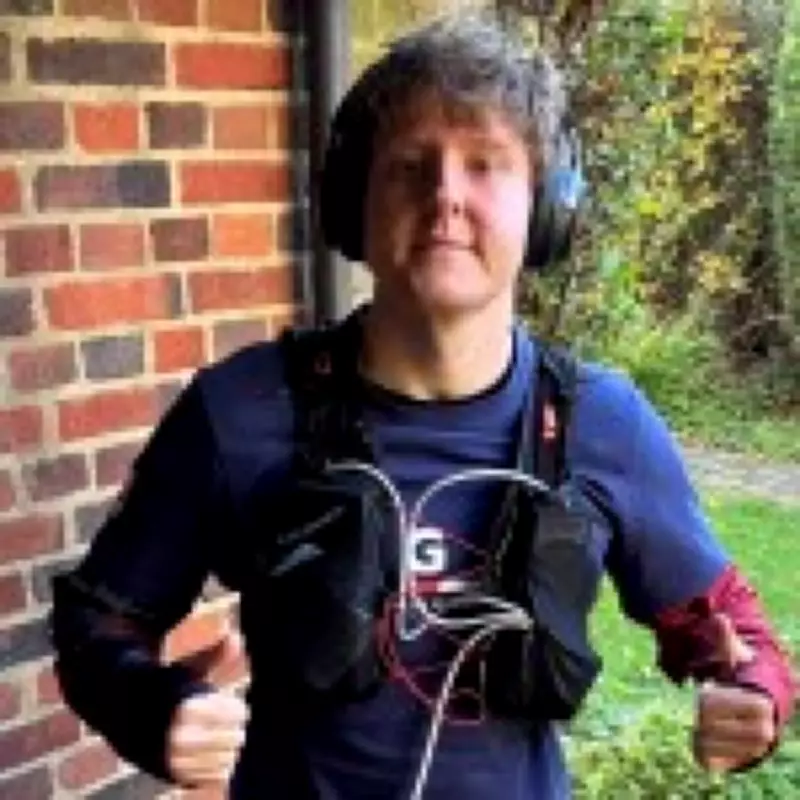
Living with a Portable Life Support Machine: How Liam Pearce Refuses to Be Held Back
After four grueling months in hospital, Liam Pearce was finally ready to return home, but his health journey was far from over. Grasping a zimmer frame, the 27-year-old knew he faced a future filled with hurdles – learning to walk again was just one of many. Consumed with anxiety, he couldn't help but feel scared of what his life would look like, now that he had been diagnosed with end stage heart failure and fitted with a portable life support machine.
The Life-Saving Device That Changed Everything
The life-saving device, called a left ventricular assist device (LVAD), is a battery-powered machine that sits on the outside of the body but is attached internally to the heart and helps pump blood when the heart is too weak to do it alone. Liam is one of just 324 in the UK living with an LVAD, which are most commonly used by those waiting for a heart transplant – but he has since shed his anxiety and refuses to let it hold him back.
Today, he skis, runs, hits the gym, and owns a vintage men's fashion business. In fact, Liam is so happy with life, that he's yet to join the transplant waitlist. However, such an active lifestyle was not always certain, especially after Liam suddenly fell ill in July 2023.
A Sudden Health Crisis
One moment, he was re-doing his friend's kitchen, the next, he could hardly move. 'I started noticing a shortness of breath,' he tells the Metro. 'Then after two weeks, I had extreme fatigue, painful burning in my muscles, and walking 30 metres felt like running a marathon.'
Liam was just 24 at the time, and his mum Paula – a nurse of 40 years – knew something was wrong. She was supposed to go to France with the family, but booked her son into the GP instead. Liam calls it her 'nurse and mother's instinct.'
The morning after some blood tests at his local doctor's surgery, Royal Surrey County Hospital urged Liam to come in for further checks. 'When I got there, I was in a really bad state and my body just gave up,' he remembers. 'I think my subconscious knew I was finally somewhere safe, and when I walked through the doors, I mentally and physically shut down.'
'When you go into A&E, you're hoping to be there for a night at most. I didn't come home for over four months,' he adds.
Diagnosis and Hospitalization
Tests discovered Liam was in multi-organ and heart failure – a total shock for the man in his twenties who had never suffered from physical health issues before. He was kept stable overnight in Surrey before being moved to St. Thomas' in London, where he stayed for four days, before moving to Harefield Hospital in Uxbridge.
While his family were distraught, it was all 'blurry' for Liam, who can only remember everything from notes that help him piece everything together. 'I've got certain memories, like my MRI. But when you're ill, your mind is bad at taking things in because you are so drained,' he explains. 'It was very overwhelming, realising you are in critical condition.'
While in hospital, Liam managed to overcome sepsis and an induced coma, as well as celebrate his 25th birthday. And his gratitude to the staff knows no bounds – no matter how 'dreadful and bleak' his situation was, such as the discovery that his heart medication wasn't working, they strived to provided solutions.
Choosing the LVAD Over Transplant
One was the 'T-word': transplant. However, Liam wasn't deemed a suitable candidate as he needed to both lose weight and get stronger, so was offered the LVAD – something neither he nor his mum knew existed.
'My mum had worked in an ICU for 15 years, and she had never heard of it,' Liam explains. 'I spoke to a patient who had an LVAD at the time, and it was reassuring to see he looked well. But I would never have imagined that the things I am able to do now would be possible.'
Since leaving the hospital in November 2023 and getting to grips with his life-saving machine, Liam has been intent on pushing himself 'to the limits', giving talks at Harefield Hospital and making social media videos about what life is like with an LVAD.
The Challenges of Adaptation
Getting to this point was far from easy though, he admits. Liam explains: 'Learning to live with the device while you're really weak is hard. It was scary, and I was afraid of my mental health deteriorating. To me, that's scarier than physical health, because it's not as simple as tweaking medication.'
'It wasn't until I was back on my feet, got in touch with an outreach physio, and started going to the gym that things started to look more positive.'
'I had to ease back into it – I had my chest opened up, so I was nervous, wondering how securely they'd attached it back together.'
Laughing, Liam explains that humour has also been hugely helpful in his LVAD journey, and he's not held back – a TikTok of his brother pretending to unplug his life support to charge his phone has 49.6k views. He says: 'It's a life changing and dramatic thing, but being able to not take it too seriously is massive.'
Daily Life with the LVAD
Despite the jokes, calling himself a 'human Tesla' and his battery pack a 'toaster', Liam really does plug himself in overnight, as well as carry a backpack with the machine 24/7 – it reaches his heart through a wire in his abdomen.
'There was lots of paranoia to begin with,' he admits. 'But I've learnt to trust the device. It really has become a part of me.'
And with these physical changes has come a shift in his outlook on life, too. 'In my first two years of recovery, I needed to rebuild myself and my confidence,' says Liam. 'But I've started thinking about dating in the last three months, because this has shown me how fragile life is. It made me realise I don't want to be alone.'
'Waiting for a transplant does complicate things, but outside of that, relationships are very normal, and an LVAD shouldn't be a reason not to date.'
Embracing an Active Lifestyle
And for Liam, his portable life support machine is never a reason to miss out on anything. Currently, he's down 60kg, runs, has just returned from skiing (where he took a few harmless tumbles, judging by his TikToks), and successfully sells vintage men's clothes online.
'Over the past two years, I've gone from the weakest I've ever been, to the strongest and fittest I've ever been,' he says. 'People sometimes forget I am actually very unwell, which is a good thing. I even forget how severe things are myself.'
Future Plans and Transplant Considerations
However, his journey is far from over. He still visits the hospital every two months, and while he's happy and fit, he does plan to go on the heart transplant waiting list next month – and with another open heart surgery comes another year of physical recovery.
'I'm putting off the transplant because I'm enjoying life,' he explains. 'But right now, there's only so much I can plan for the future.'
'Once that's done, and there's not another major surgery coming up, the real future can start.'