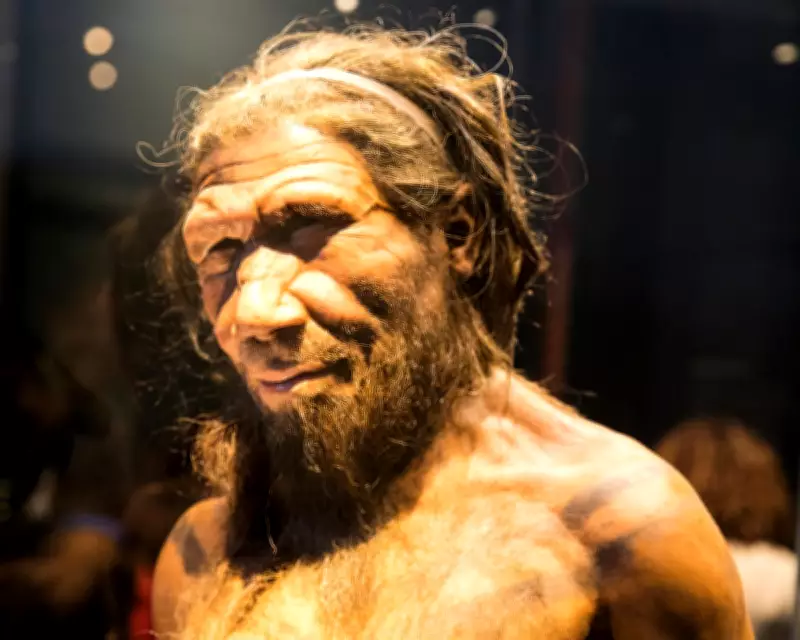
Ancient DNA Reveals Neanderthal-Human Mating Bias: Male Neanderthals, Female Humans
Groundbreaking genetic research has uncovered a striking prehistoric mating pattern between Neanderthals and early humans, revealing that interbreeding occurred predominantly between male Neanderthals and female humans. This discovery provides crucial insights into our evolutionary history and explains long-standing mysteries in human genetics.
The Prehistoric Encounter
Tens of thousands of years ago, as modern humans migrated from Africa into northern territories inhabited by Neanderthals, the two species encountered each other and occasionally interbred. While scientists have known about this prehistoric mixing for years, new DNA evidence reveals a significant imbalance in these ancient relationships.
"We found a clear pattern indicating a sex bias: gene flow occurred predominantly between Neanderthal males and anatomically modern human females," explained Dr. Alexander Platt, senior research scientist at the University of Pennsylvania and lead author of the research published in the journal Science.
The Genetic Evidence
The research team discovered that Neanderthal DNA carried by modern humans is not evenly distributed across the genome. Particularly notable are "Neanderthal deserts" - missing areas of Neanderthal DNA along the human X chromosome. For years, scientists assumed these gaps existed because certain Neanderthal genes might have been biologically incompatible with humans.
However, the new study presents an alternative explanation. Researchers analyzed modern human DNA preserved in three Neanderthal specimens - the Altai, Chagyrskaya, and Vindija - and compared this data with genetic information from specific sub-Saharan African populations that lack Neanderthal ancestry.
The analysis revealed a remarkable pattern: Neanderthal X chromosomes showed a 62% excess of modern human DNA compared to their other chromosomes. This represents a mirror-like reversal of the distribution of Neanderthal DNA in human populations.
Understanding the Mating Pattern
Because females carry two X chromosomes while males carry only one, the direction of mating matters significantly. If Neanderthal males partnered more frequently with modern human females, fewer Neanderthal X chromosomes would enter the human gene pool, while more human X chromosomes would enter Neanderthal populations.
"Mating preferences provided the simplest explanation," Platt stated. "The strength of the effect suggests this wasn't just a one-time occurrence but continued within populations after initial mating events."
Today, individuals of non-African heritage typically carry about 1-4% Neanderthal DNA, while those of African heritage generally have a lower proportion. This genetic legacy represents the lasting impact of these prehistoric encounters.
Evolutionary Context
The ancestors of modern humans and Neanderthals diverged approximately 600,000 years ago. "Our ancestors evolved in Africa, while the ancestors of Neanderthals evolved in and adapted to life in Eurasia," said Sarah Tishkoff, the David and Lyn Silfen University professor in genetics and biology at the University of Pennsylvania, who led the research.
"But that separation was far from permanent," Tishkoff added. "Over hundreds of millennia, human populations migrated into Neanderthal territories and back again, and when these groups met, they mated, swapping segments of DNA."
Interpreting the Findings
The research doesn't necessarily suggest that Neanderthal males were particularly attractive to modern human females or vice versa. "It could be that everybody considered interspecies matings as gross - or attractive," Platt noted. "But it seems that one direction was viewed as better, or less worse, than the other."
The findings indicate that males with Neanderthal heritage would have been preferred over females with Neanderthal heritage within predominantly modern human populations. This preference pattern would have continued beyond initial mating events, shaping the genetic legacy we see today.
"It's hard to say exactly how many times these mating events occurred," Tishkoff commented. "But I'm getting the sense that this was happening more than we originally speculated."
This research provides valuable new understanding of our evolutionary past and the complex relationships between different human species that coexisted thousands of years ago.