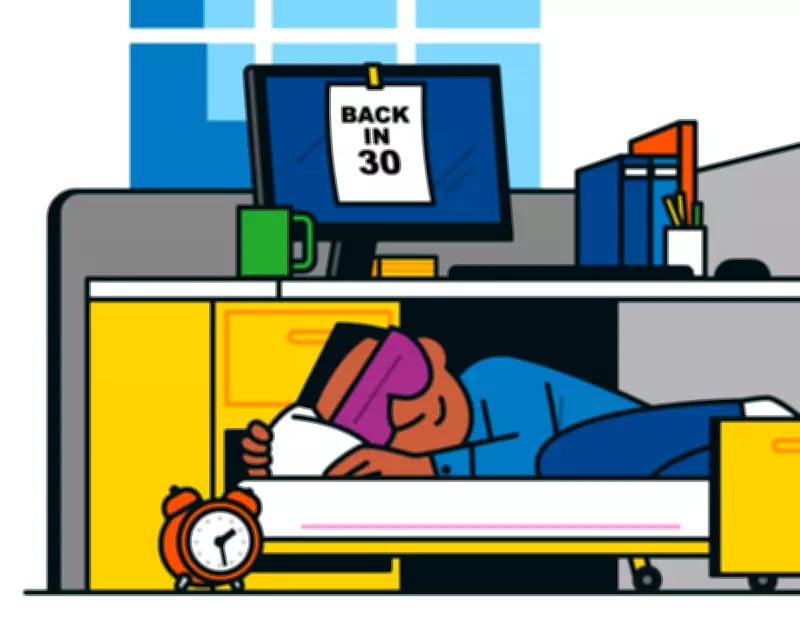
Expert Strategies for Mastering the Art of the Perfect Nap
Many individuals envy those who can effortlessly enjoy a rejuvenating nap, only to find themselves struggling with either an inability to fall asleep or waking up feeling more fatigued than before. This common experience inspired a deep dive into expert advice on achieving a truly restorative nap.
Redefining the Nap: Rest Without Sleep
According to sleep psychologist Dr. Jade Wu, the benefits of napping do not necessarily require actual sleep. "As long as your brain is resting in a quiet space, with your eyes closed, without distractions and without doing something goal-oriented in your mind, your brain activity will slow down and get into a pattern similar to what it's like during napping," Wu explained. This insight challenges traditional notions and opens up new possibilities for those who find it difficult to fall asleep during daytime rests.
Essential Sleep Accessories for Optimal Conditions
Former emergency medicine doctor Sarah Nicholls, who perfected napping techniques during night shifts, emphasizes the importance of creating an ideal environment. "A completely dark, cool and quiet environment" is crucial, with blackout blinds being particularly helpful. Nicholls champions the use of affordable sleep masks, specifically recommending an inexpensive option from Gritin, and suggests earplugs for noise blocking—standard foam ones suffice, but silicone versions offer superior sound isolation.
Breathwork for Rapid Relaxation
For those with limited time, Nicholls advocates breathwork techniques as more than just a wellness trend. "For a quick 30-minute window, focus on relaxation techniques immediately. My favorite is box breathing," she advised. This method involves inhaling for a count of four, holding for four, and exhaling for four, providing a structured approach to calming the mind and body efficiently.
Timing and Consistency Are Key
Dr. Wu highlights the importance of nap duration and scheduling. She recommends capping naps at 30 minutes to avoid grogginess and warns against varying nap times and lengths. "This disrupts your night-time sleep and destabilizes your circadian rhythms, making your sleep quality worse and increasing your risk for sleep problems like insomnia," Wu cautioned. Maintaining consistency helps preserve overall sleep health and effectiveness.
These expert strategies offer practical guidance for transforming napping from a frustrating endeavor into a beneficial ritual, enhancing daily energy and well-being through simple, evidence-based techniques.