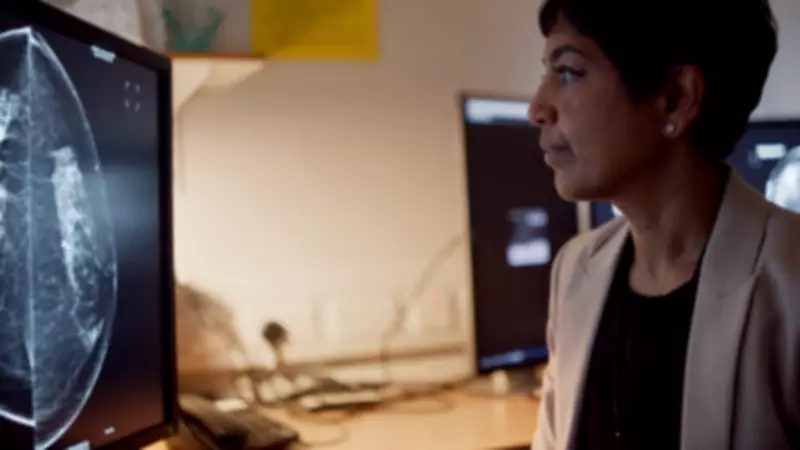
NHS Requires Gradual Integration for AI-Powered Cancer Screening
A groundbreaking study reveals that artificial intelligence developed by Google can identify breast cancer more effectively than human doctors, offering the potential to save the overstretched NHS considerable time and resources. However, the research also uncovers significant practical challenges that must be addressed before widespread implementation can occur, highlighting a complex journey for adopting life-saving technology.
AI Outperforms Humans in Initial Detection but Faces System Hurdles
The collaborative study, published by Google, the NHS, and Imperial College London, analyzed 115,000 breast scans from five NHS screening services. In this evaluation, the AI system detected approximately two additional cancers per 1,000 women compared to a single human specialist. Notably, it identified 25% of "interval cancers"—cases diagnosed between routine screenings after previous clear results—suggesting it could aid in earlier breast cancer detection, a critical factor in preventing metastasis.
While the AI surpassed individual radiologists, it did not outperform the NHS's standard practice of using two doctors to review scans, with a third expert available for arbitration in case of disagreements. A second Google paper examined this arbitration system and found that when an AI-human team was compared to a human-human pair, the results were statistically similar. The AI showed a slight advantage in spotting hard-to-detect cancers but generated more false positives. Researchers concluded that the AI performed on par with human specialists, offering a valuable alternative perspective, particularly for first-time screenings.
Significant Time Savings Offset by Increased Arbitration Needs
The study demonstrated that AI could read scans in an average of 17.7 minutes, compared to 2.08 days for the first human radiologist—a substantial time reduction. This efficiency is crucial as the NHS in England struggles to meet cancer diagnosis targets amid a 30% shortage of clinical radiologists, projected to rise to 40% by 2028. AI integration could alleviate this burden by working alongside humans to achieve comparable results rapidly.
However, the implementation is not straightforward. Although AI saved time in scan reading, it increased the workload in arbitration, with the need for third experts rising by 142% and 22% across two centers studied. Human doctors often found it difficult to trust AI evaluations, leading to 93 instances where the AI correctly identified cancer but was overruled by humans during arbitration, often due to confusion about the AI's methodology. Despite this, researchers estimate AI could reduce time spent on scans by 32%, though complexities persist.
Phased Deployment Essential for Effective AI Integration
The NHS faces additional barriers to AI adoption, including the widespread use of paper scans incompatible with AI systems and the technology's sensitivity to changes in equipment. For example, when radiologists switched scanning machines, patient recall rates doubled as the AI produced false alarms due to unfamiliar input. Researchers emphasize the necessity of a "phased, iterative approach to AI deployment," requiring careful calibration and specialist oversight to prevent errors.
In summary, while AI holds promise for revolutionizing cancer screening in the NHS, challenges such as trust deficits, system compatibility, and calibration issues necessitate a slow, monitored rollout. The journey toward harnessing AI's full potential in healthcare remains ongoing, with significant hurdles to overcome before achieving widespread benefits.