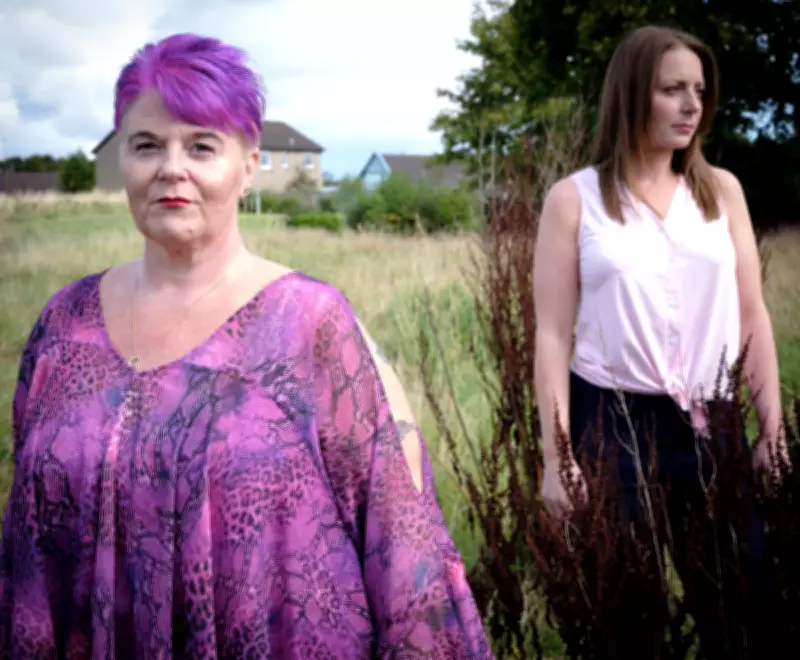
Wendy Barker, 56, recalls a moment of explosive rage that left her daughter Laura Daly, then six, cowering in the back of the car as Barker rammed it into their garage door seven times. This incident was a turning point, leading to a diagnosis of premenstrual dysphoric disorder (PMDD) after two decades of misdiagnosis. PMDD, officially recognized in 2013, affects up to one in 20 women of reproductive age, but only 1.6% receive a formal diagnosis. Symptoms include severe mood swings, irritability, depression, anxiety, and fatigue.
Barker's daughter, now 37, recalls overhearing arguments and feeling sad seeing her mother upset. Barker herself describes the guilt of her behavior, which she attributes to the disorder. She found relief through oestrogen implants, though the NHS initially refused to fund the treatment. She paid out of pocket, with her daughter even lending her money for the implants.
Counselor Tamsin Taylor, known as the PMDD Therapist, notes that mothers with PMDD are often "riddled with guilt" and need a non-judgmental environment. Dr. Louise Newson explains that PMDD is caused by the brain's reaction to hormonal changes, particularly progesterone. Treatments vary, including antidepressants, contraceptives, and hormone therapy.
Jenny Fairhurst, 41, from Crewe, experienced symptoms after her second child, feeling "dead inside" and snapping at her family. After tracking her symptoms, a GP finally listened, and she found relief with fluoxetine during the luteal phase of her cycle. Her 10-year-old son now understands her condition and shows empathy.
Dr. Milli Raizada, a GP and women's health expert, was diagnosed with PMDD six years ago but had never heard of it. She advocates for better training and research. Phoebe Williams, 28, founded the PMDD Project, the UK's first charity for PMDD, to educate medical professionals and create a helpline.
Despite the challenges, some families find that PMDD brings them closer. Barker and her daughter now laugh about the garage incident, and Daly says her mother's openness has made her proud. Samaritans can be contacted at 116 123, and Mind at 0300 123 3393.