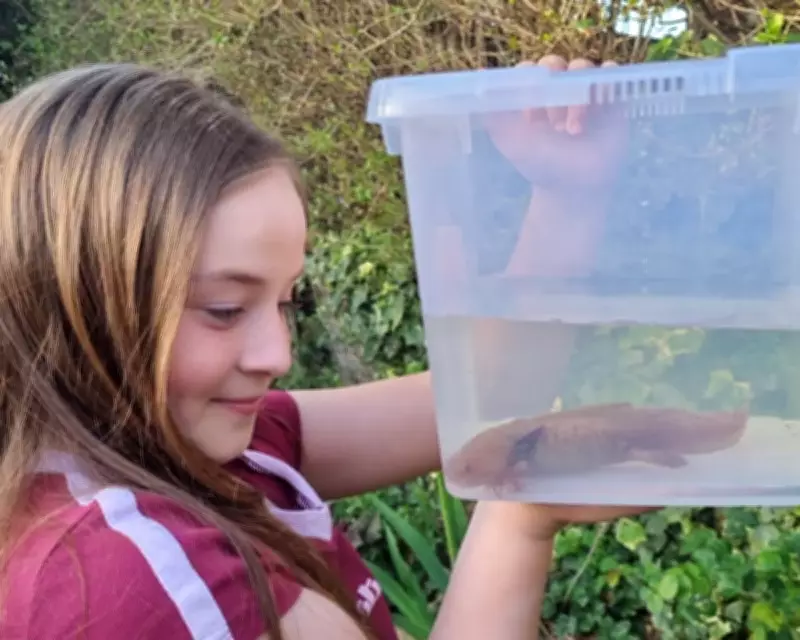
A rare axolotl discovered under a historic bridge in south Wales is believed to be an abandoned pet, according to experts. The Mexican salamander, named Dippy by its finders, was found by 10-year-old Evie Hill under the 15th-century Dipping Bridge over the River Ogwr (Ogmore) in Merthyr Mawr near Bridgend. The bridge got its name from gaps in the parapets used by farmers to push sheep into the water, and now it has lent its name to the amphibian.
First Axolotl Found in UK Wild
Dippy is thought to be the first axolotl ever found in the wild in the UK. The species, critically endangered, naturally lives only in Lake Xochimilco near Mexico City. The 22cm (9in) salamander was found in shallow water under the bridge, with injuries to its tail and stomach likely caused by a predator.
Chris Newman, director of the Kent-based National Centre for Reptile Welfare (NCRW), said: "Axolotls are very cold tolerant and can survive outdoors in our climate. However, predatory fish like pike or perch would pose a threat. In the river, it likely wouldn't have lasted long. It was in shallow water, so we suspect it was deliberately released. That is illegal and poor for welfare."

Rise in Axolotl Popularity
Demand for pet axolotls has surged globally, driven by internet memes, videos, and their resemblance to Pokémon. The axolotl inspired a dragon in the 2010 film How to Train Your Dragon and has appeared in games like Fortnite, Minecraft, and Roblox. In 2024, The Economist called the salamander a "global superstar."
However, rescue centres report that inexperienced owners often struggle. Nicole Rowe, who runs a rescue centre in the West Midlands, said: "I have about 30 axolotls here at the moment. One was dumped at a shop with no legs, no tail, and no filaments after being attacked by other fish."
Recovery and Advice
Evie and her mother, Melanie Hill, have taken Dippy in and are documenting her recovery on TikTok. Melanie said: "She will only eat bloodworm and prefers it from a syringe. She is having methylene blue soaks for her injuries. Fingers crossed she heals well."
Newman urged: "Anyone who can no longer care for an axolotl should seek help rather than release it into the wild. Our centre covers the UK, and other rescues are available."