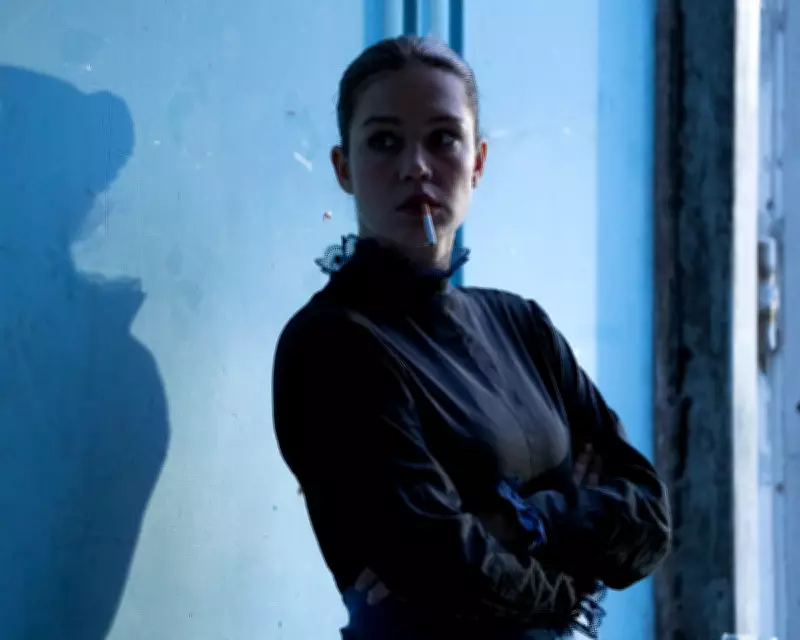
It is always a pleasure to see the funny, smart performer Adèle Exarchopoulos at the Cannes film festival. After all, she made Cannes history by being jointly awarded the Palme d'Or for the 2013 film Blue Is the Warmest Colour, sharing the big prize with director Abdellatif Kechiche and co-star Léa Seydoux. Exarchopoulos has her moments in this new film from Jeanne Herry, in which she plays an actor struggling with a drinking problem. The scenes where we see her on stage, boisterously performing in a touring theatre for schoolchildren, are genuinely great. But this is a very glib and unsatisfying drama, whose essential naivety becomes apparent when the lead character is forced to confront the crisis in her life.
A Thinly Conceived Character
Exarchopoulos plays a young actor called Garance, who adores Arletty's character of the same name in Marcel Carné's classic film Les Enfants du Paradis. At the moment, she works as an assistant stage manager in a prestigious Paris repertory company, believing she is on the verge of getting serious speaking parts when the next season's casting is announced. Instead, she is relegated to the touring schools company, where her undoubted talents are compromised by partying extremely hard every night and waking up with a terrible hangover every morning. Garance is the kind of person who shows up chaotically late to meetings with a drama-queen swirl of excuses about late buses and trains.
A Predictable Downward Spiral
With awful inevitability, she is fired from the theatre troupe, a sacking made worse by being executed collectively with a stern injunction to get help, like an intervention. She forms a new relationship with a set designer, Pauline (Sara Giraudeau), but this is also placed under pressure by her drinking, and she begins to suffer anxiety attacks and depression. To make things worse, her pregnant sister, who serves as the unimpressed voice of common sense, gets cancer—a contrived health crisis that exists solely to facilitate Garance's path to maturity.

A Flimsy Confrontation
When Garance is forced to confront her life choices by a doctor, the film looks very flimsy. The doctor professes herself astonished by how good Garance looks for someone supposedly necking litres of white wine daily. Yes, it is astonishing; she looks like a well-groomed movie star who isn't drinking anything like that amount. When she finally admits she needs to quit because her liver is packing up, there are some tearful scenes in which she says how “scared” she is, but then she just quits, without going to Alcoholics Anonymous. And it doesn't even look that hard. She is surely what AA veterans call a “dry drunk” or a “white knuckle drunk”—someone who thinks they can go it alone. Surely this film isn't suggesting that you can do it the way Garance is fancifully shown? It is a very superficial portrait.
Garance screened at the Cannes film festival.