
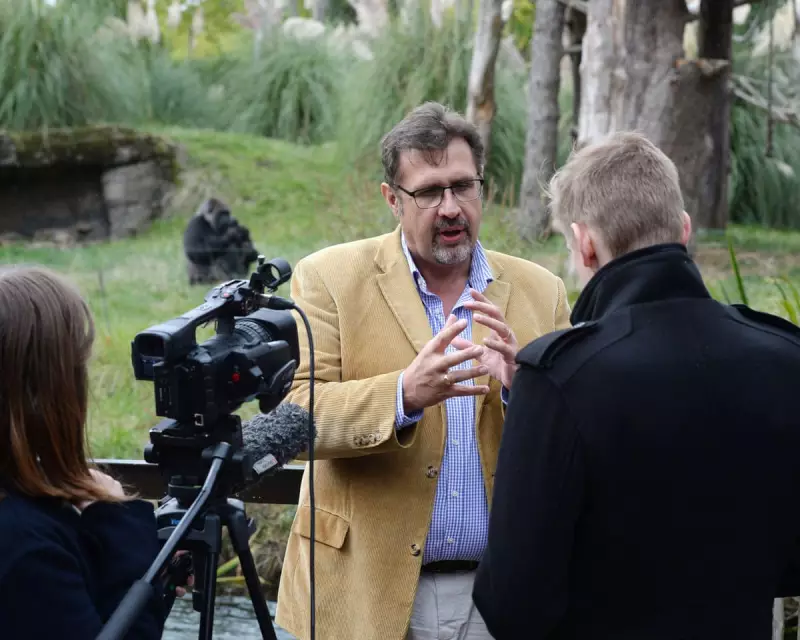
David Field, the newly appointed president of the World Association of Zoos and Aquariums (WAZA), has launched a stark critique of the industry he loves, stating he would like to see many zoos in the UK and abroad closed down.
A Lifelong Passion with a Critical Eye
Field, who began volunteering at Dudley Zoo at the age of 12 and has served as CEO of the Royal Zoological Society of Scotland, has dedicated his life to animal collections. However, he admits he has probably tried to close down more zoos than open them. He expressed desperation about facilities that treat animals poorly, stating: "There are many zoos in this country and certainly abroad that I would like to see closed."
He specifically highlighted concerns in the UK, pointing to exotic animal collections that fail to meet expected standards. "There are zoos in the UK that are not achieving the standards we would expect and are not giving back in terms of conservation and education, and that is fundamentally wrong," Field said in an exclusive interview.
Modern Challenges and Welfare Reforms
Field takes leadership during a period of intense public debate about the role of zoos. While they were once primarily for entertainment, modern expectations demand a focus on animal welfare and conservation. This is particularly relevant for species like elephants, which require vast spaces and complex social structures.
The UK government is introducing updated regulations that will require zoos to have a clear conservation focus. New rules will mandate larger enclosures for elephants and ban the tethering of birds of prey, requiring large aviaries instead. A notable new ban will also prevent visitors from touching fish, rays, or cephalopods like octopuses.
Field welcomes these changes but warns of the problem of "bad zoos" that operate outside formal networks and engage in overbreeding for commercial purposes. "There are a lot of bad zoos out there which are breeding animals for commercial and wrong purposes," he cautioned, acknowledging that euthanasia is sometimes a necessary last resort despite efforts to minimise it.
Which Animals Belong in Captivity?
The debate over which species are suitable for zoos is ongoing. Field revealed that WAZA has concerns about new polar bear exhibits in the UK, particularly those "down south" where heat could be an issue. He also suggested that while Whipsnade Zoo provides an "exceptional" home for elephants, other zoos like Edinburgh lack the necessary space.
The issue of penguins at the London Aquarium, kept in a basement without natural daylight, has drawn criticism from 75 MPs. Field believes their veterinary needs are met but acknowledges the public's discomfort, stating: "If people are seeing an animal in an environment they don't feel comfortable with, they lose their connection."
He was unequivocal about orcas, asserting that the UK should never keep killer whales as the country lacks adequate facilities. The way cetaceans are kept needs to be reviewed and progressed, he said.
Conservation and Rewilding Successes
Field strongly advocates for the positive role zoos can play in conservation. His own zoo recently pioneered the successful release of wildcats into the Cairngorms National Park in Scotland. He believes this carnivore reintroduction could pave the way for global big cat rewilding projects, with species like lynx being discussed for the UK.
However, he condemned the "evil" act of suspected rogue rewilders who dumped lynx in the Scottish highlands. The animals were so desperate for human care they walked into traps, highlighting that rewilding is a serious science that "can't just be done by anyone."
While he supports the potential return of lynx, Field does not believe wolves have a place in the UK as wild animals and expressed fears that the same individuals might attempt to dump them.
Addressing recent headlines about "lonely gorillas" at Bristol Zoo, Field urged the public to look beyond emotional headlines, explaining that animal behaviour can be misinterpreted. He vouched for the care the gorillas received, emphasising that zoos must balance public perception with professional animal management.



