In the heart of Norfolk, near Caistor St Edmund, the transition from winter's stark white snow to the muddy sludge underfoot has left the landscape in a state of drab monotony. Heavy rains have only intensified this late winter murk, creating a canvas of browns and greys that seems to swallow all colour.
A Ghostly Vision by the Water
Amid this gloom, a sudden apparition breaks the monotony. A ghostly figure materialises beside the lake, separating itself from the low-lying mist with an almost ethereal grace. Against the oppressive grey of the sky, the impossible brilliance of its pure white plumage and impressive metre-wide wingspan delivers a jolting contrast.
This is the little egret, a small white heron that has become a more common sight in UK wetlands, yet still manages to spark excitement with its exotic allure. Originally native to southern Europe, climate change has facilitated their northward expansion, allowing them to establish resident populations along Britain's coasts and wetland areas.

The Cleanliness Conundrum
This particular egret makes its home along the River Tas, regularly visiting the farm's man-made lake (or perhaps more accurately described as a pond) to hunt for fish and frogs. Observing its patient hunting techniques – standing statue-still at the water's edge or performing an awkward foot-shuffling dance to disturb potential prey – raises a domestic parallel.
As the chief clothes-washer in my household, constantly battling the grey tinge that infiltrates school shirts and the stubborn stains on white sports socks, I find myself marvelling at the egret's immaculate appearance. How does a creature living in riverbanks, marshes and lakes maintain such pristine whiteness against all odds?
Seeking White in Winter's Palette
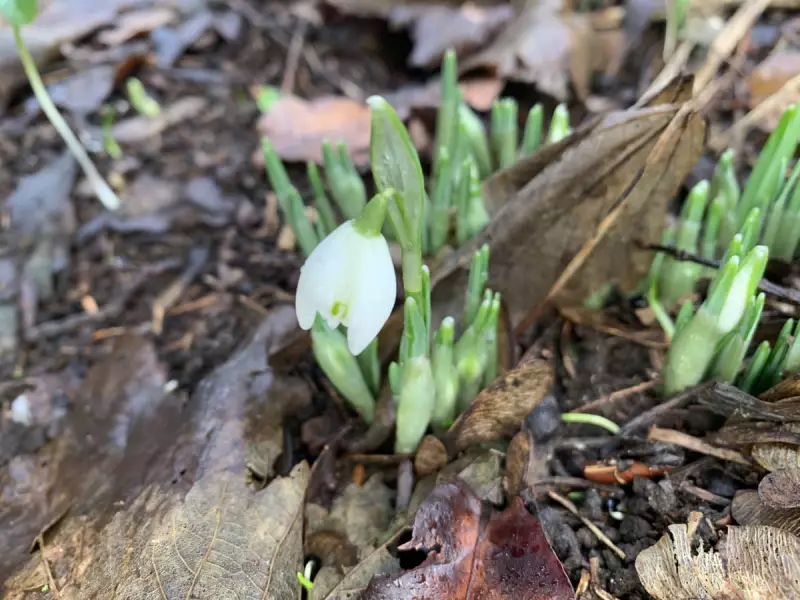
This fascination with white in the murky landscape becomes a quest. Beyond the egret's brilliance, I search for other natural whites that might equal its purity. In the woodland, a clump of snowdrops provides that much-needed spring dopamine hit, their delicate inner tepals trimmed with subtle green accents.
Yet there's a noticeable hesitation in their emergence this year. While they're just beginning to show themselves, their progress seems unusually slow. Typically, by this time, I'd expect the entire patch to be in full, glorious flower, but nature appears to be taking a more measured approach this season.
An Unusual Jackdaw Encounter
On the journey homeward, another white anomaly captures attention. A jackdaw swirling within its flock initially appears to defy physics, seemingly missing several key feathers. Closer observation reveals the truth – these feathers aren't absent but leucistic, lacking pigment due to a genetic mutation.
There's something peculiarly compelling about leucistic birds that creates an odd sense of ownership or perhaps simple recognition. This jackdaw has become "mine" in observation, a distinctive individual I'll always search for among its uniformly coloured companions.
The Domestic Parallel Continues
With more rain forecasted, the domestic cycle continues unabated. Mountains of not-quite-white laundry await attention, a humble human counterpart to nature's brilliant whites. The contrast between our struggling domestic cleanliness and nature's effortless purity remains a persistent theme as winter gradually loosens its grip.
In this Norfolk countryside, the white of egrets and snowdrops serves as beacons against winter's drabness, reminders of nature's resilience and the subtle changes occurring in our ecosystems. Each white flash against the grey backdrop tells a story of adaptation, survival and quiet beauty in the face of seasonal challenges.