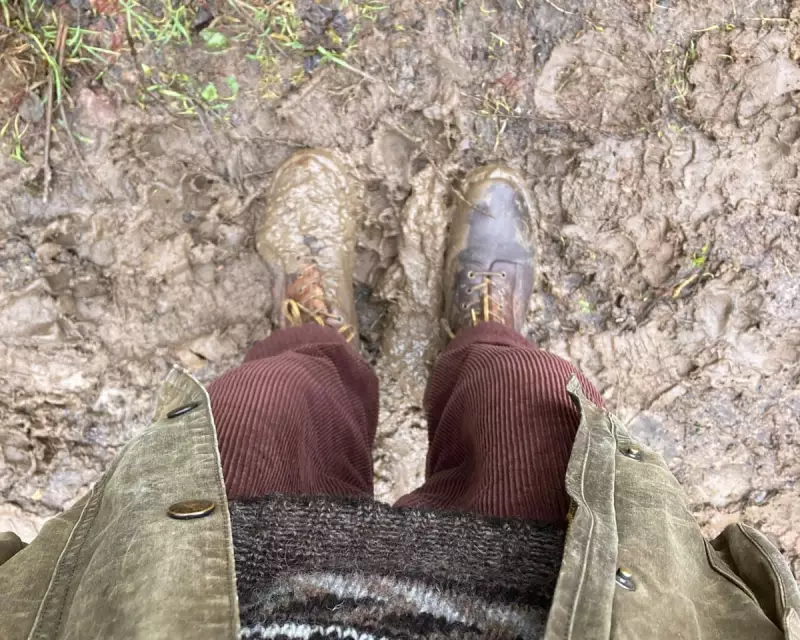
For those who venture into the British countryside at this time of year, there is one universal, inescapable truth. A winter walk, particularly after the relentless rains, means only one thing: mud. Deep, cloying, and determined, it defines every footfall.
The Elemental Pull of Teesdale's Terrain
On a late December morning in Teesdale, within the North Pennines Area of Outstanding Natural Beauty, this reality is immediate. The path, a desire line forged by countless boots, sheep, and perhaps the occasional tractor, is a slick, chocolate-brown ribbon. It pulls at walking boots with a gentle, insistent suction, a reminder of the earth's soft, saturated state.
The air carries the rich, peaty scent of damp soil and decayed vegetation. It is cold and clear, with a weak sun struggling to break through a high veil of cloud. The landscape, stripped bare of summer's finery, reveals its bones: the dark skeletons of hawthorn hedges, the silver-grey of birch trunks, and the faded ochre of dead bracken clinging to the fellsides.
Wildlife Amidst the Mire
Life persists, defiant against the gloom. A charm of goldfinches, like animated jewels, tumbles through the air, their sharp calls piercing the stillness. They settle in the thistle heads, foraging for the last precious seeds. Further along, a pair of ravens cronk loudly to each other, their vast, black shapes soaring on the updrafts above the valley.
At the edge of a sodden field, a heron stands in monumental patience, a statue amidst the mire, waiting for a careless frog or vole. The only constant sound, beneath the bird calls, is the squelch and suck of mud releasing each boot, a rhythmic percussion to the walk.
Mud as a Testament to the Land
This mud is not merely an obstacle; it is a testament. It speaks of a land that is alive, breathing, and full of water. It is the consequence of heavy December rains saturating the ground, with little chance to dry in the low winter sun. Each footprint is a temporary engraving, soon to be reclaimed by the ooze or filled by the next shower.
There is a peculiar, primal satisfaction in navigating it. The careful placement of feet, the search for a firmer tussock of grass, the slight slide and recovery—it demands engagement with the terrain. This is not a sanitised stroll on a paved path; it is a negotiation with the raw elements of a UK winter countryside.
Returning from the walk, legs tired and boots twice their original weight, caked in a thick layer of clay, the experience feels complete. The mud is a badge of honour, a physical connection to the earth. It is the essence of a winter walk in these parts: messy, challenging, and profoundly real. It reminds us that beauty in the North Pennines is not always pretty, but it is always authentic.