
A Global Snapshot of Nature's Wonders and Challenges
This week's collection of wildlife photographs from across the globe presents a powerful narrative of natural spectacle, poignant conservation struggles, and startling animal adaptations to a changing world. From the familiar shores of the UK to the remote deserts of Australia, these images capture moments of fragility and resilience within the animal kingdom.
UK Wildlife Highlights and Setbacks
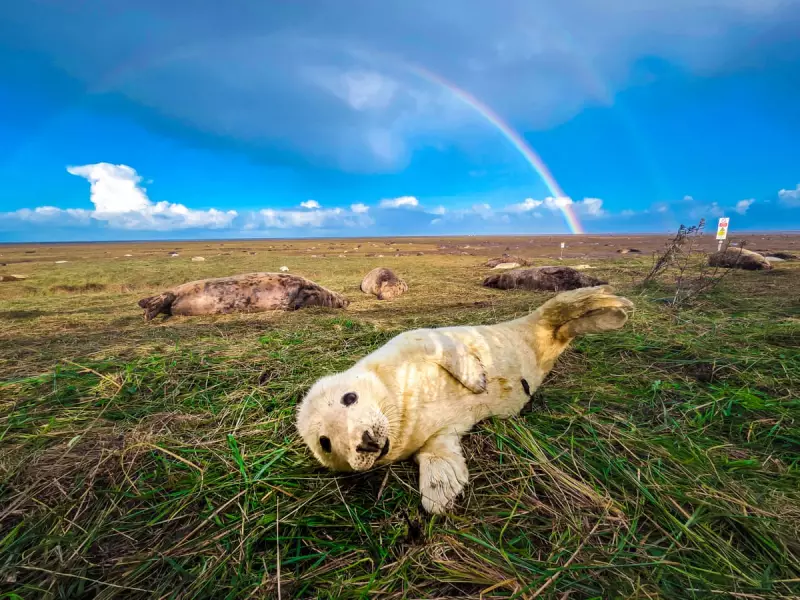
In north Lincolnshire, a captivating annual event continues to draw crowds. Every year in late October, November, and December, grey seals arrive at the Donna Nook National Nature Reserve to give birth to their pups near the sand dunes. This remarkable spectacle attracts visitors from across the United Kingdom, eager to witness the new generation of seals.
Further north, however, the news is more concerning. The National Trust bird count on the Farne Islands, Northumberland, has revealed a 'mixed picture'. The islands' famous puffin population has suffered a significant blow. Breeding pairs have dropped by 23 per cent compared to the previous year's figures, a stark decrease of 50,103 to just 38,500 pairs. This decline is largely attributed to the severe impact of an Avian Influenza outbreak that affected several species two years ago.
Elsewhere in the UK, a red squirrel was photographed hunting for buried nuts in deep snow in Northumberland, and deer were seen navigating the cold undergrowth of London's Richmond Park, illustrating the seasonal challenges faced by British fauna.
Global Conservation Efforts and Dilemmas
In Australia, scientists are embarking on a bold project to address a century-long problem. Many of the country's distinctive small marsupials – such as bilbies, bandicoots and quolls – have been wiped out due to land clearing and feral cats. A team, including scientist Rebecca West, is conducting a pioneering experiment in the Wild Deserts precinct of Sturt National Park, New South Wales. They are investigating whether small marsupials can be trained to survive alongside the very predators that drove them to the brink of extinction.
This issue with feral cats is also a priority in New Zealand, where the government has announced an ambitious goal to eradicate all feral cats by 2050.
A different kind of conservation challenge is unfolding in Niagara Falls, Canada. At the now-closed Marineland, 30 captive beluga whales remain in a state of limbo. The former tourist attraction is reportedly broke and closed to visitors, leaving the whales to circle their decaying pools while the park's owners dispute their future with the government.
Back in the UK, a collaborative project aims to save a much smaller creature: London's hairy ice-aged snail. Led by Citizen Zoo and the Zoological Society of London, conservationists and citizen scientists are conducting surveys to understand the species' distribution and inform crucial conservation action.
Awards and Animal Encounters Around the World
The week also celebrated the winners of several prestigious photography competitions. The Nature inFocus Photography Competition 2025 winner in the conservation category depicted a young leopard feeding on a cow carcass amidst rubbish and traffic in Udaipur, India, a stark image of wildlife coexistence with urban development.
Other notable images included a female peacock mantis shrimp guarding her eggs, a winning entry in the 2025 Oceania photo contest, and an intense close-up of an emu, titled "Stare down", which was the runner-up in the youth category of the BirdLife Australia Photography Awards 2025.
From the infrared capture of a snow leopard in China's Giant Panda National Park to narwhals in the ice breaks of Nunavut, Canada, these photographs highlight the breathtaking diversity of life on Earth, while also underscoring the urgent need to protect it from threats like shipping noise and climate change.



