
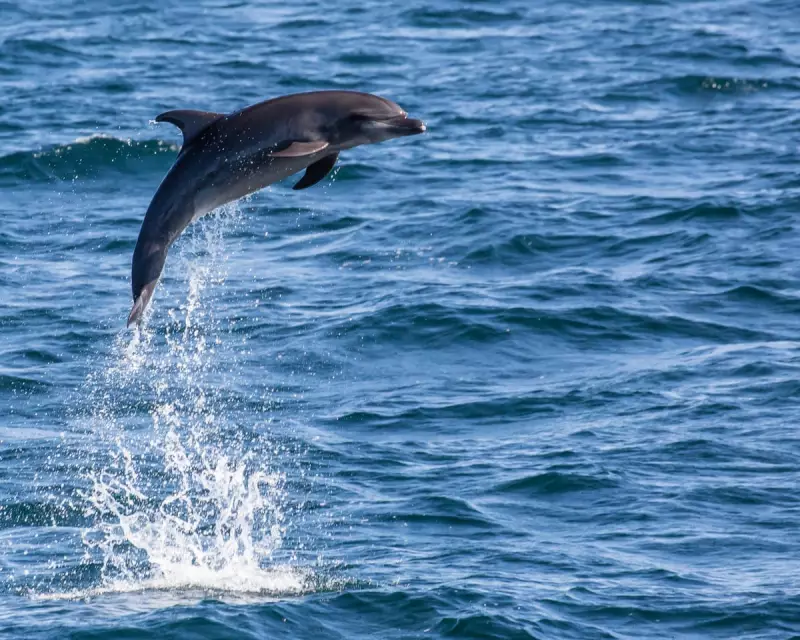
A remarkable bottlenose dolphin captivating Venice with its acrobatic displays has prompted an urgent rescue campaign as concerns mount over its safety in the busy lagoon waters.
The Venetian Visitor Causing Concern
Known affectionately as Mimmo, the dolphin made its latest appearance in the St Mark's basin on Wednesday, thrilling tourists and residents with spectacular leaps near one of Venice's most iconic locations. However, animal welfare activists warn that the creature's fearless nature could prove fatal amid the constant boat traffic.
Manuel Tiffi, a water-taxi driver who first spotted Mimmo on 23 June, told Italian media that the dolphin frequently swims "right in front of the bow" of vessels. While taxi drivers coordinate to report sightings and warn colleagues to exercise caution, Tiffi noted that "the animal seems to have no fear" of the watercraft sharing its environment.
Growing Threats to a Wild Animal
The very popularity that makes Mimmo a local sensation now represents its greatest danger. Some visitors have allegedly thrown balls at the dolphin while others chase it in their boats. More worryingly, entrepreneurs have organised dedicated "selfie tours" specifically to encounter the marine mammal.
Cristina Romieri, who launched the 'Save the dolphin' campaign, emphasised that "this animal is not a tourist attraction, it is a wild animal that needs to be brought to a healthier environment." She highlighted that while the broader lagoon might support dolphin survival, St Mark's basin presents particular risks as the thoroughfare for "water taxis, steamers and everything else."
Expert Monitoring and Conservation Efforts
Specialists from Cert, an emergency response team for stranded marine animals affiliated with the University of Padova, are working alongside coastguard personnel to monitor Mimmo's situation. Their objective remains assisting the dolphin's safe return to open waters away from human activity.
The coastguard has issued official warnings to boat operators, instructing them to maintain a minimum distance of 50 metres if they encounter the animal. This precaution aims to prevent potentially fatal collisions with boat propellers that crisscross the lagoon.
Guido Pietroluongo, a researcher at Cert, explained that bottlenose dolphins represent the most common dolphin species in Italian waters. While they typically travel in pods, recent years have witnessed several solitary dolphins appearing in the Adriatic region.
"They are the classic dolphins that follow fishermen in the northern Adriatic," Pietroluongo stated. "It is likely that these animals, following their prey, detach themselves from the group and find themselves in environments where there is the presence of human activity."
The researcher confirmed that Mimmo remains in the lagoon because it provides ample feeding opportunities, noting that "the parameters of the lagoon are very similar to those of the sea, in addition to the fact that the lagoon is full of fish. So this animal is in the lagoon because it eats, otherwise it would have died after a week."
Pietroluongo stressed that dolphin wandering behaviour falls within normal patterns and that Mimmo demonstrates skilled navigation abilities. His crucial advice to the public echoes that of wildlife experts everywhere: "The important thing is not to disturb it."
He offered a powerful comparison to drive the message home: "If you see a lion in the middle of St Mark's Square, nobody would ever dream of going up to it and giving it a hug. Same with a dolphin – everyone sees it as a friend, but it is a wild animal."



