
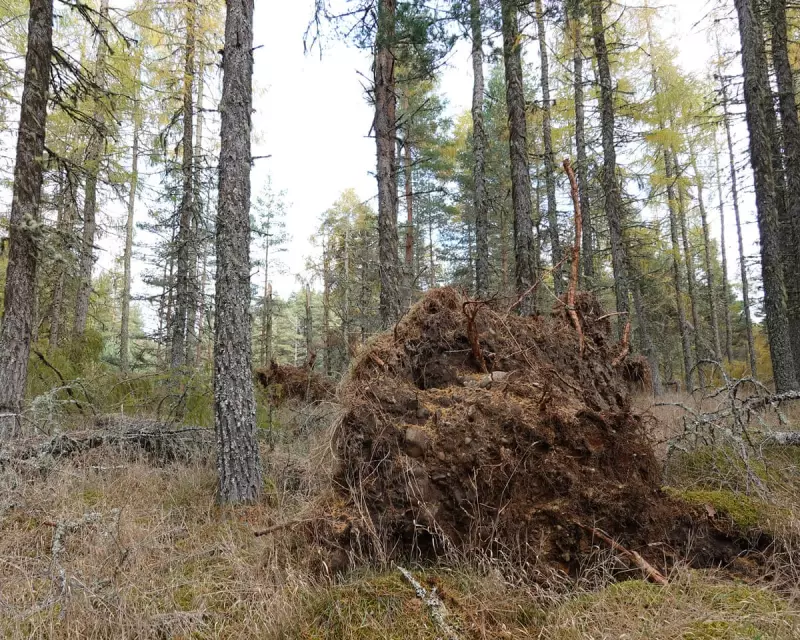
The serene landscape of Abernethy Forest in the Cairngorms has been dramatically transformed by the powerful forces of Storm Amy, creating a new chapter in this ancient woodland's story.
A Changed Landscape
Walking through the forest reveals nature in flux. The summer's vibrant greens have given way to autumn's golden palette, with larches turning green-yellow and bronze while birches warm to yellow, copper and bronze tones. Storm Amy has left its mark clearly visible throughout the woodland, with numerous trees completely windthrown and others resting precariously against their neighbours.
The storm has created unexpected views through newly formed gaps in the canopy, revealing ancient 'granny' pines that previously remained hidden. These gnarled veterans stand as living monuments to an earlier time, contrasting sharply with the more uniform plantation trees that dominate much of this area.
Nature's Domino Effect
A distinct storm path cuts diagonally through the woodland, showing where trees have fallen in domino-like patterns. Each fallen tree points consistently north-east, creating a visible fault line through the forest. The author navigates this transformed landscape, scrambling over moss-covered casualties from previous storms that now form their own micro-habitats.
The ecological impact of these changes is profound and multi-layered. As the newly fallen trees begin their gradual decay process, they will provide essential habitats for beetles, ants, hoverflies and fungi - some of which are quite rare and specifically dependent on deadwood for survival.
New Opportunities for Wildlife
The dramatic root plates of windthrown trees, some standing as tall as a person, create immediate new environments. The exposed grit at their bases provides perfect dust-bathing spots for capercaillies, while the holes they leave may transform into small pools attracting aquatic plants, amphibians and insects including dragonflies and their larvae.
More daylight filtering through the damaged canopy will inevitably change the understorey vegetation. Pioneer species like birch, rowan and juniper may gain new footholds in these sunlit spaces. Meanwhile, the remaining standing trees will benefit from increased space to expand and bulk out their canopies.
During the visit, strengthening winds eventually drowned out the remaining bird calls from coal tits and crested tits, along with the eerie squeaking of tree trunks rubbing against each other. The vulnerability of being among trees during high winds became palpable as upper branches whipped violently and birch leaves showered down like golden rain in the afternoon sun.
This dynamic environment serves as a powerful reminder that even in managed plantations where uniformity might be expected, nature ensures constant change and adaptation through events like Storm Amy.



