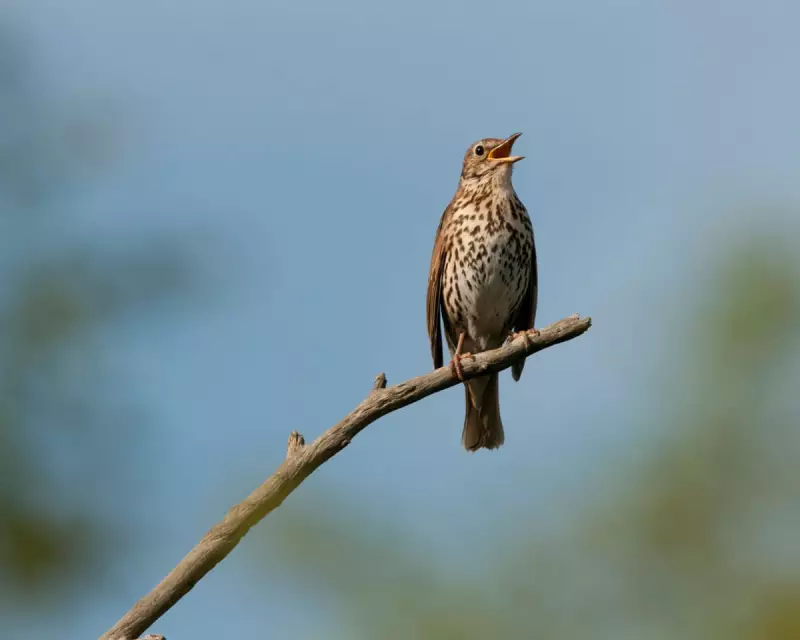
On a damp November morning in the Peak District, when the landscape sits swathed in grey, one sound cuts through the stillness with remarkable clarity. It is the song of the Turdus philomelos, the Song Thrush, delivering a performance that feels nothing short of revolutionary against the winter gloom.
The Persistent Winter Musician
While many bird species have fallen quiet, the Song Thrush chooses this muted season to make its voice heard. The bird does not offer a timid, half-hearted tune. Instead, it projects a powerful, clear-throated declaration from its perch high in an ash tree. Its performance is built on repetition, each distinct musical phrase delivered two, three, or even four times before the bird moves confidently to the next.
This isn't mere background noise. It is a deliberate and structured recital. Observers note the sheer force behind the song, a sound that seems to actively push against the heavy, moist air. The bird's dedication to its craft turns a simple territorial call into a complex and captivating winter concert.
More Than Just a Territorial Claim
It would be easy to dismiss this behaviour as purely functional—a claim on territory or an attempt to attract a mate. Yet, to the human listener standing below, the effect feels profoundly different. In the heart of a season often associated with dormancy and retreat, the thrush’s unwavering melody injects a vibrant, living energy into the world.
The song cuts through the monotony of a colour-drained sky and the skeletal forms of bare trees. Its repetitive, confident phrases create a rhythm that feels both ancient and immediate. This persistent singing in the face of November's bleakness feels like a conscious act of resilience. It is as if the bird is not just marking its space, but actively defying the season's quiet despair.
An Unmistakable Interpretation of Joy
So, what is the core message of this winter song? After witnessing such a performance, the conclusion seems inescapable. This is not a song of mere survival or simple instinct. The thrust of the Song Thrush's song, delivered with such power and consistency from its high branch, can only be interpreted as a profound expression of joy.
It is a celebration of existence that persists when the natural world appears to have shut down. The bird’s melody serves as a powerful reminder that life and vitality do not disappear in winter; they simply find a different, more determined voice. The Song Thrush, in its unwavering November recital, becomes an emblem of pure, unadulterated joy.
Next time you find yourself on a walk during a grey winter day, pause and listen. If you are fortunate enough to hear the repetitive, confident song of the thrush, you will be hearing more than just a bird. You will be hearing a testament to the enduring spirit of the natural world, a small, feathered declaration of happiness against the odds.