On a dark November night in Warwickshire, a routine drive home turned into an encounter with the utterly unexpected for 19-year-old Molly Laird. While navigating country lanes near Oxhill in her pink Mini, her headlights illuminated a peculiar animal sitting in the road. Initially mistaking it for a deer, she soon realised it was hopping, its tail all wrong for a native British species. Her first thought was that she was losing her mind; her second was that no one would believe her. So, she did what any modern witness would do: she filmed it.
The Video Evidence and the Wallaby Hunter
Molly's social media post of the creature quickly identified it as a red-necked wallaby, a smaller cousin of the kangaroo native to Australia. The sighting drew the attention of local wildlife tracker and bushcraft enthusiast Darren Parkin from Stratford-upon-Avon. For years, Parkin has been fascinated by reports of wallabies in the UK, having previously searched for tracks in the Peak District and spent nights in a hammock with thermal imaging equipment near his home, all without success.
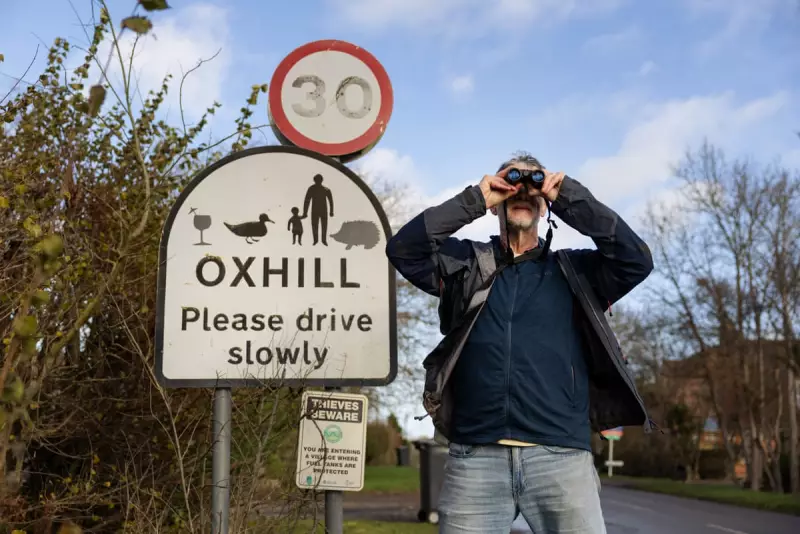
Accompanying Molly and her mother Becky to the site of the sighting, Parkin surveyed the Oxhill terrain, noting it was classic wallaby country with open spaces, copses, and hedgerows for cover. He scoured the area for fur and footprints, even carrying a sketch of a distinctive wallaby print where the tail drags a line between hops. Despite his expertise, the tracks found belonged to deer and badgers, not the elusive marsupial.
Britain's Burgeoning Wallaby Population
The quest led to consultation with ecologist Dr Anthony Caravaggi, an expert in non-native species. He explained that wallabies in the UK are typically escapees from wildlife parks, farm zoos, or private collections, where they are surprisingly popular. "They're really adept at escaping," Caravaggi noted, highlighting their ability to hop, dig, and manipulate objects with their claws.
Once free, they can thrive. The temperate climate of southern England, increasingly mild due to climate change, suits them, and habitats like the scrubland of the Isle of Man—home to around 1,000 descendants of 1960s escapees—resemble parts of Tasmania. Caravaggi's decade-long study, mapping sightings across Britain, suggests a continuous population in southern England with hotspots in the Chilterns and evidence of breeding in Cornwall, based on sightings of joeys (baby wallabies) in pouches.
While in New Zealand they are considered a forestry pest, their impact in the UK is less clear. Caravaggi cautions that they could compete for food with species like muntjac deer and potentially alter local flora and invertebrate populations. However, he stresses that modern wildlife management must consider public opinion, and with wallabies being seen as charismatic and strange, any control measures would require robust evidence of harm and careful public engagement.
The Local Farmer and the Escaped Pet
The Oxhill mystery took a decisive turn when a local farmer stopped to enquire about the search party. He revealed the likely source: his son's escaped male wallaby. The farmer's son, Paul Heritage, initially wary of the journalists and tracker, confirmed he kept three wallabies in a seven-foot-high paddock on his sheep farm. One had escaped about ten days prior, likely digging under the fence.
Paul, passionate about the animals, explained his fascination with their unique reproductive biology, where tiny, underdeveloped joeys climb into the pouch. He was adamant he would not keep them if he thought they were environmentally damaging. While he refused to show the two remaining females, he gave permission to continue searching for the escapee, last seen on the other side of Oxhill village.
The revelation that Molly's 'wild' wallaby was a recent escapee underscored tracker Darren Parkin's point: "It underscores the point that so many people in the countryside have strange creatures on their property and they escape." It echoed the case of 'Colin', a famous white wallaby that roamed near Kenilworth until it was killed in a road accident.
A Successful Sighting and a Recapture
Undeterred, Parkin, the journalist, and a photographer headed to the last known location. Following a stream into a wood along an animal 'desire path', Parkin's expertise finally paid off. There, 30 metres ahead, sat the wallaby under a tree, eating fallen crab apples—a surreal image of Australian wildlife in an English woodland. For Parkin, who had waited years for this moment, it was magical. The wallaby, after a lazy glance, bounded away.
In a final update, the wallaby's adventure came to an end. A team of five later managed to net the animal where it was sighted, bundling it into a pickup truck and returning it to its paddock. For now, the Oxhill wallaby would not be joining Britain's unofficial wild population, but its brief freedom perfectly illustrated how these charismatic marsupials are hopping into the British countryside.