
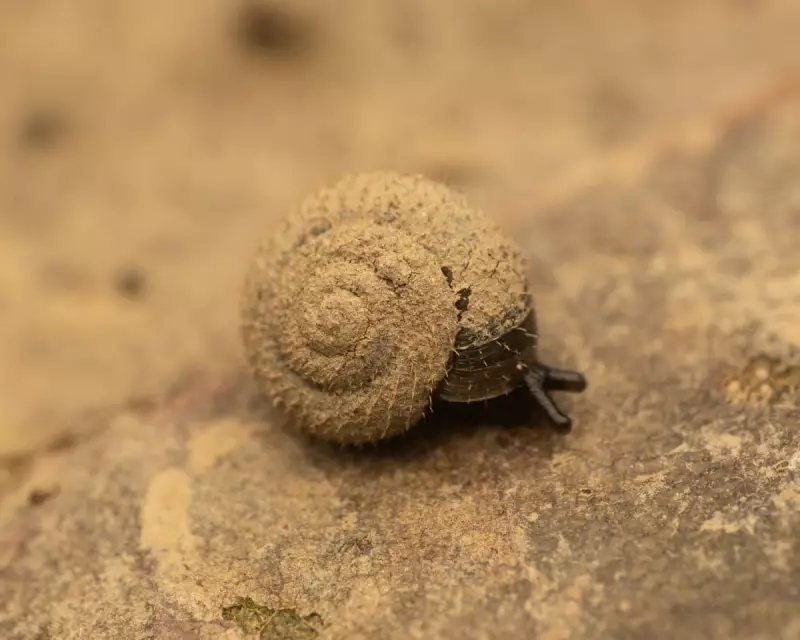
A major citizen science initiative is underway across London, aiming to locate one of Britain's most elusive and endangered molluscs: the German hairy snail.
The Elusive Mollusc
More than 100 volunteers have joined forces with expert conchologists in a coordinated search led by Citizen Zoo and the Zoological Society of London (ZSL). The focal point of their mission is the German hairy snail (Pseudotrichia rubiginosa), a creature no larger than a human fingernail.
This remarkable snail is distinguished by the fine hairs covering its slim, round shell. Scientists believe these hairs help the mollusc shed moisture, ensuring its slime remains sufficiently sticky to cling to riverside vegetation and objects.
Despite only being formally recorded in Britain in 1982, fossil evidence reveals a much longer history. Fossilised remains indicate the species has been present since at least Neolithic times, and possibly since the last ice age when the River Thames was connected to Germany's River Rhine.
The Search Along the Thames
The snail is typically found in fragmented habitats, mostly along the tidal Thames, its islands, and tributaries like the River Lee. Volunteers are meticulously searching debris along the high-tide line, hoping to find the tiny creatures clinging to driftwood and other riverside objects.
The survey team, supported by partners including the London Wildlife Trust, the Conchological Society of Great Britain, and the Port of London Authority, has already confirmed sightings near Kew, Richmond upon Thames, Isleworth Ait, and Cody Dock on the Lower Lee.
Elliot Newton, director of rewilding at Citizen Zoo, described the thrill of discovery: "I was over the moon when I found my first one. They are beautiful creatures if you really pay attention to them and very curious looking, covered by these little straight hairs."
Conservation Implications
The data gathered from these surveys will be crucial for understanding the snail's current status and guiding conservation efforts. Joe Pecorelli, freshwater conservation programme manager at ZSL, emphasised the urgency: "This charming little snail has called our riverbanks home for thousands of years – yet it is sadly now very rare in the UK, potentially restricted to just a few sites along the Thames."
The findings will directly inform strategies such as habitat restoration, pollution management, and the potential translocation of snails between sites to bolster the population. The German hairy snail is a priority species in the London biodiversity action plan and is considered endangered in other European nations, including its namesake Germany.
This project not only aims to secure the future of this unique snail but also helps safeguard London's green spaces for both people and wildlife. As Elliot Newton notes, "The German hairy snail helps spark imagination and open people’s minds to the curious and diverse wildlife that can thrive across Greater London."



