Each visit to this expansive Northumberland beach reveals a landscape sculpted anew by the elements. At Alnmouth, giant boulders appear and vanish with the shifting sands. Piles of bladderwrack seaweed come and go, while the tides alternately deposit and reclaim sea coal, periwinkles, and limpets. The wind and water are ceaseless artists, forever reshaping this dynamic stretch of coast.
A Beach Transformed by a Turbulent Sea
Following a period of rough weather and turbulent seas, the strandline at Alnmouth was littered with the crunchy, sharp-edged shells of razor clams. These molluscs, named for their resemblance to old-fashioned cut-throat razors, burrow using a powerful muscular foot. Their charming Scottish moniker, 'spoots', comes from the jet of water they expel to ease their descent into the sand. Their pale remains stood out starkly against the dark, sea-tumbled nuggets of coal, scattered among broken crab claws and the delicate spiral skeletons of whelks.
The Intricate Marvel of the Sand Mason
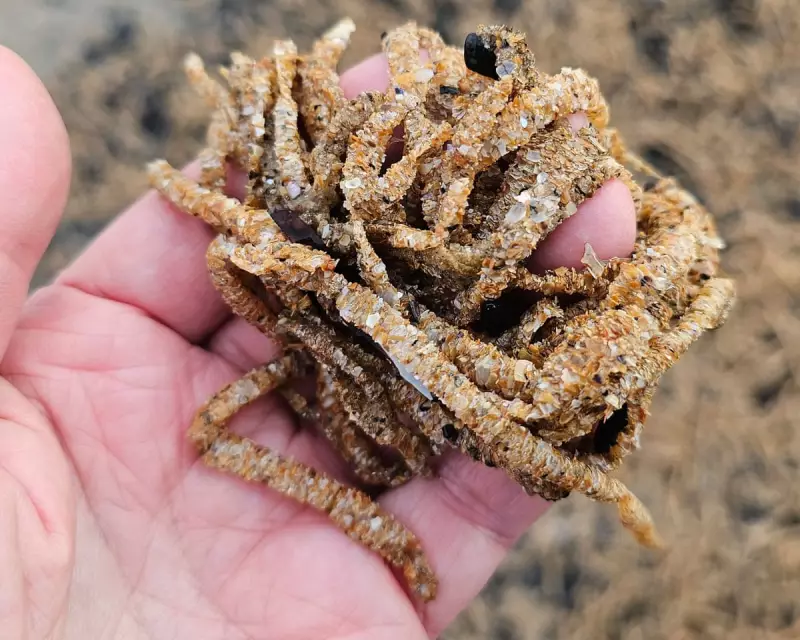
Draped over this coastal detritus were masses of straw-coloured, floppy strands, reminiscent of long catkins or cereal bran sticks. Scooping up a handful reveals an object of astonishing intricate beauty. These are the constructed tubes of the sand mason worm (Lanice conchilega), creatures that typically live buried in the seabed but were washed ashore by the powerful waves.

Each tube is a masterful piece of natural architecture. The worm meticulously cements together a necklace of tiny shell fragments and minuscule grains of rock to form a protective home for its soft body. This technique mirrors that of caddis fly larvae in freshwater streams. The worm itself extends a fringed crown of tentacles from the tube's top, resembling a miniature palm tree, which it uses to filter passing plankton, algae, and decaying matter from the water. This frond is usually the only part visible when the worm is safely nestled in the seabed.
A Landscape Held in the Hand
Holding these tubes is to hold a microcosm of the entire local landscape. Every adhered grain narrates its own geological history. Sparkling quartz, Cheviot granite, honey-coloured feldspar, and dark whinstone are all stacked in a methodical order to create a sturdy dwelling. If sediment builds up around it, the worm can simply extend its tube upwards. However, this clever construction is no match for the specialised beaks of probing wading birds.
Curlews and redshank, with their exquisitely sensitive bills, patrol the shore at low tide. They can deftly tweezer the worm from its tube, enjoying a protein-rich meal while leaving the now-empty sandy casing behind. The discovery of these delicate structures on the beach is a fleeting testament to the hidden life of the shore and the relentless, creative power of the North Sea.
The anthology 'Under the Changing Skies: The Best of the Guardian’s Country Diary, 2018-2024' is published by Guardian Faber and available with a discount via the Guardian Bookshop.