
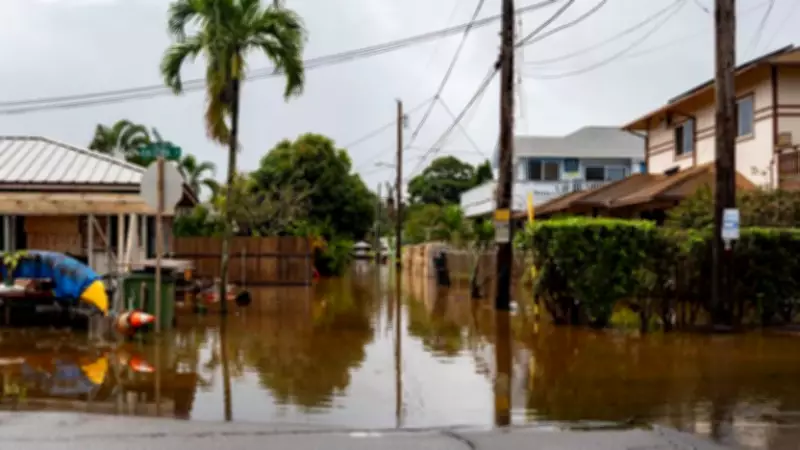
Hawaii Confronts Catastrophic Flooding with Urgent Evacuation Demands
Hawaii is currently grappling with its most severe flooding event in more than two decades, prompting emergency officials to issue dire warnings and evacuation orders for thousands of residents. The situation has escalated to a critical level, with authorities urging people in the hardest-hit regions to "LEAVE NOW" to ensure their safety.
Imminent Dam Failure Threatens Oahu Island
One of the largest dams on Oahu island is at "risk of imminent failure," according to alerts from the island's emergency management team. The 120-year-old Wahiawa dam, a key infrastructure component, is under severe stress due to the relentless rainfall. "It could fail," stated Molly Pierce, a spokesperson for the Oahu Department of Emergency Management, highlighting the precarious condition of the aging structure.
Pierce emphasized that over 4,000 people are directly within the dam's evacuation zone, underscoring the urgency of the situation. The potential collapse of this dam could lead to catastrophic consequences for the surrounding communities.
Evacuation Orders and Infrastructure Collapse
More than 5,500 residents north of Honolulu have been placed under evacuation orders as a result of the historic weather conditions. The Emergency Management team issued a stark warning on social media, noting that the only remaining access road out of the nearby town of Waialua is at "high risk of failure." This critical transportation route is essential for evacuation efforts, and its potential collapse could isolate communities further.
"Residents in the Waialua area are strongly urged to LEAVE NOW. The remaining access road out of Waialua is at high risk of failure if rainfall continues," the team posted, reflecting the gravity of the unfolding crisis.
Compounding Factors and Economic Impact
The flooding crisis has been exacerbated by a previous storm that saturated the ground, making it highly susceptible to further flooding. Hawaii Governor Josh Green projected that the financial toll of the storm could reach $1 billion (approximately £750 million), with widespread damage reported across airports, schools, roads, homes, and a hospital.
"This is going to have a very serious consequence for us as a state," Governor Green remarked, emphasizing the long-term implications of the disaster. In response, state employees, except for emergency workers, have been sent home to allow families to focus on evacuation and safety measures.
Community Response and Environmental Devastation
Oahu's North Shore, renowned for its big-wave surfing, has been transformed into a landscape of muddy floodwaters, with homes and cars being lifted by the rising waters. Despite the chaos, local residents have demonstrated resilience by organizing clean-up parties and rescue attempts. One notable effort involved a man attempting to rescue a neighbor's cat from the muddy floods, a gesture that garnered community support online.
Social media platforms have become hubs for coordination and mutual aid, with residents sharing resources and offering assistance. "Mahalo for your service to the community," one Instagram user commented, reflecting the spirit of solidarity amid the adversity.
Governor Green reiterated the seriousness of the situation, stating, "With catastrophic flash flooding already impacting parts of Oahu, including evacuation orders on the North Shore and the potential for dam-related impacts, we are taking this situation extremely seriously." The combined threats of dam failure, road collapse, and continuous rainfall have created a multifaceted emergency that requires immediate and coordinated action.



