
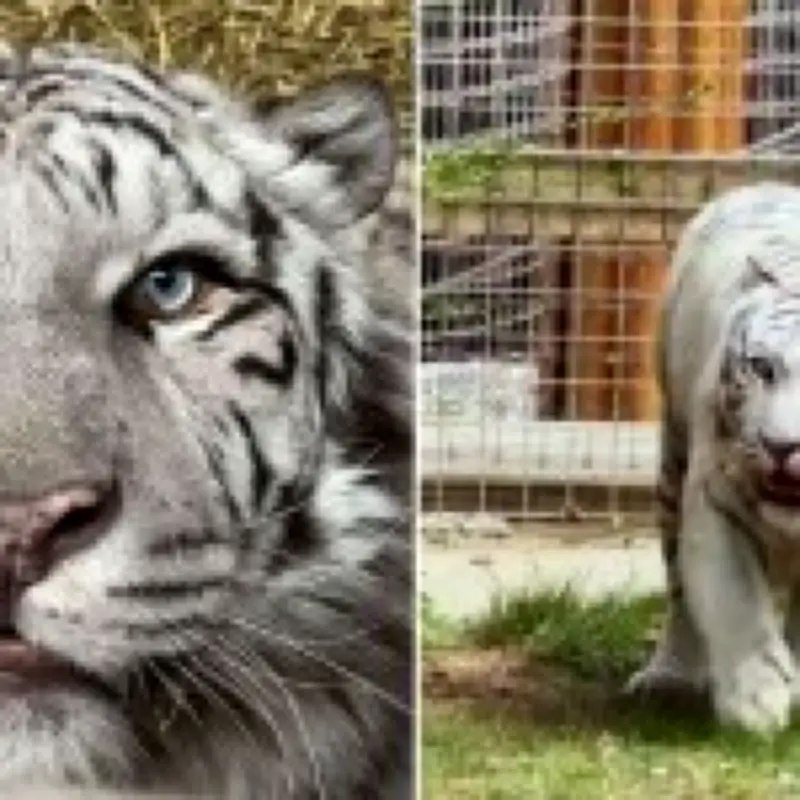
Two years after being found on the brink of death in a war zone, Aleks the white tiger has achieved a major milestone: he has taken his first steps on grass since leaving his Ukrainian home. The big cat, now residing at Lincolnshire Wildlife Park in Friskney, near Boston, arrived in February after an 18-month wait for permission to transport him 1,630 miles from Kharkiv.
Rescue from Kharkiv
Aleks was discovered in a residential yard in Kharkiv by military volunteers, who initially moved him to a wild animal rescue centre. His owner is presumed dead. The park's CEO, Steve Nichols, described his condition upon arrival: 'He was on the verge of death. His skin was badly inflamed and could be seen through bald patches on his back, he couldn’t stand on his hind legs and his digestive system was in disarray.'
The trauma of living through bombing has left Aleks suffering from PTSD. 'Before he came to Lincolnshire Wildlife Park he spent 18 months at a wild animal rescue site in Ukraine – but his facilities weren’t the best as he was kept in a small concrete pen with straw,' Nichols said. 'Aleks was so shellshocked by all of the bombing that every noise sent him into PTSD. He was in such a nervous state and every little noise petrified him – including the wind, birds, and doors opening.'
Health struggles and a record tapeworm
Shortly after arriving, the team discovered Aleks was infested with internal parasites, including what they described as the 'biggest tapeworm they had ever seen'. The parasite was sent to Lincoln University, where experts were fascinated by its scale. Over the past five months, Aleks has been on a steady path to recovery, with his greatest achievement being his first steps on grass.
'He’s been through more than a tiger should have ever gone through but he’s come out of it,' Nichols added. 'He’s still got a long way to go but just seeing the absolute joy in his face when he is playing with the ball or in the waterfall or in his own swimming pool – when he’s doing all of that you realise it’s all worth it.'
Looking ahead
The team estimates Aleks is between five and six years old. In the wild, his lifespan would be around nine to ten years, but in captivity it can increase to sixteen. Over time, the male tiger will be introduced to other tigers at the zoo and matched with a 'friend' – but not for breeding purposes. Supporters can contribute to Aleks's care and the park's work.



