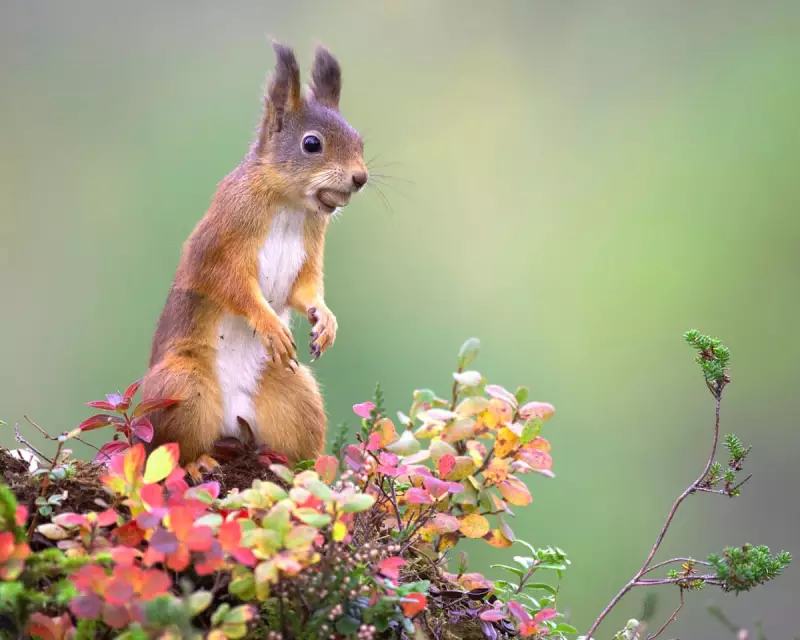
A major rewilding initiative in Scotland has successfully expanded the range of native red squirrels across the Highlands by more than a quarter, marking a significant conservation victory for a species once pushed to the brink of extinction in the UK.
A Decade of Dedicated Reintroductions
The ten-year project, spearheaded by the charity Trees for Life, has involved moving hundreds of red squirrels from healthy populations to carefully selected new sites. The animals were translocated from donor areas in Inverness-shire, Moray, and Strathspey to suitable woodlands in the north and north-west Highlands, regions from which they had been absent since the 1970s.
Becky Priestley, a project manager at Trees for Life, hailed the effort: "This rewilding success story is offering hope for the long-term survival of Scotland’s much-loved red squirrels, and shows how we can make a real and positive difference to our native wildlife."
Before release, each squirrel undergoes a thorough health check, and the charity uses multiple donor sites to ensure strong genetic diversity in the new populations. To help them settle, the squirrels receive supplementary food for several months in their new woodland homes.
Scotland: The UK's Red Squirrel Heartland
This success is crucial for the UK's overall red squirrel population. Scotland is home to roughly 80% of the UK's estimated 200,000 red squirrels, making it the species' national stronghold. Their historical decline was driven by habitat loss, persecution, and, most severely, competition and disease from the invasive non-native grey squirrel, which carries the often-fatal squirrelpox virus.
The reintroduction strategy specifically targets areas in the Highlands that are safe from grey squirrel encroachment. Red squirrels are reluctant to cross large open spaces, so human-assisted moves are essential to re-establish them in these isolated but ideal habitats.
Broader Rewilding Ambitions and Ecological Benefits
The squirrel project forms part of Trees for Life's wider Missing Species programme, which aims to restore other keystone species to the Highland landscape, including lynx, beavers, and a bovine equivalent of the extinct aurochs.
Beyond their cultural value, the returning red squirrels play a vital ecological role. They aid forest regeneration by inadvertently planting new trees when they forget where they have buried their winter stores of nuts and seeds.
Meanwhile, separate scientific progress offers further hope for red squirrels in other parts of the UK. In September, the Animal and Plant Health Agency announced a breakthrough with an oral contraceptive bait that is effective on grey squirrels, potentially providing a new tool to control their numbers.
This success in the Highlands stands in contrast to ongoing challenges elsewhere, such as in England where conservationists warned in 2024 that squirrelpox could wipe out remaining populations, barring isolated strongholds like the Isle of Wight.