Rediscovery of Elusive Bee After Over a Century
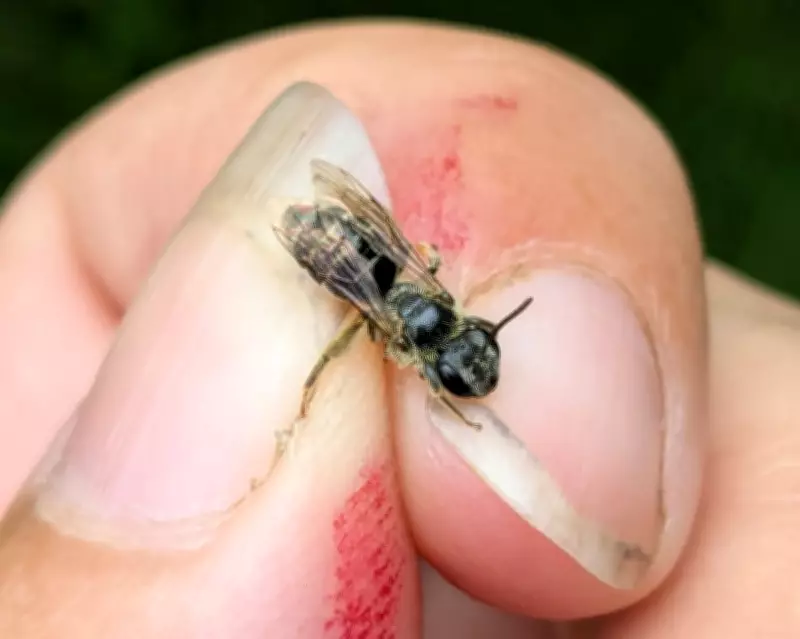
In a remarkable discovery that has excited the scientific community, pollinator ecologist Molly Jacobson has found the chestnut mining bee (Andrena rehni) in New York State after a gap of 119 years. This elusive species, which had not been recorded in southern New York since 1904, was previously thought to be possibly extinct in the state. The discovery occurred in a chestnut orchard in Syracuse, marking the first documented appearance of this bee north of the Hudson Valley.
A Lifelong Passion for Insects
Jacobson's fascination with insects began in childhood, when she would spend summers observing ants and other small creatures. "My mum would always tell me that from the age of one – even before I could walk – I would happily sit outside, watching ants and trying to follow them back to their colony," she recalls. Today, as a pollinator ecologist at the College of Environmental Science and Forestry at the State University of New York, she leads groups to meadows with nets to catch and examine insects, aiming to reignite the childlike curiosity that many adults have lost.
The Moment of Discovery
Last summer, while working weekly in a chestnut orchard in Syracuse, Jacobson decided to survey the trees for the chestnut mining bee, a species never before documented in Central New York. "I was off travelling and had a few minutes spare before packing up to leave. I was just hanging out with my butterfly net – which I always have on me – and I started swinging it around just 10 feet from where I’d spent that summer," she explains. Despite the orchard's location in a densely urbanized area surrounded by highways, Jacobson had a gut feeling the bee would be there. In just 10 minutes, she caught two specimens, a thrilling moment that underscored the importance of persistent observation.

Significance of the Find
The rediscovery of the chestnut mining bee is a significant event for conservation efforts. It demonstrates that restoration projects for chestnut orchards, which were devastated by chestnut blight in the early 1900s, are yielding positive results. These bees are entirely dependent on chestnut trees, and their reappearance suggests a recovery in habitat health. Jacobson notes, "It showed that our efforts to restore chestnut orchards were paying off. These bees, which are totally dependent on them, appear to be coming back."
The Challenge of Bee Identification
In the United States, there are approximately 450 species of mining bees, many of which look nearly identical to the untrained eye. Distinguishing them requires years of expertise and often involves microscopic examination. "Under a microscope they have details on their exoskeleton that differentiate them – for example, patterns of pits and grooves on the thorax, or the texture of their abdomen," Jacobson explains. Key identifiers include the placement, texture, color, and length of hair, and in some cases, genitalia.
The Role of Citizen Science
Jacobson emphasizes the critical importance of citizen science in conservation. "I can’t emphasise enough the importance of citizen science; we need people to look in their back yards as that’s the place most scientists can’t search," she states. The growing interest in tracking rare bees has led to increased efforts to search for lost species, many of which have disappeared from museum records without clear evidence of extinction. This discovery has inspired residents in upstate New York to survey for the bee, highlighting how urban areas can harbor unexpected biodiversity.
A Broader Perspective on Conservation
Jacobson advocates for a shift in how we perceive natural habitats. "I am of the belief that every place has something interesting; it’s just a question of whether we spend the time looking right under our noses," she says. She challenges the assumption that only pristine environments hold valuable species, pointing out that cities and overlooked spaces can be rich with life. By fostering empathy through close observation, she hopes to inspire more people to protect insects and other small creatures essential to our ecosystem.

Looking Ahead
The rediscovery of the chestnut mining bee serves as a powerful reminder of the mysteries still surrounding wild bees. "The lives of most wild bees are a mystery to us. We don’t know where they nest, or what their nests look like. The less we know, the less we can do to protect them," Jacobson notes. Her work continues to blend scientific inquiry with a deep appreciation for the natural world, aiming to cultivate care and curiosity that can drive effective conservation efforts for generations to come.