A millennium-old dingo burial site discovered in western New South Wales, including evidence of a unique feeding ritual, has shed new light on the longstanding relationship between the canines and First Nations people.
Discovery of the Burial Site
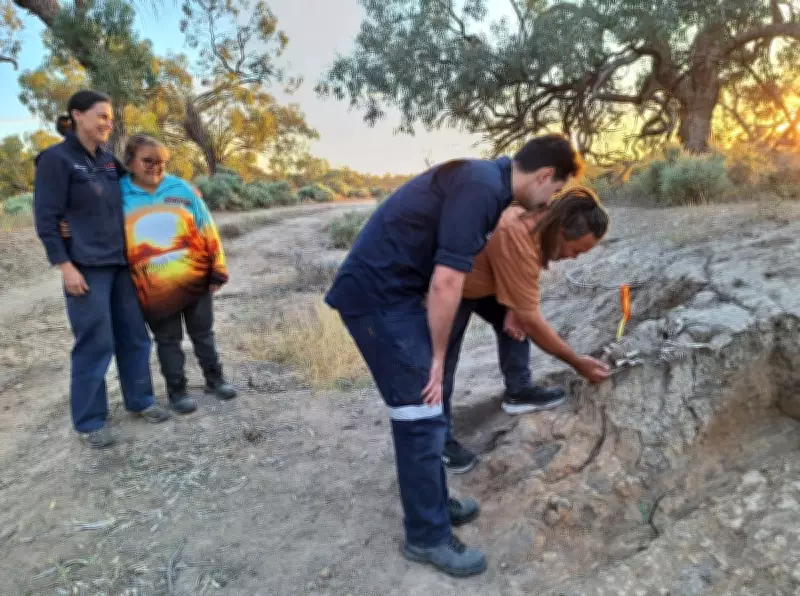
The dingo was buried along the Baaka, or Darling River, in Kinchega National Park near the Menindee Lakes. Radiocarbon dating suggests the animal was buried between 916 and 963 years ago in a midden, which the Barkindji people tended to by adding river mussel shells for about 500 years afterwards.
Scientists say the practice of feeding the site with shells had never been observed archaeologically anywhere in the world before. Barkindji Elders propose that ongoing additions to the Kinchega midden may have formed a feeding ritual maintained over multiple generations, according to a study published in Australian Archaeology.

Archaeological Significance
Dr Amy Way, the project's lead archaeologist from the Australian Museum and the University of Sydney, noted that while Aboriginal dingo burial sites had previously been discovered, they had not been analyzed in context. She explained that the research showed the midden was created at the time of burial, linking the two processes as a way of interring the dingo into the landscape.
The dingo, a male estimated to be between four and seven years old, had broken ribs and a broken leg, typical injuries from hunting with kangaroos. Way emphasized that the animal survived these injuries and was nursed back to health, indicating the community's deep care for the animal.
Cultural Context
The burial was first identified in 2000 by Barkindji elder Uncle Badger Bates and a National Parks and Wildlife Service archaeologist after roadworks exposed the site. A salvage excavation in September 2023 recovered the dingo's remains after its skull was lost to floods in 2021.
David Doyle, a Barkindji custodian involved in the excavation, described the continuous addition to the shell midden as a way of keeping connection and respecting the ancestors. He noted that dingoes were companion animals until colonization, but now none remain on country due to hunting to regional extinction. Some Barkindji people still carry dingo as their totem, emphasizing its ongoing significance.
Broader Implications
Though Indigenous dingo burial sites have been documented before, this research, funded by the Australian Museum Foundation, shows the practice extended further north and west along the Baaka system than previously known.
Dr Kylie Cairns, a conservation biologist at the University of New South Wales not involved in the research, said the excavation demonstrates how some dingoes were important to First Nations people as companions. She noted that most dingoes live in the wild and are ecologically and culturally significant, but current legislation and management often fail to reflect this value. She called for a discussion on how to manage dingoes to protect livestock while respecting their cultural and ecological importance.
Her 2023 research showed more than half of Australia's dingoes are genetically pure, and a separate study published this week identified eight genetically distinct dingo populations.