
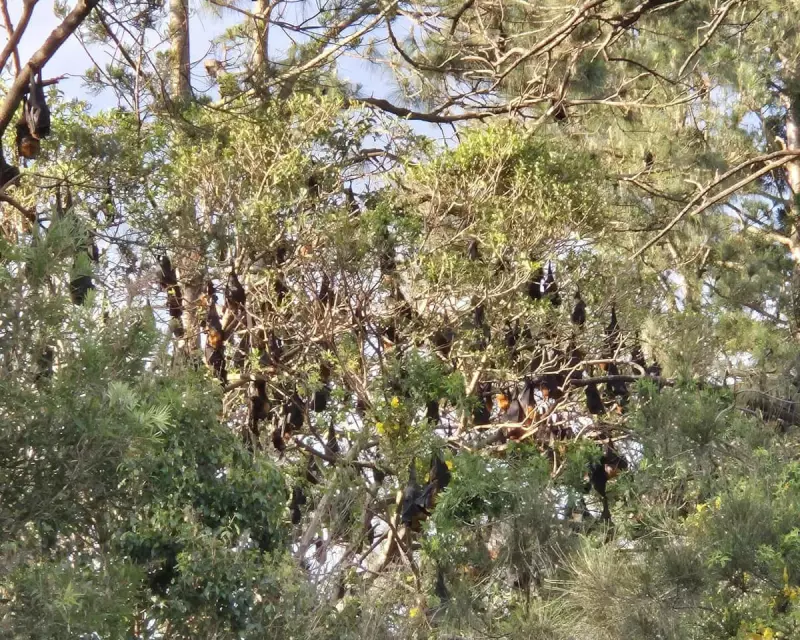
Residents' Nightmare: Living Alongside Protected Bats
A Queensland council is taking unprecedented steps to address growing complaints from residents plagued by what they describe as "loud and smelly" flying foxes. Gympie Regional Council, located approximately 170km north of Brisbane in south-east Queensland, has endorsed a long-term management plan that includes a potential property buy-back scheme for the most affected households.
The situation has become so severe that council officials are considering purchasing 20 or more properties near Commissioners Gully, home to what's recognised as a nationally significant roost of protected flying foxes.
Daily Struggles for Local Residents
Kyla Reen, who has lived just metres from the gully for five years, describes the constant challenges of coexisting with the bat colony. "The noise is horrendous and it doesn't stop," she revealed, detailing how black dust from flying fox droppings frequently infiltrates her home through flyscreens.
The 44-year-old resident has adopted drastic measures to cope with the situation. "I keep my bedroom windows shut to prevent the dust covering my clothes and furniture," Reen explained. "I do try to stay inside a fair bit, because even when you go out on to the verandas, it's just in the air, and you can see it on the railings."
Even basic household tasks have become problematic. "I can't hang my washing out outside. So, I basically just dry it inside with the fan that I've got in my lounge room area," she added, noting that the problem has intensified recently as the bats no longer leave during winter months.
Council Seeks Government Support for Solution
Gympie Regional Council Mayor Glen Hartwig told Guardian Australia that the proposed buy-back plan would involve "20 or more" affected properties, but emphasised that the scheme is entirely dependent on securing state and federal government funding.
Hartwig expressed frustration with current limitations, stating that council's attempts to manage the bats were "limited by legislation" protecting the species. "The bottom line is that they've [the state and federal governments] created a problem," Hartwig asserted. "They should fund a solution."
The council's management plan includes multiple approaches:
- Vegetation management around affected areas
- Potential dispersal of bat colonies
- Advocacy for property buy-back scheme funding
- Requests for government financial support
Ecological Perspective on Urban Bat Colonies
Adam McKeown, a senior ecologist with CSIRO, explained that the situation in Gympie reflects a broader trend of bats increasingly roosting in urban areas over the past 20 to 30 years.
"The reality is, they do smell, they do poo a lot in the camps. They do make a lot of noise at four o'clock in the morning," McKeown acknowledged. "So yes, if you've got a large camp near you, then you generally will have some problems with it."
While the exact reasons driving bats toward urban areas remain unclear, McKeown suggested several possible factors: the lack of predators, reliable water supplies, and easier navigation due to urban lighting. He noted that in regional centres like Gympie, the bats typically forage in native forests but choose to roost in urban locations.
McKeown, who has two decades of experience working with flying foxes, described managing urban colonies as "a very difficult problem" for local councils. "You can disperse the camps that are in an urban area, but the animals actually want to be in that urban area," he explained.
Legal Protection Complicates Management
The flying foxes residing in Commissioners Gully enjoy significant legal protection under both Queensland's Nature Conservation Act and the federal Environment Protection and Biodiversity Conservation Act. This protected status severely limits what actions the council can take to manage the colony.
Hartwig confirmed that discussions with the state government have begun. "We've had a very productive conversation with them, and we are discussing changes to legislation that might assist," he said.
However, government responses have been cautious. A spokesperson for the federal environment department wouldn't commit to funding a buy-back scheme but mentioned existing guidelines to assist local governments dealing with flying fox impacts.
Similarly, a Queensland environment department spokesperson declined to comment specifically on the proposed buy-back scheme, instead highlighting the government's commitment to supporting councils through existing local government grant programs for managing flying fox roosts.
The situation in Gympie highlights the growing challenge of balancing wildlife conservation with residential quality of life, particularly as protected species increasingly adapt to urban environments. The council's proposal represents one of the most radical solutions attempted to date in addressing human-wildlife conflict in Australian urban areas.



