
The Unexpected Rewards of Winter Moth-Trapping
While many assume insect watching ends with summer, a dedicated naturalist in Northumberland has proven otherwise. Despite forecasts predicting rain, Susie White set her moth trap in Allendale, trusting that the relatively mild 10C temperature would encourage late-season activity.
The remarkable waterproofing of moth wings makes rain less of a deterrent than one might think. Their wings function like miniature sloping roofs, with microscopic scales overlapping like tiles to create a super-hydrophobic surface that causes water droplets to roll away effortlessly. While wind poses challenges, rain proves surprisingly manageable for these resilient insects.
Discovering November's Moth Diversity
The initial inspection around the trap revealed an exciting find: the first December moth of the season, despite its name suggesting later emergence. The male Poecilocampa populi displayed distinctive features including comb-shaped antennae designed to detect female pheromones from considerable distances.
This handsome species boasts excellent cold weather insulation with its furry, Cossack hat-like head and wings coloured in charcoal grey and russet with cream cross lines. White's garden, situated near woodland with broad-leaved trees that serve as larval food sources, has consistently recorded December moths each winter since she began submitting data to the Garden Moth Scheme.
The Moth Trap Mechanism and Findings
The trapping setup consists of a large black tub positioned beneath a bright light source. Moths drawn to the illumination are funnelled downward into textured egg boxes that provide shelter. The careful examination of these containers reveals the quiet drama of winter moth-trapping, markedly different from the bustling activity of summer months.
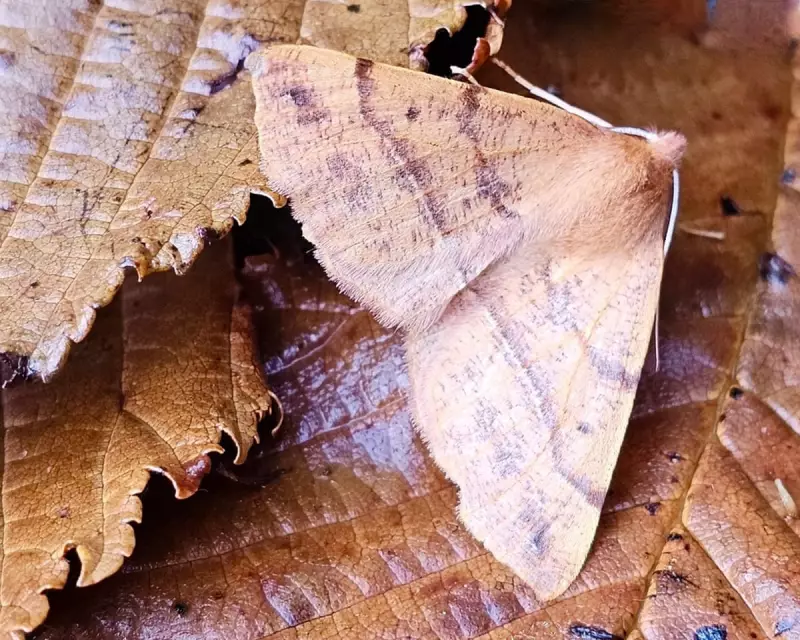
This November session yielded several expected species for the season: red-green carpet, small wainscot, chestnut and winter moths, all demonstrating remarkable camouflage abilities adapted to various backgrounds in the landscape. Using a wooden coffee stick, White carefully transferred a feathered thorn moth to fallen leaves for photography, where its warm tones blended seamlessly with autumn's palette.
The Angle Shades: A Masterpiece of Natural Design
Among the day's captures, one species stood out as particularly special: the angle shades moth, a complex arrangement of triangles and scalloped edges that creates a visual trick mimicking the crisp patterns of dry leaves. White recalls her first encounter with this species in an old walled garden where she worked, describing being "blown away by its elaborate design" and crediting that moment as the beginning of her long fascination with moths.
This winter moth-trapping session demonstrates that nature observation needn't cease with the arrival of colder months. The practice offers a more muted but equally rewarding experience compared to summer's abundance, proving that patient observation in November can reveal some of nature's most sophisticated designs and adaptations.
For those inspired to learn more about supporting these remarkable insects, White's upcoming book "The Gardener and the Moth: Planting for Moths and Butterflies" will be published next week by Saraband, while "Under the Changing Skies: The Best of the Guardian's Country Diary, 2018-2024" remains available through Guardian Faber.



