Norfolk Broads: A Timeless Fenland Journey Through Storm and Serenity
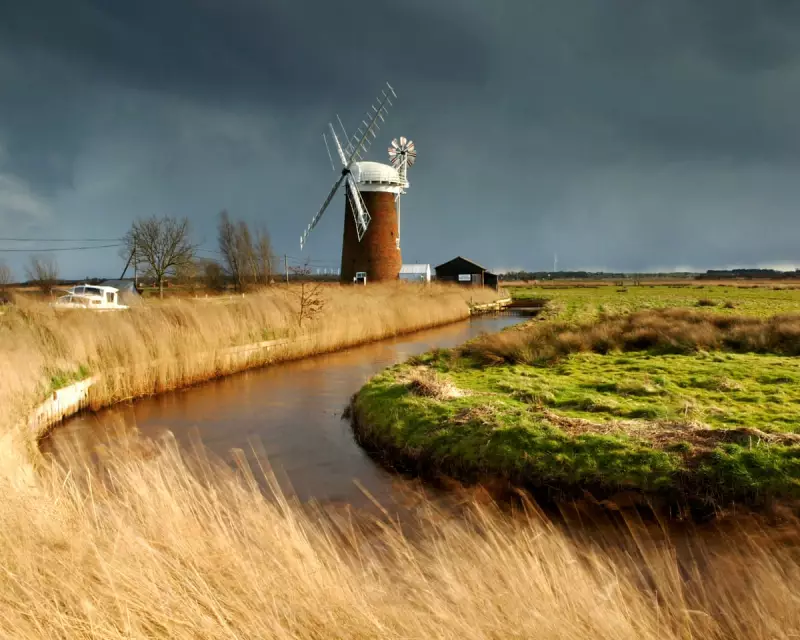
The iconic Horsey windpump stands defiant against a tempestuous sky on the Norfolk Broads, a stark reminder of nature's raw power in this unique landscape. This image, captured by Chris Herring, symbolises the enduring wildness of a region that has resisted centuries of reclamation efforts.
The Watery Jungles of Norfolk's Past
While the expansive marsh levels flanking the Yare estuary near Great Yarmouth were successfully embanked, drained, and converted to grazing land over two centuries ago, the terrain just to the north presents a dramatically different picture. Here, the land remains a captivating mosaic of reed grounds, fens, and broads, with only isolated pockets of fertile farmland carved from what were once extensive watery jungles.
This northern area has periodically been inundated by the sea breaching through the protective sandhills, leaving its waters with a noticeable salinity. This distinctive characteristic supports a specialised community of aquatic and riparian plants and animals, creating an ecosystem found nowhere else in the region.
A Living Relic of the Lost Fenlands
More than any other part of Norfolk, this landscape preserves the authentic character of the long-vanished Fenlands. Vast expanses of sedge-ground provide crucial habitat, harbouring higher densities of rare species like the elusive bittern and the striking swallowtail butterfly per acre than other sections of the Broads district.
During the summer months, the area transforms into a paradise for small reed-dwelling birds. It is here that observers are most likely to witness the majestic flight of harriers, as they soar and flap gracefully over the seemingly endless sedgy wastes.
The Seasonal Transformation
Winter brings a starkly different atmosphere, casting the Broads in a wild and forbidding light. Yet, even in the cold, the scene is not without beauty. When sunlight pierces the pervasive mists, it illuminates the gold and russet hues of the standing reeds and sedge. This season also sees the area become a vital haunt for numerous wildfowl species, ensuring the landscape is never truly desolate, but teeming with life adapted to the harsh conditions.
A Personal Expedition Through the Swamps
On a recent, cold, and grey day, a journey across miles of muddy tracks and a passage by marsh boat through the swamps offered an intimate encounter with this environment. The air was filled with the circling forms of lapwings and golden plover, while mallard ducks erupted from the plashes with a sudden rush of wings.
On such days, smaller avian residents like the bearded tit and reed bunting tend to remain under cover, adding to the sense of a landscape holding its breath. The constant sound of the sea carried on the wind served as a potent reminder of the area's vulnerability. It evoked memories of the great inundation of 1938, when the sea swept across this very waste on a wild winter's night—a force of nature that could, and has, reclaimed its dominion.
This enduring landscape, caught between storm and serenity, continues to be a powerful testament to Britain's natural heritage and the fragile, watery worlds that have shaped its history.