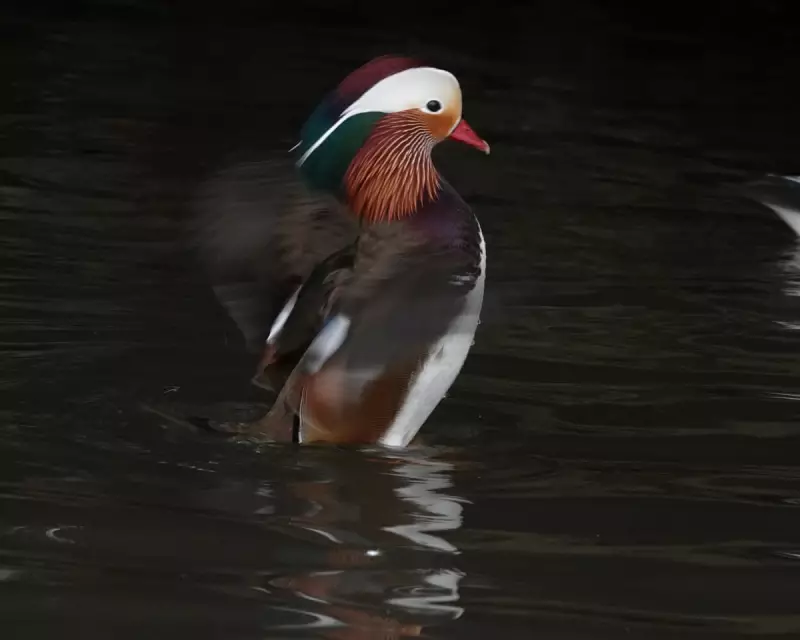
The vibrant flash of a Mandarin duck, once a rare spectacle in the British countryside, is becoming a more frequent and celebrated sight. This colourful visitor, famed for its dazzling plumage, is staging a remarkable comeback in the nation's wetlands, offering a glimmer of hope for broader biodiversity efforts.
A Splash of Colour in British Wetlands
Known scientifically as Aix galericulata, the Mandarin duck is arguably one of the planet's most visually stunning waterfowl. The males are a living kaleidoscope, boasting a palette of iridescent greens, blues, and oranges, punctuated by dramatic sail-like feathers on their backs. Females, while more subdued in their grey and brown tones, possess an elegant beauty of their own. Historically native to East Asia, these birds have found a welcoming second home in the UK, particularly in pockets of southern England, following introductions to private estates.
Their presence here is more than just an aesthetic delight; it's a significant ecological indicator. Mandarin ducks are cavity nesters, relying on old trees near water bodies to raise their young. Their successful breeding and population growth in areas like Surrey, Berkshire, and Gloucestershire signal healthy, mature woodland habitats adjacent to clean waterways. Conservationists view their expanding numbers as a positive sign for the management of these precious ecosystems.
Conservation Efforts Behind the Comeback
The duck's resurgence isn't purely accidental. It is the direct result of dedicated habitat protection and thoughtful conservation strategies. Key organisations, including the Royal Society for the Protection of Birds (RSPB) and local wildlife trusts, have played a pivotal role. Their work involves safeguarding ancient woodlands, maintaining the health of ponds and lakes, and sometimes even installing specially designed nest boxes to supplement natural tree cavities.
This hands-on approach has provided the secure environment Mandarin ducks need to thrive. The removal of invasive plant species and careful management of water quality have further enhanced these habitats, benefiting not only the ducks but a whole host of other native species. The story of the Mandarin duck in the UK is a powerful testament to what targeted, habitat-focused conservation can achieve.
A Symbol for the Future of UK Wildlife
The increasing sightings of Mandarin ducks are doing more than just pleasing birdwatchers; they are serving as an inspirational flagship for UK biodiversity. Their dramatic appearance captures public imagination in a way few other species can, drawing attention to the importance of wetland and woodland conservation. This 'wow factor' is invaluable for engaging communities and fostering a deeper connection with local natural spaces.
However, conservationists are quick to frame this success within a broader context. While celebrating the Mandarin duck, they emphasise the ongoing plight of many native UK species facing habitat loss and climate pressures. The hope is that the enthusiasm generated by this colourful immigrant can be channelled into support for protecting all wildlife. The duck's journey from ornamental collection to established wild resident underscores a crucial message: with sustained effort and suitable habitat, species can recover and flourish, enriching the British landscape for generations to come.