
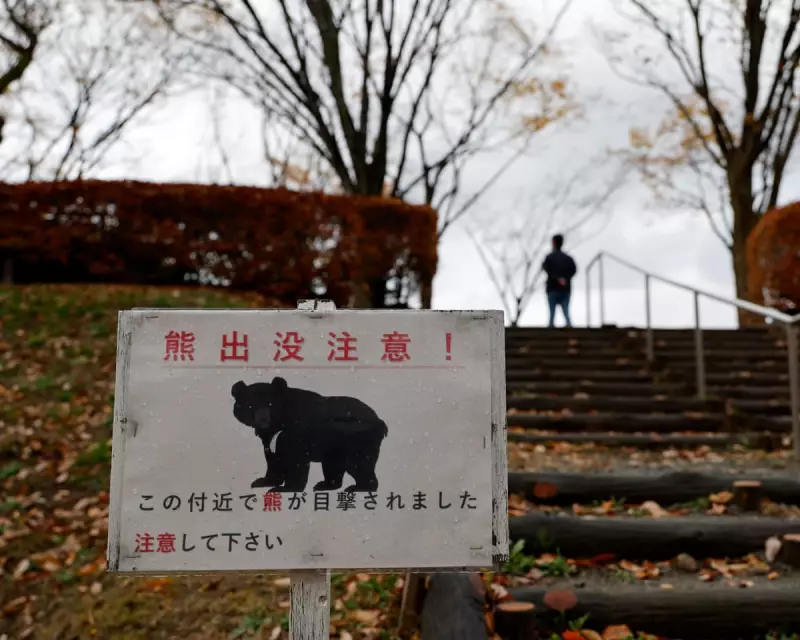
A security guard in Japan has survived a terrifying encounter after fighting off a bear that attacked him inside a public toilet. The incident is the latest in an unprecedented wave of bear attacks across the country, which has already resulted in a record number of fatalities this year.
Early Morning Toilet Encounter
The attack occurred in the early hours of Friday in Gunma prefecture, north of Tokyo. The victim, a 69-year-old security guard, was about to leave the public convenience when he noticed the animal, estimated to be between one and 1.5 metres long, peering inside.
According to reports from Kyodo news agency and broadcaster NHK, the man fell backwards as the bear approached. In a desperate act of self-defence, he fought the animal off by kicking his legs repeatedly until it fled the scene.
The man sustained minor injuries to his right leg but was able to run to a nearby police box to raise the alarm. The confrontation took place close to a railway station that had closed for the night.
Record-Breaking Surge in Attacks
This alarming incident is part of a much larger and worrying trend. Japan's environment ministry has confirmed that a record 13 people have died in bear attacks since the start of April.
The total number of attacks in the same period has reached 197, another grim record. Experts predict the number for the current financial year, starting April 2024, will almost certainly surpass the previous annual record of 219 incidents.
The northern prefecture of Akita has been the hardest hit, followed by Iwate and Fukushima in the country's north-east.
Government Response and Contributing Factors
Authorities are scrambling to address the crisis. The national government has deployed members of the self-defence forces to Akita to assist local hunters with trapping and disposing of bears.
Furthermore, armed police officers have been granted permission to shoot the animals on sight, a measure prompted by a shortage of licensed hunters in affected regions.
Wildlife experts point to a clear cause for the surge in urban bear encounters: a poor natural harvest. Failed crops of acorns and beechnuts in the bears' native habitats are driving the hungry animals into residential and built-up areas in search of food.
In a bizarre twist that has added to public anxiety, a local government in north-east Japan was forced to apologise this week after it was discovered that an image it posted on social media to promote awareness of bear attacks was AI-generated. The Onagawa municipal government deleted the post from its X account after the creator of the fake image, which showed a huge bear on a road at night, contacted officials to clarify its origin.



