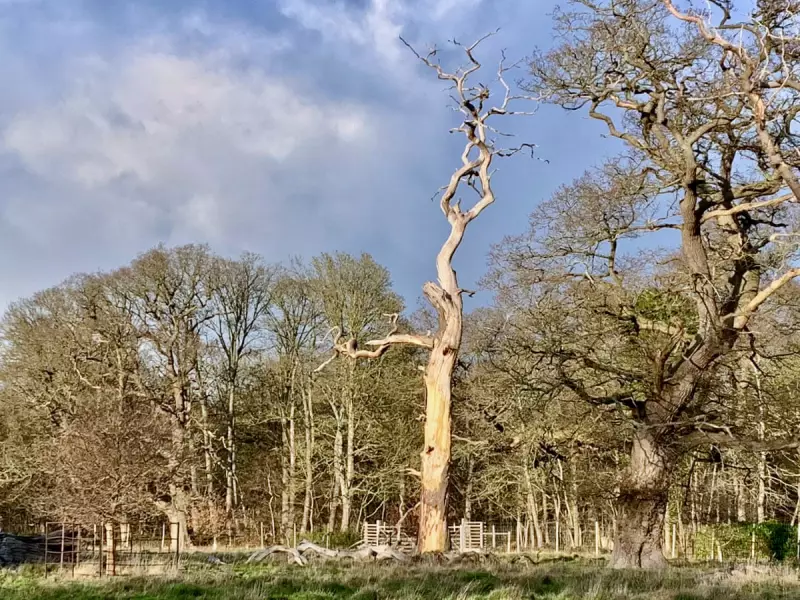
In the heart of the UK countryside, a remarkable natural phenomenon has captured the attention of environmentalists and nature enthusiasts alike. A Kelo tree, standing tall and proud, defies conventional expectations by remaining upright despite being dead. This extraordinary specimen serves as a powerful symbol of resilience and ecological significance, as highlighted in a recent country diary entry that delves into its unique story.
The Defiant Kelo: A Testament to Nature's Strength
The Kelo tree, a species known for its hardy characteristics, has become a focal point in discussions about woodland ecosystems. Unlike many trees that succumb to decay and collapse after death, this particular Kelo has refused to fall, maintaining its structural integrity for an extended period. This defiance against natural decomposition processes underscores the tree's inherent strength and the complex biological factors at play.
Ecological Importance of Standing Deadwood
Standing dead trees, such as this Kelo, play a crucial role in forest habitats. They provide essential resources for a diverse array of wildlife, including insects, birds, and fungi. By remaining upright, the Kelo offers nesting sites, food sources, and shelter, thereby supporting biodiversity in the surrounding area. This ecological function highlights the importance of preserving deadwood in natural settings, as it contributes to a healthy and balanced ecosystem.

Cultural and Symbolic Resonance
Beyond its ecological value, the Kelo tree holds cultural and symbolic significance. It stands as a monument to endurance, reminding observers of nature's ability to persist against the odds. In a world where environmental challenges are increasingly pressing, the tree's steadfast presence offers a poignant metaphor for resilience and adaptation. The country diary entry that brought this tree to light emphasises these themes, encouraging a deeper appreciation for such natural wonders.
Conservation Implications and Future Prospects
The discovery of this Kelo tree underscores the need for continued conservation efforts in the UK countryside. Protecting standing deadwood is vital for maintaining ecological networks and supporting species that depend on these habitats. Environmental campaigns and local initiatives can draw inspiration from this example to advocate for policies that safeguard similar natural features. By recognising the value of dead trees, we can foster a more holistic approach to woodland management and biodiversity preservation.
In summary, the Kelo tree's dead but defiant stance serves as a compelling reminder of nature's resilience and ecological complexity. Its story, as shared in the country diary, invites us to reflect on the intricate relationships within our natural world and the importance of conserving such unique elements for future generations.