
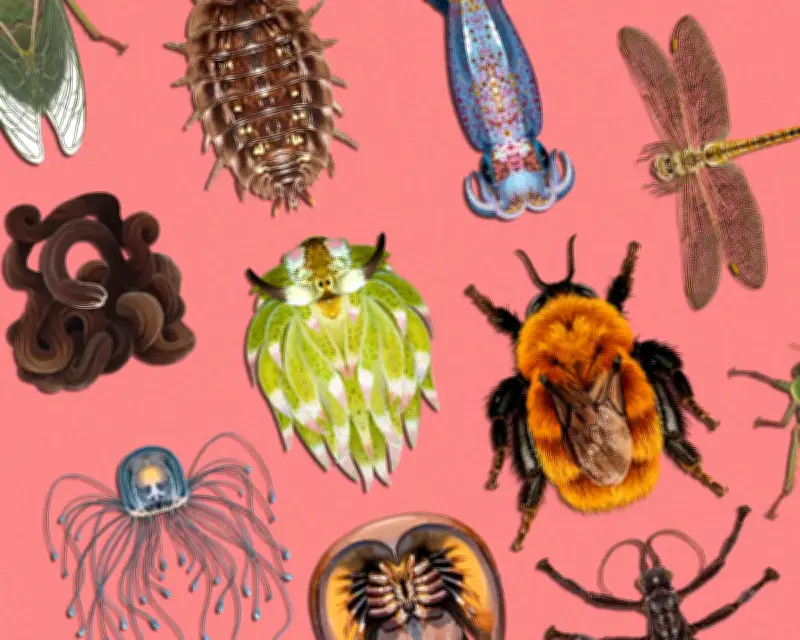
The 2026 Invertebrate of the Year contest is now open for public voting, spotlighting ten remarkable species that often go unnoticed despite their critical roles in ecosystems worldwide. This is the third annual competition organized by The Guardian, which aims to draw attention to the more than 1.3 million spineless animal species that form the foundation of life on Earth.
While vertebrates like pandas, lions, and whales typically capture public admiration, invertebrates perform essential functions such as pollination, decomposition, and serving as food sources for countless other animals. The shortlist includes a diverse array of creatures, from the common woodlouse to the neon flying squid, each with unique adaptations and ecological significance.
The 2026 Shortlist: Ten Remarkable Invertebrates
The contenders were selected from thousands of reader nominations. They include the common woodlouse, a detritivore with unexpected superpowers; the immortal jellyfish, which can revert to its juvenile form and grow anew; and the leaf sheep, a solar-powered sea slug known for its irresistible cuteness. The greengrocer cicada can produce sounds exceeding 120 decibels, nearly reaching the human pain threshold.
Also on the list are the Lord Howe Island stick insect, a giant species that demonstrates resilience against extinction; the wandering glider, a dragonfly that migrates farther than any other insect; and the moscardón bumblebee, often called the giant panda of the insect world. The bootlace worm's mucus could inspire new insecticides, while the horseshoe crab, with blue blood, has remained largely unchanged for 445 million years. The neon flying squid completes the list, known for flying in formation above the ocean surface.
How to Vote and Participate
Voting is open to the public through an online form provided by The Guardian. Participants can also share their personal stories about invertebrates if they are 18 or older, with the option to remain anonymous. All responses are encrypted and accessible only to The Guardian, with personal data deleted once no longer needed for the feature.
The initiative encourages people to appreciate the often-overlooked creatures in their immediate surroundings, whether under stones, in ponds, or flying overhead. As the article states, "some of the most marvellous creatures you've never heard of may be a few millimetres away."
Why Invertebrates Matter
Invertebrates constitute the vast majority of animal species and are integral to ecosystem health. They pollinate plants, recycle nutrients, and provide sustenance for higher trophic levels. By highlighting these species, the competition aims to shift some attention from charismatic megafauna to the small but mighty organisms that sustain global biodiversity.
The winner of the 2026 Invertebrate of the Year will be determined by public vote, with results expected to be announced after the voting period concludes. This contest serves as both an educational tool and a celebration of the incredible diversity of life without backbones.



