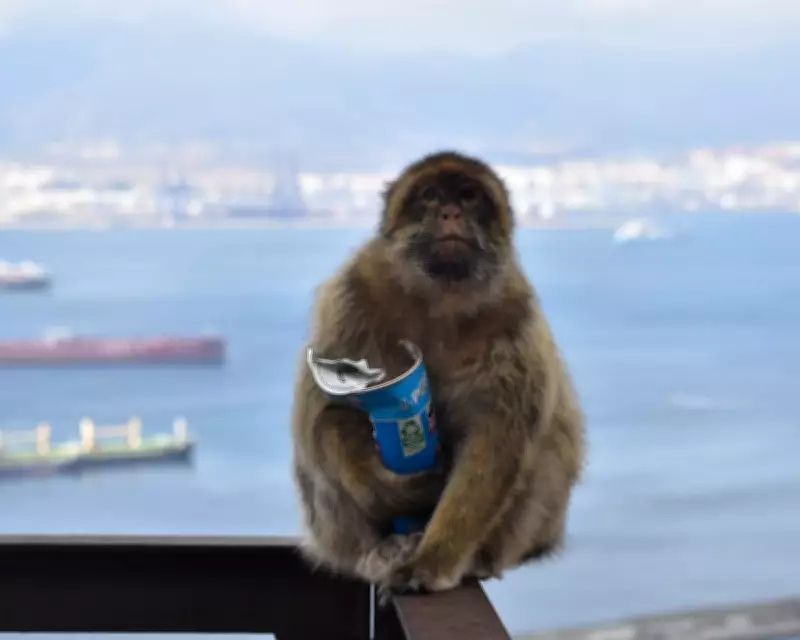
Gibraltar's Monkeys Turn to Soil to Counteract Tourist Snack Diets
Troops of Barbary macaques living on the Rock of Gibraltar have developed a surprising dietary habit: consuming soil to mitigate digestive issues caused by junk food regularly provided by tourists. Researchers observed this intentional mud-eating behavior, known scientifically as geophagy, during extended monitoring of the territory's monkey populations.
Tourist Contact Correlates with Soil Consumption
Scientists discovered that macaques with the highest exposure to tourists consumed the most soil, with consumption peaking dramatically during holiday seasons when visitor numbers swell. Approximately 230 macaques inhabit Gibraltar across eight distinct social groups. While local authorities provide daily rations of fruits, vegetables, and seeds, tourists persistently offer processed snacks including potato chips, chocolate bars, M&M's, and various ice cream products.
The research revealed that nearly one-fifth of all food consumed by these primates originated from tourist-provided junk items. Monkeys residing near the rock's summit, a prime tourist destination, consumed junk food at more than double the rate of other groups and correspondingly ate the most soil.
Protective Mechanism for Digestive Systems
Dr. Sylvain Lemoine, a primate behavioral ecologist at the University of Cambridge, explained that soil consumption likely helps rebalance gut microbiomes disrupted by fatty, salty, and sugary foods. "We think that eating this junk food disrupts the composition of the microbiome," Lemoine stated. "Bacteria and minerals in soil can help recompose the microbiome and alleviate negative effects."
Observations documented between summer 2022 and spring 2024 recorded 44 monkeys eating dirt on 46 separate occasions. In three specific instances, macaques consumed soil shortly after ingesting ice cream, biscuits, or bread. During winter months when tourist numbers declined by approximately 40%, soil consumption decreased by more than 30%.
Social Learning and Soil Preferences
The study, published in Scientific Reports, indicates that monkeys appear to learn soil-eating behaviors from one another, with different troops developing preferences for specific soil types. Most groups seek out terra rossa, the red clay found throughout Gibraltar, while the Ape's Den troop inhabiting the lower western slopes prefers tar-clogged soil from asphalt road potholes.
Researchers noted that the only macaque group not observed eating soil was completely isolated from tourist contact, strengthening the connection between human interaction and this unusual dietary adaptation.
Distinct from Human Geophagy Patterns
Unlike human soil consumption practices observed in various global cultures—particularly among pregnant women in Africa, Asia, and South America seeking mineral supplementation or nausea relief—the Gibraltar macaques showed no increased soil consumption during pregnancy or lactation periods. This suggests their behavior serves primarily as digestive protection rather than nutritional supplementation.
Dr. Paula Pebsworth, a primatologist at the University of Texas at San Antonio, noted that geophagy serves multiple purposes in primates, including detoxification and mineral supplementation. "The idea that soil consumption may help monkeys cope with tourist provisioning is plausible and has been documented elsewhere," she commented, while emphasizing that reducing human food provisioning represents a more effective management approach.
Environmental Concerns and Management Challenges
Despite official prohibitions against feeding Gibraltar's monkeys, enforcement remains inconsistent. Beyond the health impacts of junk food, soil consumption near busy roadways introduces potential exposure to vehicle pollutants. "There are a lot of vehicles passing every day, and most are not electric yet," Lemoine cautioned, noting plans to analyze soil pollution levels.
The research highlights the complex ecological consequences of human-wildlife interactions in tourist destinations, demonstrating how animal behavior adapts—sometimes detrimentally—to human presence and dietary offerings.