Giant 'Flying' Joro Spiders Swarm Across the United States, Experts Urge Calm
Arachnophobes, take note: a surge of enormous, brightly colored spiders is sweeping across the United States, with the invasive Joro spider expanding its territory at an alarming rate. These creatures, native to East Asia, have been quietly multiplying since their arrival over a decade ago, and a new generation is poised to hatch, promising an even wider spread this season.
Origins and Expansion of the Joro Spider
The Joro spider, scientifically known as Trichonephila clavata, originates from regions including Japan, China, South Korea, and Taiwan. It is believed to have first reached American shores via shipping containers entering Georgia. Since then, its population has steadily grown, with annual sightings reported in increasingly diverse locations. Currently, these spiders have been documented in states such as Georgia, Tennessee, North and South Carolina, Virginia, Maryland, Pennsylvania, and even as far west as California.
Physical Characteristics and Behavior
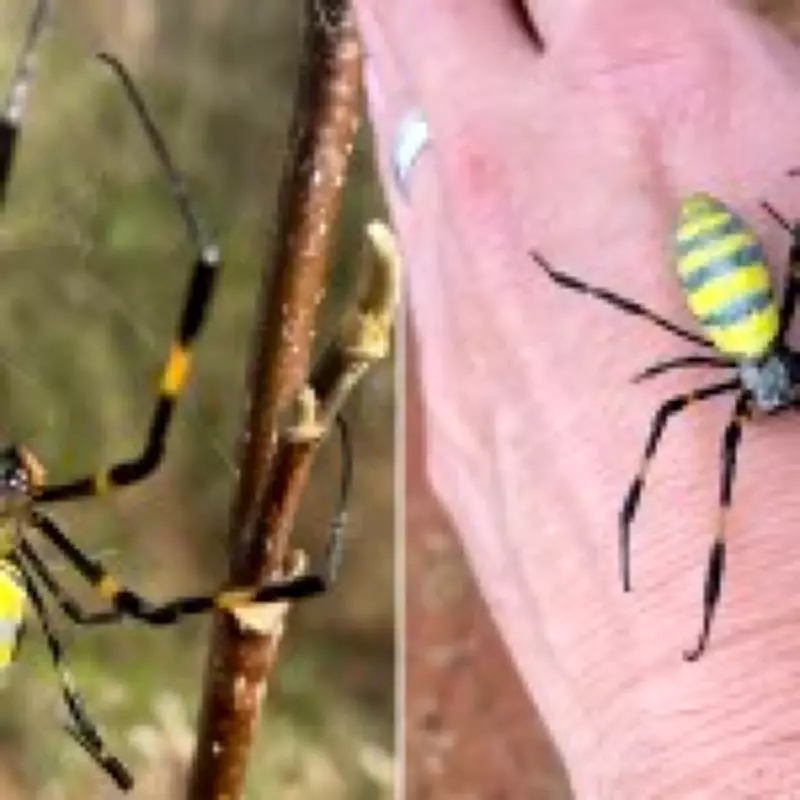
Female Joro spiders are particularly striking, boasting a vivid yellow body adorned with blue stripes and red accents, often reaching sizes comparable to a human palm. In contrast, males are smaller and more subdued in brown hues. These females construct large, golden webs that can appear overnight, efficiently trapping prey. Notably, they exhibit a unique behavior of occasionally consuming their male counterparts. Eggs typically hatch between May and June, with spiders maturing by late summer, leading to peak activity from August through October.

The Ballooning Phenomenon
One of the key factors behind the rapid spread of Joro spiders is their ability to "balloon." This involves releasing silk strands that catch the wind, allowing them to drift through the air for several feet at a time. While not true flight, this method enables long-distance travel, often aided by vehicles or gusts of wind, facilitating swift movement between regions.
Safety and Ecological Impact
Despite their venomous nature, experts emphasize that Joro spiders pose minimal danger to humans and pets. José R. Ramírez-Garofalo, an ecologist, stated, "There have been no documented fatalities, nor any notable medically significant bites." Their behavior is generally non-confrontational, preferring to avoid interactions. However, as an invasive species, they threaten local ecosystems by outcompeting native spiders for resources. David Coyle of Clemson University warned, "These are pushing out native species and catching and killing whatever happens to get in their webs."
Resilience and Urban Adaptation
Joro spiders demonstrate remarkable resilience, thriving in urban environments where other species might struggle. Research from the University of Georgia indicates they are unfazed by traffic vibrations and can withstand colder temperatures, with over 75% surviving freezing conditions in tests. Their high metabolism and fast heart rate further contribute to their adaptability in new habitats.
Practical Advice for Residents
For those encountering unwanted Joro spiders, removal is straightforward—using a broom or stick to relocate them is typically sufficient. While their presence may be unsettling, the primary concern is psychological rather than physical safety. As these spiders continue to spread, staying informed and maintaining a calm perspective is advised, even if a close encounter triggers instinctive alarm.