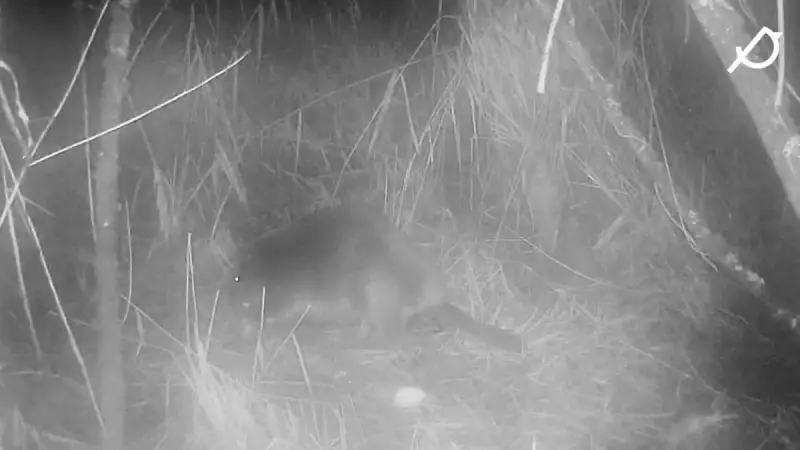
In an event that has stunned conservationists, a wild beaver has been recorded living in Norfolk for the first time in approximately 400 years. The lone animal was captured on camera establishing a home at the Pensthorpe nature reserve, near Fakenham, in what experts are calling a "perfect beaver habitat."
A Mysterious Arrival on the River Wensum
The beaver's appearance at Pensthorpe about a month ago remains a complete mystery. Reserve manager Richard Spowage confirmed that no one knows where the creature originated. It was discovered in an isolated, wild section of the River Wensum, an aquifer-fed chalk stream whose name fittingly means "wandering." The beaver has been filmed nocturnally dragging logs and gathering willow to build a lodge and a winter larder of bark.
Spowage's first clue came when a volunteer spotted an unusually pointed tree stump. Initially suspecting vandalism, the discovery of classic wood chips at the base of another tree led to the installation of camera traps. These captured the elusive vegetarian going about its business, a sight not witnessed in the county since beavers were hunted to extinction in England in the early 1500s.

National Context: Beaver Reintroduction Gains Pace
This Norfolk sighting is a significant milestone in the gradual return of beavers to the English countryside. The species began re-establishing itself in 2015 with the birth of wild kits in Devon. According to the Beaver Trust, there are now around ten individual wild populations in England, with sightings reported in Kent, Hampshire, Somerset, Wiltshire, and Hereford.
In March, Natural England announced it would begin issuing licences for wild beaver reintroductions, receiving 39 expressions of interest by August. However, to date, only one population has been legally released into the wild in England—a group of four into Dorset's Purbeck Heaths. The Scottish beaver population is estimated at 1,500.
An Unknown Origin and a Warm Welcome
The sex and age of the Pensthorpe beaver are unknown, and its provenance is debated. While it could be a "naturally dispersing" animal from another wild population, Spowage considers it unlikely to have reached Norfolk unaided, suggesting potential human involvement—a practice sometimes called 'beaver bombing.'
Despite the mystery, the reserve has extended a full welcome. "From our point of view, it's a wild animal and it's got the right to be here," Spowage stated, reflecting on the special moment of seeing a beaver live its life in Norfolk after centuries of absence. The creature's activities in the managed wetland reserve are now being monitored with great interest, as its presence could bring significant benefits for local biodiversity and water management.