
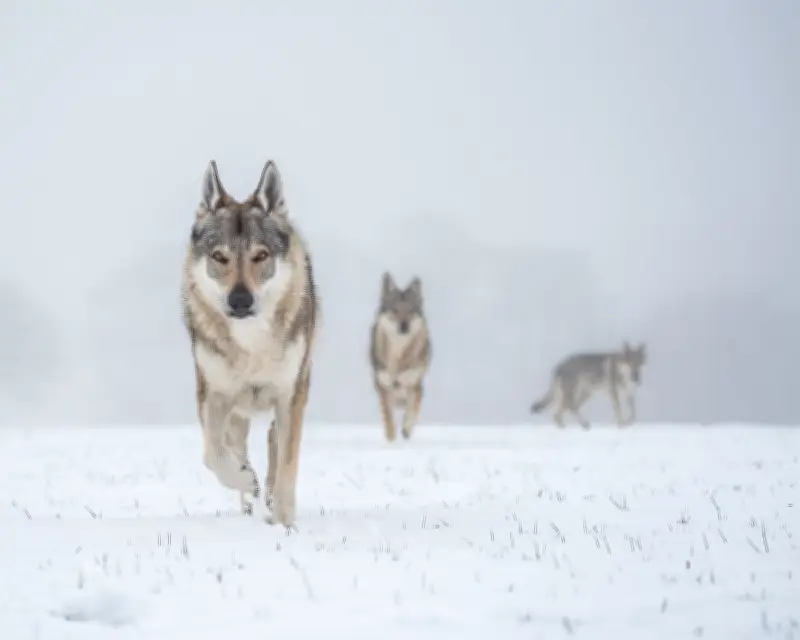
Danish authorities have issued advice for tourists on how to behave during a wolf encounter, urging them to stand still, make eye contact, and offer "maximum resistance" if attacked. The guidance comes as the wolf population in Denmark grows following their return after a 200-year absence.
Wolf population and recent incidents
Wolves began returning to Denmark in 2012, and there are now an estimated 49 wolves on the Jutland peninsula. While wolf attacks on humans are rare, young wolves have been spotted approaching people near the popular tourist destination of Oksbøl earlier this year.
The municipality of Varde and Visit Vesterhavet have distributed flyers with government advice at holiday homes, campsites, and tourist offices in Danish, English, and German.
Recommended behavior during an encounter
Tourists are told to remain calm and still, maintain eye contact, and take a photo of the animal. If the wolf does not leave, they should shout, clap hands, and wave arms. They are advised not to follow or turn their backs on an approaching wolf. The tip is to "stare directly at it" to "show dominance."
In the unlikely event of an attack, tourists are urged: "You must offer maximum resistance: hit and kick and use any blunt weapon." Children under 10 should be accompanied by an adult in the Oksbøl area.
Historical context and political divide
Wolves have a long history in Denmark, with the oldest wolf bones dating back 13,000 years. After the last wolf was shot in 1813, they only began returning in the last two decades. Their presence has divided opinions, often along political lines.
In April, two ponies were killed by wolves within a fortnight. Subsequently, four MPs from the far-right Danish People's Party were reported to police for sharing a Facebook post calling for people to "Shoot the wolf." Wolves are protected by EU law.
Expert insights
Peter Sunde, a wildlife ecology professor at Aarhus University, said: "During the winter and spring of 2026, at least two young wolves were observed approaching humans and exhibiting markedly reduced flight distances in the area around Oksbøl that is a tourist hotspot. One of these wolves is still alive."
He noted that such behaviour often occurs when young wolves are repeatedly exposed to humans. "It has been discussed whether tourists, who may be unaware both of the presence of wolves in the area and of the basic recommendations regarding wolf encounters, may have contributed to the development of this behaviour," he added.
"To prevent similar behaviour from developing in future generations of young wolves, it is important that people who live in or visit wolf habitats – including tourists – understand that they should neither approach wolves nor leave food that may attract them."
Local government response
Varde’s second deputy mayor, Sandie Eis Ravn, said the campaign aimed to inform tourists at the request of local businesses. "If you are visiting somewhere and you know there is a wolf in the nearby forest, to make sure you have the right code of conduct when you meet this creature," she said.



