Daylight Saving Time Shift Increases Wildlife Collision Risks During Peak Commute Hours
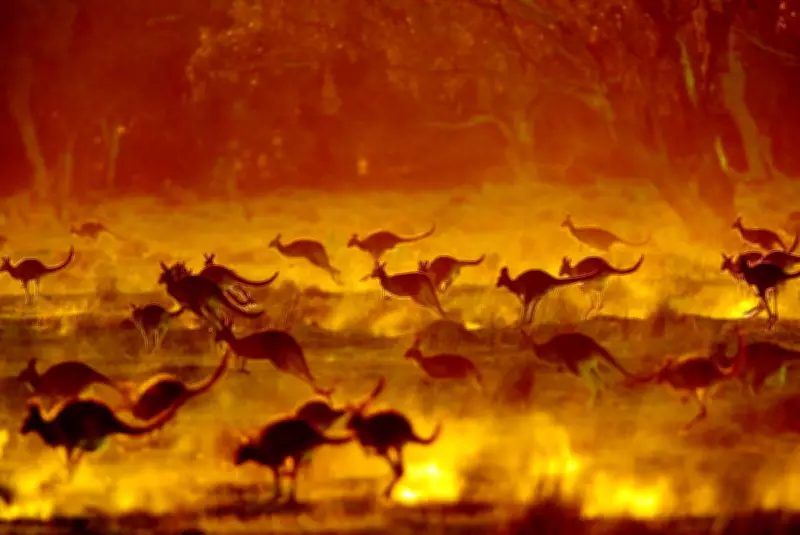
When daylight saving time concludes in most Australian states this Sunday, the resulting time adjustment will shift the evening peak commute period closer to dusk. This temporal shift coincides with heightened activity periods for numerous animal species, including kangaroos, wallabies, and various nocturnal creatures, significantly elevating the risk of vehicle collisions.
Disruption to Animal Circadian Rhythms and Human-Wildlife Overlap
All living organisms operate on innate circadian rhythms—biological clocks synchronized with natural sunlight cycles. However, humans uniquely impose artificial time adjustments through daylight saving practices, often without full consideration of the cascading effects on other species. Professor Therésa Jones, an expert in evolution and animal behavior at the University of Melbourne, emphasizes that these rhythms govern critical behaviors. "Every species, from plankton to mammals, functions on a solar-set clock," Jones explains. "When we alter our schedules through daylight saving, we abruptly intrude into the dusk and dawn periods when wildlife is most active."
This temporal overlap creates dangerous scenarios as increased vehicular traffic converges with wildlife movement. Cars introduce disruptive elements like artificial lighting, engine noise, and physical hazards that profoundly affect insects, birds, and terrestrial animals. The problem intensifies with earlier nightfalls prompting increased urban light pollution, further disturbing natural ecosystems.

Research Reveals Complex Impacts on Animal Behavior and Safety
Scientific investigations demonstrate multifaceted consequences. Jones's research utilizing automated audio recorders reveals how human activity encroaches on animal communication. "During dusk choruses—when birds and insects vocalize for mating or socialization—sudden traffic noise can mask these essential signals," she notes. Earlier studies by her team found artificial nighttime lighting alters cricket mating selections, though not their courtship calls.
Wildlife ecology professor Euan Ritchie of Deakin University identifies specific concerns. "Species like kangaroos and wallabies exhibit peak activity at dawn and dusk. Increased traffic during these windows directly raises road accident probabilities," Ritchie states. Wombats and other crepuscular animals face similar threats.
Paradoxically, daylight saving implementation can benefit certain wildlife. A 2016 University of Queensland study determined that if Queensland reinstated daylight saving—abolished by 1992 referendum—it could reduce koala road fatalities by aligning commutes with daylight hours.
Domestic Pets and Historical Context of Time Changes
Domestic animals also experience indirect effects. Dogs, creatures of habit, often display confusion when human routines change, begging for meals at accustomed times regardless of clock adjustments. The American Kennel Club confirms canines adapt to owner schedules rather than timepieces themselves.
Historically, Australia adopted daylight saving as a wartime fuel-conservation measure. The concept traces to New Zealand entomologist George Hudson, who proposed a two-hour shift in the 1890s to extend evening insect-collecting hours.
As clocks reset this weekend, the NRMA warns longer winter nights typically increase collision claims, with July historically recording peak incidents. This annual time transition underscores the complex interplay between human timekeeping and ecological systems.