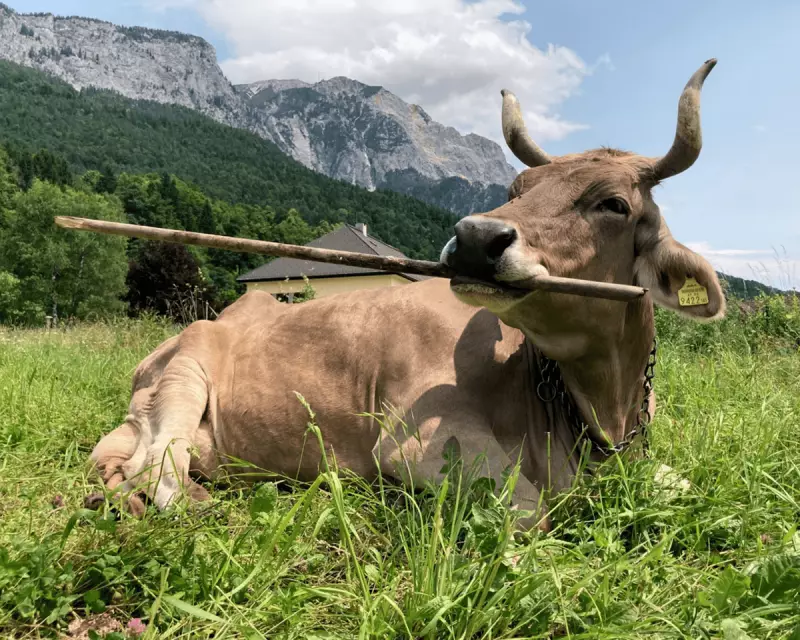
Veronika the Swiss Cow's Remarkable Tool Use Challenges Human Exceptionalism
When news emerged of Veronika, a thirteen-year-old brown Swiss cow, skilfully employing a broom to scratch hard-to-reach areas of her body, the scientific community took notice. This was not merely an amusing anecdote but a documented case of flexible tool use in cattle, challenging long-held assumptions about animal intelligence and human uniqueness.
The Farmer's Perspective: No Surprise Here
For those who work closely with cattle daily, Veronika's behaviour comes as little surprise. One experienced farmer shared numerous examples of bovine cleverness, from cows manipulating door catches to steal feed to orchestrating group escapes for entertainment purposes. "Cows learn quickly, bore easily and have an indefatigable penchant for mischief," she observed, suggesting that those who perceive cattle as simple creatures simply aren't paying close enough attention.
Scientific Documentation of Bovine Tool Mastery
Researchers from the University of Veterinary Medicine in Austria documented Veronika's sophisticated tool use in the journal Current Biology. The brown Swiss pet cow demonstrates remarkable dexterity, picking up the broom with her tongue, then twisting her body to apply different parts of the implement to various body areas. She uses the blunt end for sensitive belly skin and the bristly end for thicker back and buttock regions, showing clear understanding of tool functionality.

This represents not just the first officially documented case of tool use in cattle, but evidence that these animals can employ tools flexibly for multiple purposes. Veronika has effectively transformed a simple backyard brush into a bovine Swiss army knife, managed entirely through oral manipulation.
The Broader Context of Animal Tool Use
Tool use, defined as the deliberate manipulation of objects to achieve specific goals, was once considered exclusively human behaviour. This assumption began crumbling in the 1960s when Jane Goodall observed chimpanzees fashioning twigs to extract termites. Since then, numerous examples have emerged across the animal kingdom:
- Sea otters using stones as both hammers and anvils to access shellfish
- Senegalese chimpanzees sharpening sticks into spears for hunting bush babies
- New Caledonian crows crafting hooked tools from plant stems to extract larvae
- Polar bears reportedly using rocks as weapons against walruses
- Octopuses throwing shells at each other
- "Firehawk" raptors spreading wildfires by carrying burning sticks to flush out prey
Each discovery has chipped away at the pillars of human exceptionalism, yet many continue to maintain what appears increasingly to be an illusion of superiority.
What Veronika Reveals About Human Perception
The surprise surrounding Veronika's behaviour reveals more about human psychology than bovine capability. We consistently underestimate non-human animals despite mounting evidence of their cognitive sophistication. As British palaeoanthropologist Louis Leakey remarked after Goodall's chimpanzee observations, discoveries like these force us to "redefine tool, redefine man, or accept chimpanzees as human."
Perhaps there's a fourth option: accepting that we're not as exceptional as we'd like to believe while recognising the genuine sophistication of other species. Those who work closely with animals, like the farmer mentioned, already understand this reality through daily observation of complex behaviours and rich inner lives in creatures we often dismiss as simple.
Veronika's story serves as another reminder that intelligence manifests in diverse forms across species. Rather than maintaining artificial hierarchies, we might better appreciate the remarkable capabilities of animals like cows while acknowledging that human uniqueness may be less absolute than traditionally assumed. The humble broom-wielding cow has given us more than just an amusing video—she's provided another perspective on our place in the natural world.