It was a bright spring morning when eight-year-old Orla ventured onto Dartmoor with her mother, brother, and grandmother for a family walk in the fresh sunshine. Her mother suggested they leave the path to admire some bluebells, and everyone agreed. The scene was idyllic: birds sang, and granite rocks sparkled in the light.
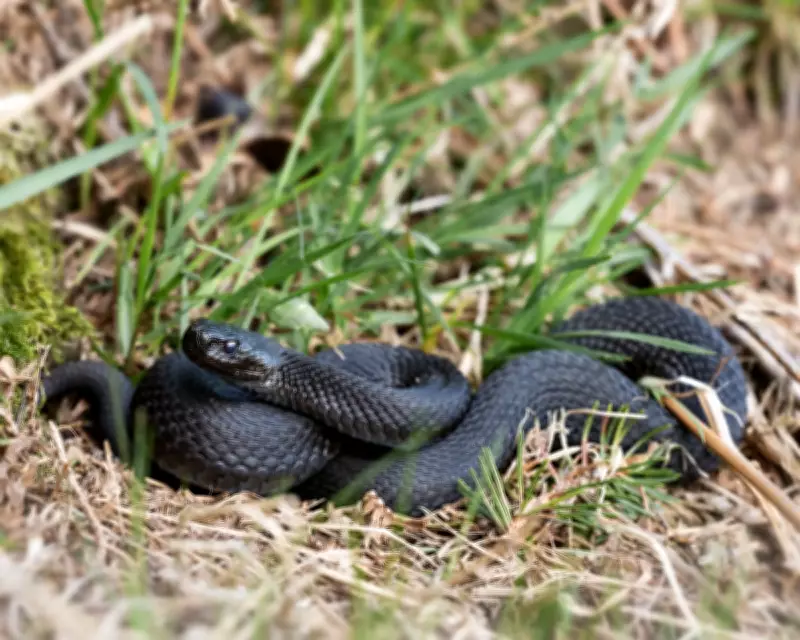
While her grandmother and brother headed in one direction, Orla wandered toward some brambles near a sun-warmed concrete slab. That is when she saw it—a large, black snake rearing up at her. For a moment, they locked eyes. The snake had black scales with faint zigzag patterns on its body.
Orla felt both scared and surprised but remained still, calling out to her mother, who instructed her to move backward very slowly. She complied, and the snake, no longer feeling threatened, relaxed, lowered its head, and slid away under a large rock.

At home, the family identified the snake as a black adder, the only venomous snake in the UK. It measured about half a meter in length, though black adders can grow up to 80 centimeters. They feed on small mammals, lizards, and slowworms. Known to be shy, black adders are rarely seen, making Orla's encounter feel especially special.
About the Black Adder
The black adder is a melanistic variant of the common European adder. Its dark coloration helps it absorb heat more efficiently after hibernation in spring. Despite its venom, it is not aggressive and will only bite if threatened. Encounters like Orla's are uncommon, as these snakes prefer to avoid humans.
More from Young Country Diary
Read today's other entry by Tabitha, 10: 'Robin chicks are everywhere, in the kitchen, in Mum's hair.' The Young Country Diary submission form is still open and will close on Monday 4 May.