
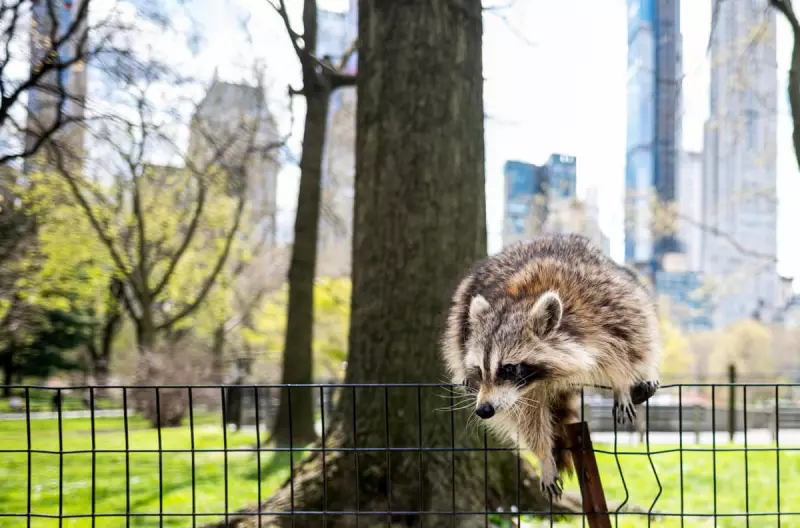
City Life Triggering Evolutionary Changes in Urban Raccoons
Raccoons living in American cities are beginning to display physical and behavioural changes that resemble early stages of domestication, according to groundbreaking research from the University of Arkansas at Little Rock. The study, published in Frontiers in Zoology, reveals that urban raccoons have developed significantly shorter snouts compared to their rural counterparts - a characteristic commonly seen in domesticated animals.
Dr Raffaela Lesch, the study's lead author and assistant professor of biology at the University of Arkansas at Little Rock, explained her motivation: "I wanted to know if living in a city environment would kickstart domestication processes in animals that are currently not domesticated. Would raccoons be on the pathway to domestication just by hanging out in close proximity to humans?"
The Science Behind the Transformation
The research team conducted an extensive analysis of nearly 20,000 photographs of raccoons submitted to iNaturalist, a community science platform. Their findings demonstrated a clear pattern: raccoons inhabiting densely populated urban areas experienced a 3.56% reduction in snout length when compared to those living in rural environments.
This physical change represents just one of several traits associated with what scientists call Neural Crest Domestication Syndrome. According to the hypothesis, selection pressure for tameness affects early embryonic development, leading to a combination of physical and behavioural changes commonly seen in domesticated species.
Dr Lesch emphasised the role of human waste in this evolutionary process: "Trash is really the kickstarter. Wherever humans go, there is trash. Animals love our trash. It's an easy source of food. All they have to do is endure our presence, not be aggressive, and then they can feast on anything we throw away."
Selection Pressure for Tameness
The study highlights how urban environments create unique evolutionary pressures. Raccoons that demonstrate "dampened" flight-or-fight responses and remain calmer around humans are more likely to thrive in cities. This creates what researchers describe as "distinct selection pressures favouring friendly and tame individuals."
As Dr Lesch explained in her statement to the Guardian: "In order to best take advantage of this human-centered niche, the animals have to be bold enough to access resources yet nonaggressive enough to avoid being culled from the population."
The research suggests this shift in natural selection toward greater tameness affects neural crest cells - embryonic cells that help form the skull, facial bones and other physical traits. This cellular-level change explains why multiple physical characteristics emerge simultaneously during domestication processes.
Parallels with UK Wildlife
The study draws interesting parallels with research conducted in the United Kingdom, where urban red foxes in London were found to have developed shorter, wider muzzles compared to their rural counterparts. British researchers suggested this facial structure "may be advantageous in an urban habitat where resources are more likely to be accessed as stationary patches of discarded human foods."
Professor Stanley D Gehrt, a wildlife ecology expert at Ohio State University who was not involved in the study, described the findings as "very interesting" and noted they fit with established knowledge about how animals adapt to urbanisation. "Urbanization for some species can strongly influence their behavior, body and their population dynamics," he observed.
However, Professor Gehrt added a note of caution: "We'll have to see with more evidence and with other studies if it's actually a pathway to domestication or not."
Field Observations Confirm Behavioural Changes
Arina Hinzen, founder and executive director of the Urban Wildlife Alliance, praised the study as "a fascinating piece of work and a clever use of citizen science." While her organisation hadn't directly noticed the physical changes described in the research, she confirmed observing significant behavioural adaptations.
"As someone who works with urban wildlife in New York City, I see raccoons that are highly habituated to people and human environments," Hinzen noted. "They routinely feed in trash, navigate buildings and streets, and show a much calmer response to people and dogs than truly wild raccoons."
The study concludes that the combination of readily available food waste and absence of large predators makes human environments an evolutionary niche of great potential for certain species. As cities continue to expand and wildlife adapts to urban living, we may witness more examples of this fascinating evolutionary phenomenon unfolding in our own neighbourhoods.



