
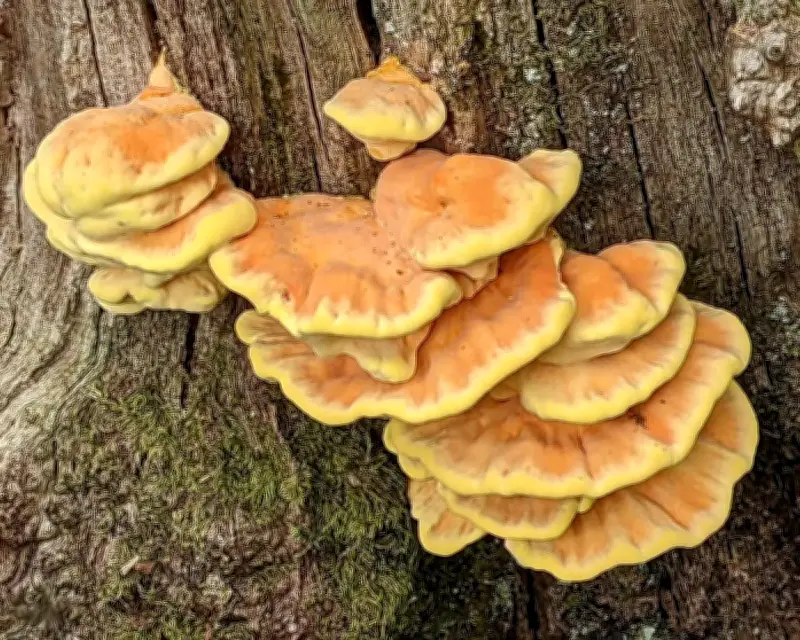
For the sixth consecutive year, the sulphur-yellow bracket fungus known as chicken of the woods (Laetiporus sulphureus) has appeared on the trunk of a decaying oak tree in Tunstall Valley, Weardale. The fungus, first noticed on this tree in 2018, is gradually reducing the oak's heartwood to dust, according to a recent Country Diary report by Phil Gates.
A Sultry Afternoon in Tunstall Valley
On a windless afternoon, the reservoir's surface lay mirror-smooth, disturbed only by the wake of a flotilla of mallards. From the dam wall, views extended over a patchwork of recently cut hay meadows, sun-bleached and yet to regreen through lack of rain. The destination was Backstone Bank, ancient oak woodland clinging to the steep eastern flank of the reservoir.
In May, the woodland was alive with newly arrived blackcaps, cuckoos, and pied flycatchers. By late August, an uncanny silence prevailed, broken only by the rustle of leaves prematurely shed by drought-stressed trees. Enchanter's nightshade, limp-leaved, had raced through flowering, its burred seeds hooking into walkers' socks.
Fungal Growth Amidst Withering Surroundings
The annual spectacle develops just off the footpath. This year's growth is still in early stages; eventually, its tiers will reach dinner-plate proportions. It seems odd that these plump, spongy brackets should be in their prime now, swelling while the growth of everything around withers in parched conditions. But fungi live by their own rules: as their hyphae creep through their host, their enzymes dismantle the oak's lignin heartwood, molecule by molecule. There is enough food in this old tree to sustain them for a few years.
The brackets, cool and clammy to the touch, leave a strong mushroom aroma on fingers. Guidebooks say chicken of the woods is edible, with the caveat that it can cause nausea in some, and a caution to try a small amount first. The article's author chose to leave it intact to release millions of spores.
Ecological Role and Future
The fungus will feed multitudes of insects, some already gathering – whole communities that will breed in its clammy, pillowy folds. This is no ephemeral toadstool; it is here for the long haul, until it has reduced its host's heartwood to dust. The observation highlights the resilience of fungal life in contrast to drought-stricken vegetation, and the ongoing transformation of the woodland ecosystem.



