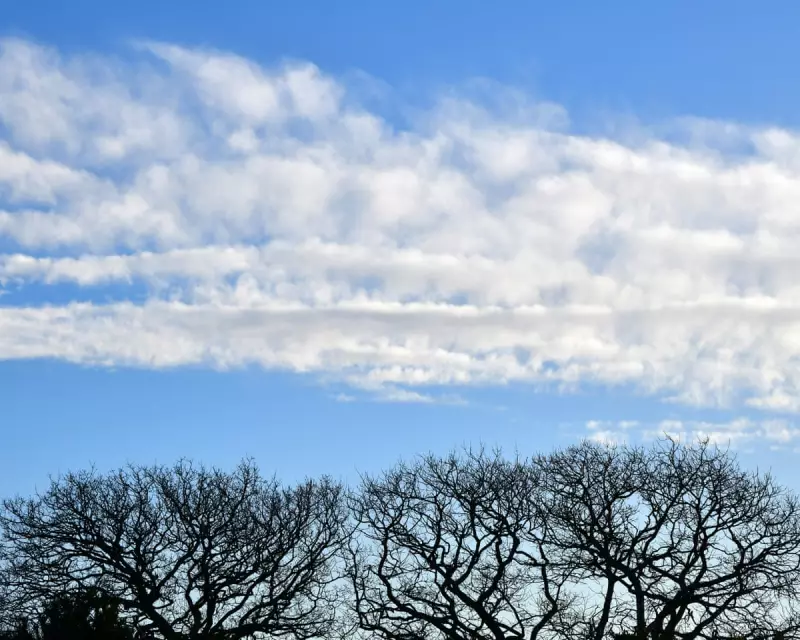
In the wake of a tumultuous night where an easterly gale rattled houses and overturned plant pots in Ceredigion, an uncanny stillness descended upon the Welsh landscape at dawn. The winds, having peaked around daybreak, blew themselves out, leaving behind a crystal-clear and eerily quiet morning perfect for exploration.
A Landscape Marked by the Gale
Venturing out into the lanes near Comins Coch, the evidence of the storm's passage was immediately clear. Fallen branches littered an old, deeply eroded trackway. The air, however, was now silent save for the harsh, disputing calls of a pair of jays from a fragment of woodland beside a stream. Where sunlight had yet to reach, a thick frost coated every blade of grass and every fallen leaf, transforming the ground into a sparkling carpet.
In areas of deeper shade, several days' worth of frost accumulation glistened with perfect, crystalline symmetry. Despite the icy veneer, the soil beneath the turf remained unfrozen, a telling sign of the unusually warm weather that had preceded this cold snap. This detail highlighted the rapid shift in conditions that defines the British winter.
Wildlife in the Winter Fields
The stillness was briefly broken by a noisy gathering of corvids. A mixed flock of roughly twenty jackdaws and rooks swirled down from a line of trees to forage in the pasture. They scattered at a human approach but displayed a curiously fluid, coordinated motion as they regrouped once the coast was clear. Their activity was a vibrant contrast to the morning's frosty hush.
The walk led to an old quarry, a former source of roadstone now being reclaimed by nature. The trees fringing the excavation site – stunted oaks and ashes – stretched their skeletal, lichen-laden branches into the still, blue sky. Sheltered from the prevailing westerlies by a sheer rock face, they had formed a new, almost secret canopy. From this vantage point, the view eastwards towards the Cambrian mountains was partially obscured by banks of cloud and haze, which muted the landscape's usual grandeur.
A Sign of the Turning Year
As the afternoon began to wane, the cold became more biting, and the wind showed signs of rising once more. Preparing to head back to the shelter of the lane, a final, beautiful sight presented itself. A movement in the trees revealed a male blackbird, perfectly lit by the low afternoon sun.
The bird was svelte and in magnificent condition, its plumage glossy, its beak and eye-rings a brilliant, striking orange. It perched only briefly among the newly emerging catkins, a potent symbol of the impending seasonal change. This fleeting encounter served as a hopeful reminder that the deepest cold of winter would soon pass, and the cycle of the year would continue its turn.