
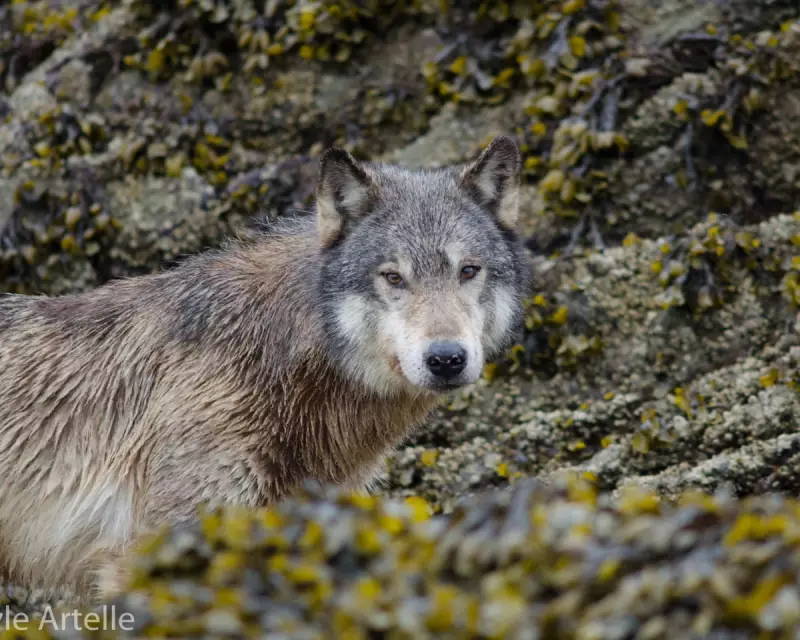
In a remarkable discovery that expands our understanding of canine intelligence, researchers in British Columbia have documented coastal wolves systematically raiding crab traps in what appears to be a carefully learned hunting technique.
The Marine Mystery Unfolds
The investigation began when researchers working with the Heiltusk First Nation noticed something peculiar happening to their crab traps. Both shallow and deep-water traps were being damaged with distinctive teeth marks, and the bait inside was consistently disappearing. The mystery deepened when they realised that traps placed in deeper water – marked with brightly coloured floats – were also being targeted.
Ecologist Kyle Artelle, who co-authored the study published in Ecology and Evolution with Paul Paquet, explained their initial confusion. "We figured wolves or bears were getting to these traps because the traps were fairly accessible during low tide," he said. "But we just couldn't figure out what was attacking the deeper traps."
The Camera Doesn't Lie
The breakthrough came when researchers positioned cameras near the traps in 2023. What they captured exceeded all expectations. Footage revealed a sea wolf swimming ashore with a float clenched between her teeth, then methodically dragging it onto the beach to gain better leverage on the rope.
Artelle described the behaviour as "highly efficient and focused" as the wolf performed a series of quick, deliberate tugs on the line until the crab trap emerged from the depths. The wolf then accessed the bait cup and made off with her prize, solving the year-long mystery in one dramatic sequence.
"We couldn't believe our eyes," Artelle admitted. "It was serendipity that we actually captured this behaviour. And it was, quite simply, inspiring."
A Different Relationship with Wolves
The thief belonged to a rare species known as coastal or sea wolves – apex predators that thrive in marine environments and have adapted to live off a diet of salmon, shellfish and seals. What makes this discovery particularly significant is the context in which it occurred.
Unlike most of British Columbia where wolves are considered nuisance predators and hunted accordingly, the Bella Bella community maintains a different relationship with wolves through the Haíɫzaqv Wolf and Biodiversity Project. Here, wolves are not hunted and instead live alongside humans in a remarkable coexistence.
"There's a pack living at the edge of town," Artelle noted. "They've lived with people for millennia, but they've forged a strikingly different relationship. This rugged, thickly forested land and seascape is possibly one of the few places in the world where wolves can fully be wolves."
Broader Implications for Understanding Wildlife
The discovery represents more than just an interesting wildlife anecdote. Researchers emphasise that this behaviour appears to be learned rather than genetic, and likely shared among wolf packs in the area.
"You can see the efficiency with which she moves through the traps," Artelle observed. "This isn't genetic. This is an entirely learned behaviour, and learned very fast, and likely shared among the group."
The research emerged from a monitoring programme designed to combat the spread of European green crabs, an invasive species that has been moving northward from California over the past three decades. These ruthless crustaceans have been devastating clam beds and eelgrass ecosystems, which provide crucial shelter for young fish.
For Artelle, the implications are profound. "This is a whole new dimension of their behaviour that we did not realise. When we see these new dimensions of human potential, it gives us a further appreciation of our own species and what it can mean to be human. This just gives us a new dimension of what it can mean to be a wolf and raises a larger question: what else can they do?"
The findings highlight the delightful surprises that can emerge when predators coexist with humans and demonstrate that even in well-studied species, there are always new behaviours waiting to be discovered.



