UK Butterfly Diversity in Crisis: 70% Decline for Rare Species, Study Reveals
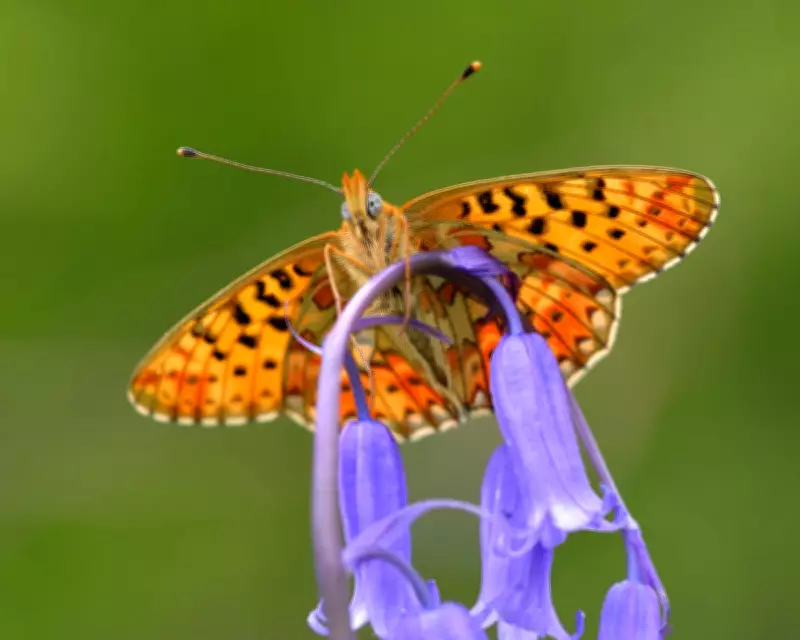
According to the UK Butterfly Monitoring Scheme, the number of pearl-bordered fritillaries has plummeted by a staggering 70% over the past half-century. This alarming statistic is part of a broader trend revealed by the world's largest insect monitoring initiative, which indicates that more than half of Britain's native butterfly species are now in decline.
Mixed Fortunes Amid Climate Change
While the term "Insectageddon" may be an overstatement, the data paints a clear picture of eroding butterfly diversity. Since 1976, more than 44 million butterfly sightings have been scientifically collected across Britain. Of the 58 native species recorded, 33 have decreased in number, while only 25 have shown increases.
Global heating has proven beneficial for some species, enabling them to expand their ranges northwards through Britain. Notable winners include the purple emperor, which has surged by 136%, the red admiral with a 330% increase, and the comma, up by 178%. These butterflies are thriving in warmer conditions, adapting to the changing climate.

Habitat Specialists Face Severe Declines
In stark contrast, rarer "habitat specialist" butterflies, which depend on specific plants or environments such as wetlands, woodlands, or flower-rich grasslands, have suffered dramatic losses. The high brown fritillary has declined by 66%, the pearl-bordered fritillary by 70%, and the white-letter hairstreak by 80%.
"It's not the insect Armageddon picture that was put forward a few years back," said Richard Fox, head of science at Butterfly Conservation. "But the data show very clearly that butterflies have declined in the UK over the last 50 years, and in particular habitat specialist butterflies have declined."
These declines are largely attributed to habitat loss and pollution, exacerbated by the disappearance of traditional woodland management practices like coppicing. This has reduced the sunny, floral-rich character of many woods, critical for species like the pearl-bordered, small pearl-bordered, and high brown fritillaries.
Indirect Impacts of Global Heating
Global heating often plays an indirect role in these declines. For instance, the grassland-dwelling wall brown and grayling butterflies are likely vanishing due to a combination of warmer weather and nitrogen pollution from vehicles. This pollution causes grass to grow taller, creating cooler conditions that are unsuitable for caterpillar development.
"The rain is now dilute fertiliser and that's raining down on our plant communities and causing them to change," Fox explained. "Changes in the composition, structure and even chemical makeup of plants is bound to have knock-on effects on specialist herbivores like our butterfly caterpillars."
Conservation Successes and Challenges
Despite the grim trends, the 50-year UK Butterfly Monitoring Scheme dataset, a collaborative effort involving Butterfly Conservation, the UK Centre for Ecology & Hydrology, the British Trust for Ornithology, and the Joint Nature Conservation Committee, highlights notable conservation successes.
The large blue butterfly, declared extinct in Britain in 1979, has seen a remarkable resurgence, with numbers soaring by 1,866% since its reintroduction to specially managed grassland in Somerset. Other rare species have also benefited from targeted efforts, including the silver-spotted skipper, up 300%, and the black hairstreak, up 844%.
Volunteer citizen scientists have been instrumental in gathering this data, walking over 1.5 million kilometers weekly during summer months since 1976 at more than 7,600 sites across Britain.
Urgent Call for Action
Prof Chris Thomas, director of the Leverhulme Centre for Anthropocene Biodiversity at the University of York, praised the UKBMS, stating, "The UKBMS scheme itself is exceptional, and should be celebrated. We can all agree that there has been a lot of change, and it is thanks to the UKBMS that we know this."
However, the results for 2025 reveal ongoing challenges. Despite Britain experiencing its sunniest year on record, it ranked only 20th best for butterflies since 1976, with no species recording its best year.

Fox emphasized the broader implications: "It's not just that the total number of butterflies has gone down, it's about the diversity that's being eroded. Just as we have lost family-run shops and traditional skills from the nation's high streets, so we've lost variety and diversity in the butterfly communities that can exist in our damaged and simplified landscapes."
He called for increased conservation efforts, noting, "We have some remarkable species in this country, and we know what we need to do to help them: create more habitat. That is what Butterfly Conservation has been doing for more than 50 years, but we are fighting an increasingly urgent battle and we need more help."