
The deadly H5 bird flu, which has devastated wildlife globally since 2021, is now spreading across Australia, raising concerns for several native bird species. The federal government announced first vaccination plans for captive native birds last week, and Victoria has moved to vaccinate wild little penguins after the first detections in terns on Phillip Island. On Saturday, the state government confirmed the death of a little penguin on the island, the first confirmed case of H5 bird flu in that species.
High-risk species identified in government assessment
A government assessment of the potential effects of H5 bird flu on every Australian bird and mammal species has placed several birds in the "high risk" category, meaning they could face severe population drops or viability issues where infections occur. Among the most concerning are silver gulls, white-bellied sea eagles, Australian fairy terns, pelicans, black swans, and brolgas.
Prof Richard Kingsford, director of the Centre for Ecosystem Science at the University of NSW, says silver gulls are a particular worry. "I really am concerned about them being one species where we will see large or mass mortality because they are scavengers and they're also very close to our big cities," he said. "I think seagulls will be the species that will most likely make the impact of bird flu hit home for the public."
Seabirds and eagles face heightened threats
The first signs of H5 bird flu spreading among local birds came when dead or unwell greater crested terns appeared on beaches in South Australia. The first mass mortalities in Australia have been among greater crested terns in SA and Victoria. Tern species globally have suffered large losses from the virus.
BirdLife Australia holds particular concern for the Australian fairy tern, listed as vulnerable under national nature laws due to existing declines. In the government risk assessment, fairy terns were rated "very high" for potential severe population reductions. Chris Purnell, BirdLife Australia's wetland bird and migratory shorebird program manager, notes that in Victoria, "our whole population of fairy terns descended on one breeding site last year," meaning a single outbreak could impact the entire regional population.
White-bellied sea eagles, which fill a "similar niche" to bald eagles in the US, are also at risk. In the US, hundreds of bald eagles have died from H5 bird flu, with severe effects on breeding populations. Purnell says the sea eagle's feeding behaviours, including eating potentially infected birds, could expose it to the virus. "It mostly takes fish but will also regularly take waterfowl, which has been a major factor in bald eagle deaths overseas," he said.
Iconic waterbirds and cranes under threat
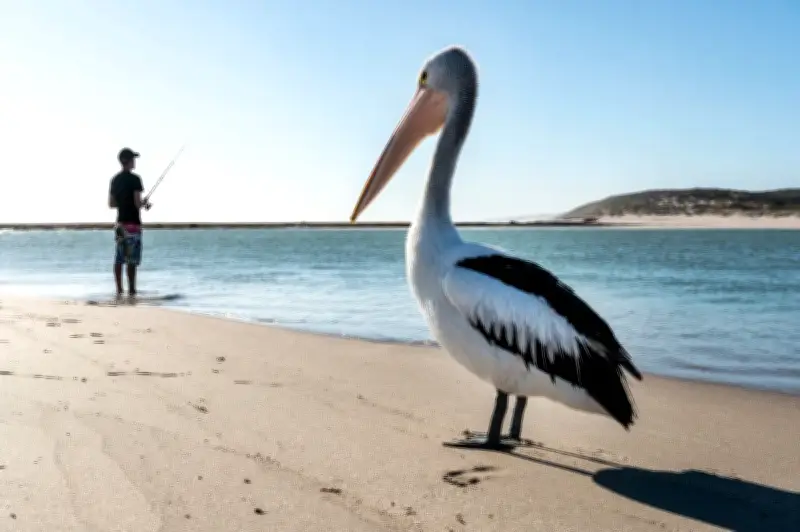
Kingsford says the first sign of H5 bird flu affecting Australia's waterbirds could come through pelicans. Waterbirds are highly susceptible because they gather in large numbers for breeding and feeding and move vast distances between inland and coastal Australia. Flocks of sometimes tens of thousands of pelicans breed in inland rookeries. "If it gets into these big breeding rookeries of pelicans, it will be devastating," Kingsford said.
Australia's black swans are considered highly susceptible because they lack some immune genes that help other waterbirds combat the virus. Genomic research published in 2023 found black swans lacked the necessary components to detect H5N1 and had a heightened inflammatory response when cells were infected. Prof Kirsty Short from the University of Queensland, who led the research, said, "You can think of black swans as a sentinel species. If there's H5N1 in the area, black swans are likely to succumb to the infection."
The brolga, one of Australia's two native crane species, is also at risk. In Victoria, it has been reduced to an isolated population of about 600 to 700 birds. During winter, brolgas can flock together in groups of hundreds. Purnell says if one or two birds were to become infected during that time, "it could spread like wildfire." He added, "They're a highly visible bird and known in rural communities. If they're lost from the landscape, it will be felt within these communities."



