Belfast Heron Colony: Early Breeders Navigate Storm-Damaged Nesting Grounds
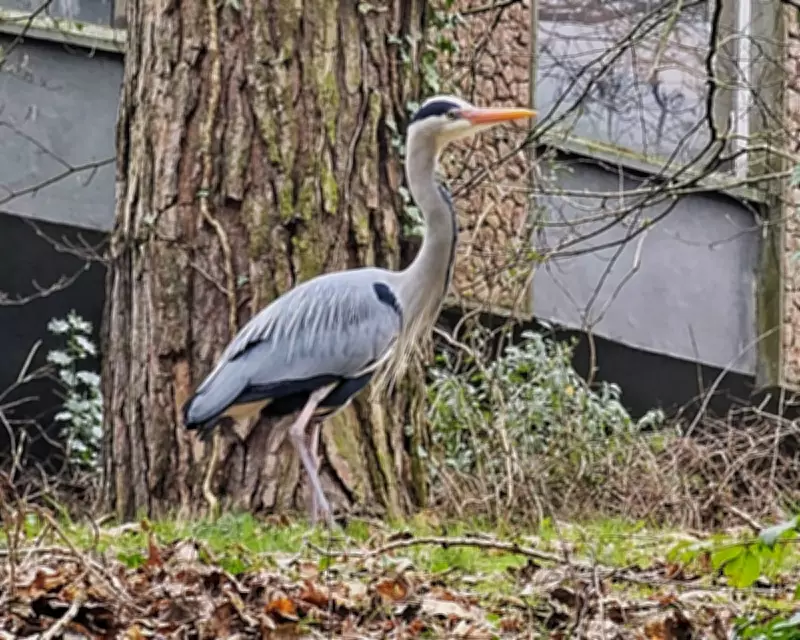
In the tranquil woods surrounding Stranmillis University College in Belfast, a bustling colony of grey herons has embarked on this year's breeding season. These early breeders are already active, with their distinctive yells once part of the dawn chorus now giving way to the quiet focus of nesting duties. High in a beech tree, one heron broods a clutch of eggs, a sign of successful parental care shared between mates.
Storm Aftermath and Nesting Adaptations
The intense storms that preceded this breeding season have left their mark, felling several trees and disrupting traditional nest sites. Despite this, the herons persist. Another heron calls out as it swoops through a gap in the trees, landing in a nearby pine where its mate guards a messy bundle of twigs. This pair is still constructing their nest, a chaotic yet determined effort.
Both male and female herons sport long black crest feathers and lacy plumes on their throat and back, but their behaviors reveal their sexes clearly. The male preens his mate before mounting her, resulting in a brief flurry of wing-flapping, squirming, and tail-wagging. After he slides off, the female tucks her bill into her breast feathers and closes her eyes, a moment of respite.

Nest-Building Rituals and Parental Roles
The male then fusses at the nest before flying over to the beech tree. He walks along a lower branch, pulling at twigs to break them for nest material. The rising sun highlights the rosy flush of his legs and the burnt orange of his bill, colors that will fade to greyish-yellow after breeding. As he flaps back and forth with sticks of all sizes, his mate screeches her approval, fidgeting the new material into place.
This activity causes so much disturbance that concerns arise for an egg-laden nest above him. Eventually, that heron stands up, bracing both wings above its back, and gently prods its bill to turn its clutch, ensuring even warmth.
Colony Dynamics and Daily Routines
As the sun climbs, harsh cries throughout the woods announce more herons returning to their nests. The beech tree brooder, still awaiting its mate, has long since settled back into the twiggy depths. When relief arrives, both herons salute each other with raised crown feathers, but busy parents cannot delay. The alighting bird steps straight into the nest, allowing the brooder to fly off to hunt, likely for most of the day.
This scene in Stranmillis woods showcases the messy chaos of nesting herons, a testament to their resilience and adaptability in the face of environmental challenges. The colony's early start to breeding highlights the intricate balance of shared care and survival in urban wildlife settings.