Indigenous Writer's Appalachian Trail Journey Exposes Ego in Hiking Culture
After spending 12 years as a wilderness ranger for the US Forest Service, backpacking America's wildest trails, a Lenape writer embarked on a profound journey along the Appalachian Trail (AT) last spring. This hike was not just a personal quest but a reconnection with Lenapehoking, the ancestral homeland of the Lenape people, which spans the Delaware River watershed and Atlantic coast. The writer, grieving recent family losses, sought healing through immersion in this ecology, only to confront a hiking culture built on ego and achievement.
The Historical Weight of Lenapehoking
For Indigenous peoples like the Lenape, relationships with land are familial, carrying responsibility rather than ownership. The writer's ancestors walked these landscapes at the end of the last ice age, with many modern roads and trails following ancient routes. However, this history is marred by colonial violence, including forced removals and broken treaties. By the early 1800s, all Lenape communities were driven from their homeland, now recognized as six separate nations in Oklahoma, Wisconsin, and Ontario.
Carrying this painful legacy, the writer began the hike in May, starting at New Jersey's highest mountain on the Kittatinny Ridge. The summit, paved over for tourist access and topped with a 220-foot concrete obelisk, exemplified the hubris that often transforms natural monuments into human achievements. This observation led to a critique of outdoor recreation's shift from ecology to ego, where activities like "peak-bagging" or thru-hiking prioritize personal conquest over environmental stewardship.

Confronting Appropriation and Erasure
The journey took a disturbing turn at a roadside shop calling itself an "Indian museum," which displayed stereotypical wooden "Indians" and sold fake Lenape crafts. This experience highlighted how the outdoor industry participates in Indigenous erasure, with appropriation dating back to groups like Scouting America's "Order of the Arrow," modeled on romanticized Lenape culture. The writer encountered "pretendians"—individuals falsely claiming Indigenous identity—which represents the ultimate form of colonialism, stealing not just land but identity.
Legitimate Lenape nations have issued proclamations condemning such groups, emphasizing the well-documented history of removals that make "lost tribes" impossible. The only authentic Lenape communities are federally recognized in Oklahoma, Wisconsin, and Ontario. At the museum, the writer felt physically ill upon seeing sacred items for sale, including hawk feathers and wampum shells, violating Indigenous protocols. A supernatural incident, with flickering lights and a doll falling, signaled ancestral displeasure, prompting a quick exit and a cleansing ceremony.
Reconnecting with Ancestral Waters and Community
To recenter, the writer detoured to Assateague National Seashore, the only undeveloped coastline in Lenapehoking, where wild horses roamed and a sunrise ceremony brought peace. Driving through the homeland, signs with misappropriated Lenape names like "Conshohocken" served as reminders of ethnic cleansing, contrasting with respectful bilingual signs in Ireland. The writer also met an elderly man who confessed to excavating Lenape artifacts, including a skull, underscoring ongoing disrespect for Indigenous heritage.
In Oklahoma, where many Lenape now live, it's easy to forget their coastal origins, but cultural icons like sea turtles and wampum shells persist. The sound of ocean waves remains a lullaby known to ancestors. Returning to the trail, the writer connected with friends Derek Tippeconnie and Martina Thomas, both Lenape tribal members. Together, they documented a vandalized rock shelter near the AT, a site used by ancestors for thousands of years. This experience highlighted the importance of traditional ecological knowledge (TEK), which is lost when communities are displaced.

The Environmental and Cultural Costs of Tourism
Lenapehoking now faces severe pollution, with hundreds of Superfund sites and the Delaware River contributing more plastic to the Atlantic than any other North American waterway. The writer argues that if Lenape were still caretaking the land, such ecological harm would not occur, as their economic systems would not require genocide against their ecological family. On the trail, vandalism at ancient rock shelters mirrored this pollution, showing how tourism can be as extractive as mining or logging.
As a former ranger, the writer has firsthand experience with the harms of outdoor recreation, such as human feces contaminating drinking water sources. In Oregon, a new thru-hiking route, the Blue Mountains Trail, cuts through Indigenous sites without proper environmental or cultural impact assessments, violating United Nations principles on Indigenous rights. Conservation groups marketing such trails often prioritize donations over consent, exacerbating ecological damage.
Reflections on Healing and Future Hope
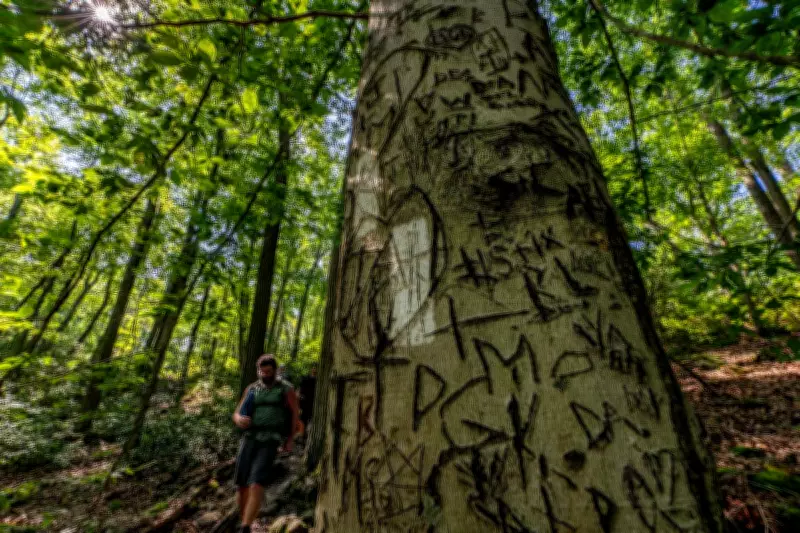
The journey concluded at Bear Mountain State Park, where the writer found a birch tree scarred by hikers' carvings, symbolizing the ego that defiles living landscapes. Despite smoke obscuring the Manhattan skyline, the night spent in the ecological family was meaningful. Leaving Lenapehoking, the writer stopped at the Palmerton Superfund site, a stark reminder of environmental degradation, but remained hopeful.
At the border of Lenapehoking, a cardinal appeared, interpreted as a message from deceased relatives, reassuring that Lenape culture and people will endure. With tribal members like Martina and Derek working to preserve history and reclaim voices, the future looks bright. The writer envisions a day when hikers on the Appalachian Trail are fully acquainted with Lenape history, and Indigenous peoples once again care for the ecology that defines them.