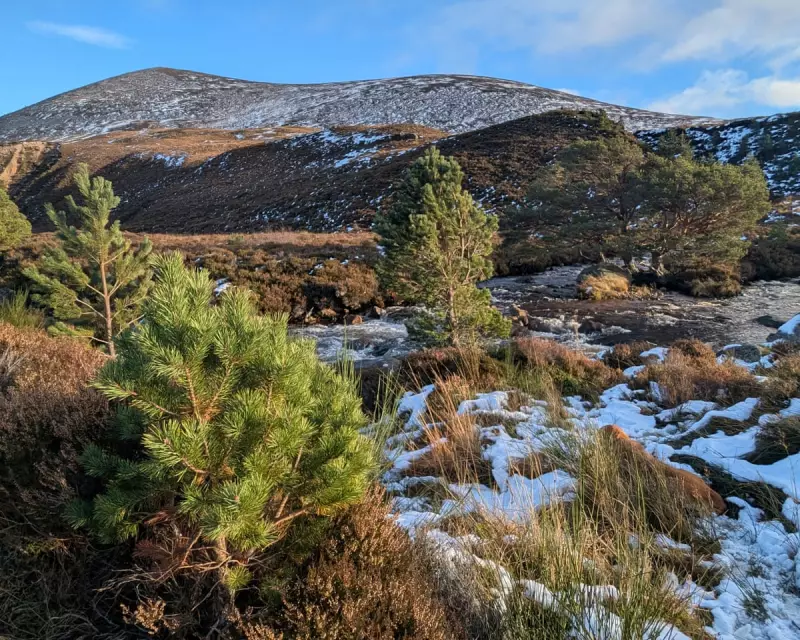
In the crisp, fading days of a cold snap, the ancient Caledonian forest of Rothiemurchus in the Cairngorms presents a scene of stark beauty and quiet, profound hope. Snow still dapples the high hills and nestles in the heather, while a silent revolution is taking root on the land.
A Legacy of Loss and a Walk Through Recovery
The writer Nan Shepherd once mourned the loss of this great pine forest in her seminal work, The Living Mountain. She witnessed the extensive timber fellings during both world wars, a devastation so severe that the ecologist Frank Fraser Darling remarked in 1949 that the land looked like a battlefield, with Rothiemurchus a tragic wreck.
Walking from Whitewell croft—a frequent retreat for Shepherd—through miles of mature Scots pine, birch, juniper, and blaeberry, one is surrounded by a living testament to older recovery. This established woodland has endured far longer than any single observer. Yet, the most compelling story of regeneration is unfolding just beyond its borders.
The Barren Expanse and a Marching Army of Saplings
As the path turns south into the long cleft of Glen Einich, the dense forest quickly thins. It gives way to gorse banks and a scattering of old, weather-beaten pines before opening onto a vast heath. This open landscape bears the marks of muirburn and is scarred by the remnants of historical industry, including the dammed stream of Am Benaidh, once used to surge logs down to the River Spey.
Here, poised between the old forest and the open moor, a patient observer will witness the new growth. Across the heath, pine saplings are pushing through the earth. They range from fragile twigs to young trees reaching knee, waist, and even head height. This is the visible result of modern land management and a crucial reduction in deer numbers, which has finally given the native forest the breathing space to regenerate naturally.
A Vision of Hope for Future Generations
The more one looks, the more this 'peacetime army' of young trees comes into focus. It is a living, growing answer to the wistful writings of Shepherd and the grim assessment of Fraser Darling. This regeneration, happening before our very eyes, offers a powerful narrative of ecological hope and restoration in one of Britain's most iconic landscapes.
It is a poignant thought that the authors who lamented the forest's past might now find solace in its resilient future, as green shoots defiantly break through the winter ground of Rothiemurchus.