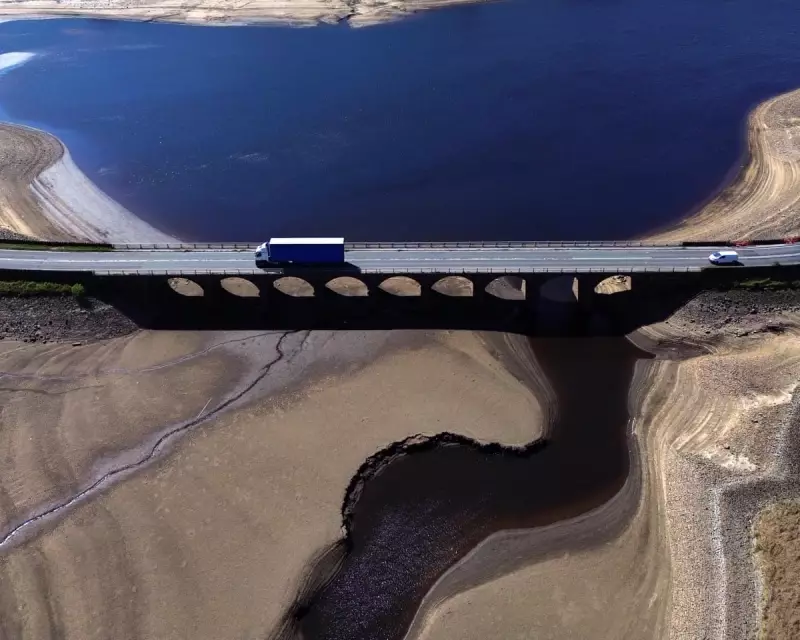
The Environment Agency has issued a stark warning about potential widespread drought conditions across the UK next year, while new research reveals that water shortages could seriously undermine the country's net zero ambitions.
Net Zero Targets Under Threat
A comprehensive study commissioned by water retailer Wave has found that water scarcity could hamper the UK's ability to reach its legally binding net zero targets. The government aims to achieve net zero greenhouse gas emissions by 2050 and has committed to a clean power system by 2030, with at least 95% of electricity generated from low-carbon sources.
However, the research conducted by Durham University concludes that there may not be enough water available to support all planned carbon capture and hydrogen projects. These technologies, crucial for decarbonisation, require significant amounts of water, and their development could push some UK regions into water shortages.
Regional Deficits Emerging
Led by Professor Simon Mathias, an expert in hydraulics and environmental engineering, researchers assessed plans across England's five largest industrial clusters in Humberside, north-west England, the Tees Valley, the Solent and the Black Country.
The study found that decarbonisation efforts could add up to 860 million litres per day of water demand by 2050. In some regions, including those served by Anglian Water and United Utilities, deficits could emerge as early as 2030.
Specifically, decarbonisation within the Humberside industrial cluster could push Anglian Water into water deficit by 2030, leading to a shortage of 130 million litres daily by 2050. Meanwhile, plans around the north-west cluster could push United Utilities into a deficit of approximately 70 million litres per day by 2030.
Industry Responses and Blame Game
United Utilities disputed the deficit figures, calling them "overstated" and noting that regional water management plans already account for predicted hydrogen demand. The company emphasised that achieving net zero represents a critical challenge for the water sector, with substantial work underway to develop sustainable solutions.
Anglian Water acknowledged the deficit figures but positioned them at the upper end of their considerations. The company pointed fingers at regulator Ofwat for restricting water companies' spending capacity, thereby hindering their ability to secure future supplies.
Water UK confirmed that water companies' plans to ensure future supply adequacy don't account for the needs of some large planned projects, blaming the Environment Agency for this omission. A spokesperson highlighted that water companies were blocked from building reservoirs for over 30 years before recently receiving approval for ten new reservoirs.
Calls for Systemic Reform
Professor Dieter Helm from the University of Oxford described England's water system as antiquated, arguing that the problem isn't water scarcity but poor management. "It's worse than an analogue industry," he stated, noting that until recently, some water companies lacked basic knowledge about their infrastructure.
Helm advocated for a data revolution in water management, suggesting that every drop of water should be measured and reported in real time. He proposed establishing an independent catchment regulator to manage comprehensive data on all water uses, similar to how electricity systems operate.
The government has acknowledged the growing water shortage, pointing to £104 billion of private investment aimed at reducing leakage and building nine reservoirs, plus a record £10.5 billion in government funding for new flood defences.
However, with the Environment Agency already warning of an England-wide water deficit of 6 billion litres daily by 2055, and the possibility of widespread drought next year without significant winter rainfall, the urgency for coordinated action has never been greater.