Christmas tree growers in western North Carolina are expressing cautious optimism as they continue to rebuild their farms more than a year after the catastrophic passage of Hurricane Helene. Despite the immense damage inflicted on the region's vital industry, many report robust seasonal sales and a determined focus on long-term recovery.
The Storm's Devastating Toll on a Key Industry
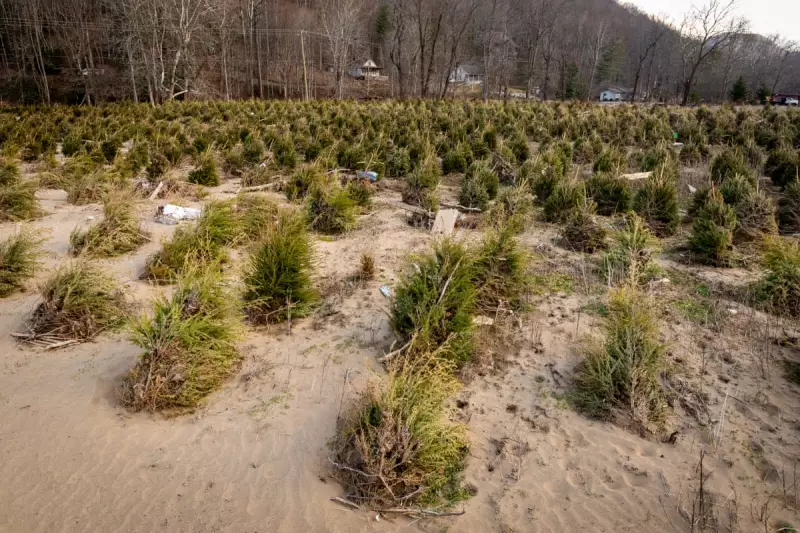
In October 2024, Hurricane Helene, at one point a category 4 storm, tore through western North Carolina. The hurricane caused at least 95 fatalities and led to widespread destruction of homes, infrastructure, and agricultural land. For the state's Christmas tree sector, the impact was severe. Officials estimated that the storm caused approximately $125 million in losses to ornamental nurseries and Christmas trees alone.
North Carolina holds the position of the second-largest Christmas tree producer in the United States, harvesting around 4 million trees each year. The majority of these are Fraser firs, predominantly cultivated in the state's western counties.
Stories of Resilience and Rebuilding
At the historic, family-run Avery Farms in Avery County, the hurricane uprooted roughly 80,000 Christmas trees, devastated fields, and destroyed equipment and buildings, including the home of manager Graham Avery's parents. In the immediate aftermath, the family salvaged what they could, selling a limited number of trees and creating wreaths and tabletop trees from recovered tops.
This year has been dedicated to reconstruction. With community help, Avery's parents have moved back into a rebuilt home. The farm has bulldozed damaged fields, fertilised the soil, and planted about 20,000 new trees this spring. "It's going to be a while," Avery acknowledged, noting trees take 6 to 12 years to mature. "But that's the whole game that we play... We are set up to do it, and we will continue to do it." Despite reduced inventory, he reported "very, very good" sales this season and a national expansion of wreath shipments.
Dee Clark, owner of Christmas Corner and C&G Nursery, also in Avery County, saw retail sales plummet last year after a crucial road washed out. Helene destroyed much of his farm's infrastructure and triggered landslides that claimed about 1,000 trees and stripped topsoil. While repairs and replanting will take years, Clark remains bullish: "The Christmas tree industry in western North Carolina as a whole is probably the best shape it's ever been in."
A Symbol of Strength and Future Challenges
The resilience of the region's growers was symbolised last year when a tree from Cartner's Christmas Tree Farm was selected for display at the White House. This occurred despite landslides on the property destroying up to 10,000 trees. Jamie Bookwalter, an extension specialist at North Carolina State University, said the tree represented the area's problem-solving spirit and self-reliance.
Looking ahead, farmers and researchers acknowledge broader challenges. Bookwalter pointed out that farming is becoming more difficult with unpredictable temperatures and more extreme wet and dry periods due to the changing climate. Researchers are now working to develop tree varieties with greater climate resilience.
Jennifer Greene, Executive Director of the North Carolina Christmas Tree Association, confirmed the industry's underlying strength. She noted a great growing season in spring 2025 with beneficial April rainfall. "We're in the middle of a great season, we're happy to not have a hurricane and we've had good weather for harvest. So things are looking good," she stated.
For consumers, specialists emphasise that buying a real tree, even from a large retailer, directly supports these local farmers. Will Kohlway IV, a Christmas tree production extension specialist at NC State, said the public's support throughout the recovery has been "humbling", underscoring the deep connection between the holiday tradition and the agricultural community working to sustain it.