
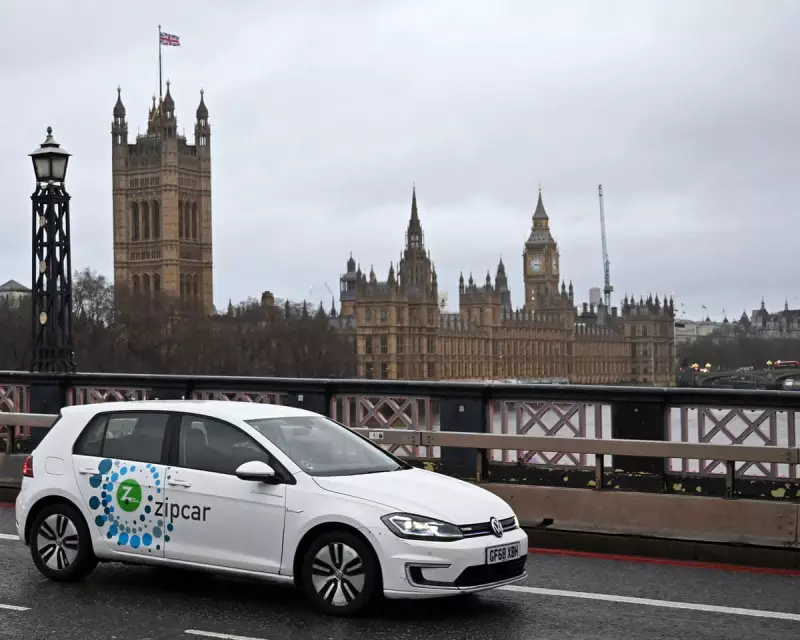
The imminent departure of Zipcar, the world's largest car-sharing club, from the United Kingdom marks a significant setback for sustainable urban transport. The company, which operates a fleet of roughly 3,000 shared vehicles across Britain, will cease its UK operations at the end of January 2023, leaving hundreds of thousands of members in the lurch.
The Personal and National Cost of a Carsharing Collapse
For many, like writer Phineas Harper who recently learned to drive specifically to join Zipcar, the news is a personal blow. Harper's plan to rely on carsharing for the less than 1% of the year he needs a vehicle is now in tatters, potentially leaving him saddled with the cost of a private car. On a national scale, the impact is even more severe. Research indicates that each shared car replaces around 20 private vehicles, making car clubs a potent tool for reducing emissions and congestion. With Zipcar's exit, the UK's shared car ratio will plummet to just one for every 30,000 people, a figure that renders the service inaccessible for most of the population.
Government Priorities: Billions for EVs, Nothing for Sharing
This collapse presents a stark contradiction in government policy. While the revised National Planning Policy Framework explicitly promotes sustainable travel modes like carsharing, recent budgetary actions tell a different story. Chancellor Rachel Reeves' recent budget allocated £1.95bn in subsidies for new electric cars and a further £500m for EV charging infrastructure. This comes alongside a £1.5bn loan guarantee for Jaguar Land Rover and another freeze on fuel duty. Critics argue this represents a clear misallocation of funds, funnelling billions into private car ownership while offering no support to the far more cost-effective carsharing sector and its 328,539 users.
Arthur Kay, a Transport for London board member and author, warns that the Treasury has been "seduced by the claims of electric car manufacturers." He states, "The EV lobby has so effectively captured the state," but cautions that "changing the fuel source doesn't change all the other things that are bad about cars."
Electric Cars: Not the Silver Bullet for Urban Transport
The focus on electric vehicles overlooks their significant limitations. While cleaner in terms of direct emissions, EVs are carbon-intensive to manufacture and still produce harmful particulates from brakes and tyres. Some studies suggest they only reduce driving's carbon footprint by 47%. Furthermore, evidence from Norway, where 94% of new cars sold are electric, reveals a hidden downside: greater EV ownership has led to a 10-20% overall increase in car trips. This demonstrates that simply switching fuel type does not solve the fundamental issues of congestion, space, and resource inefficiency inherent in a car-centric model, where vehicles sit idle 95% of the time.
The loss of Zipcar is more than a business failure; it is a glaring indicator that the UK's transport priorities are fundamentally misaligned. If the goal is to create cities for people, not parked cars, then supporting shared, efficient mobility must become a genuine policy priority, not just a line in a planning document.



